


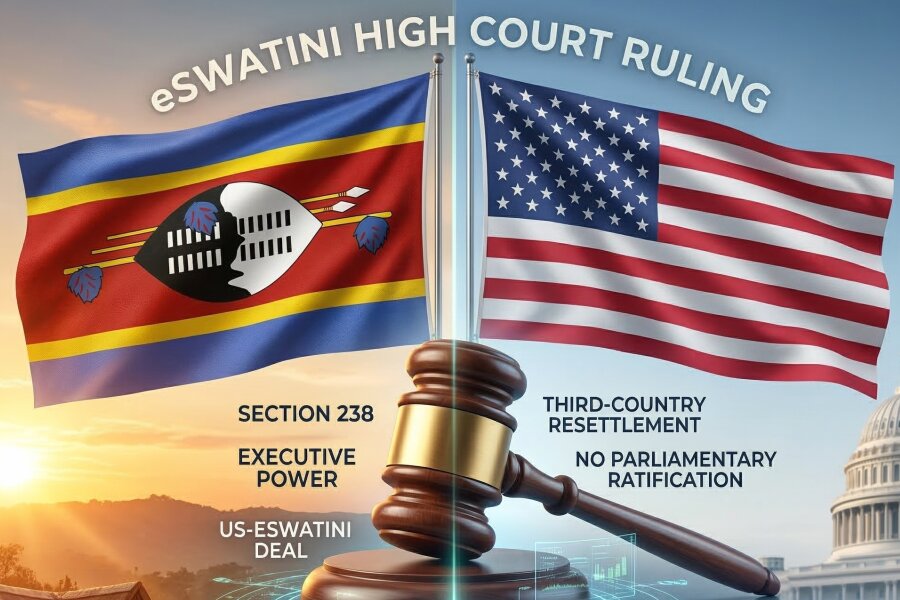
On February 4, 2026, the High Court of eSwatini dismissed a high-profile constitutional challenge regarding a covert international agreement to accept third-country deportees from the United States. The case, spearheaded by the Eswatini Litigation Centre and the Swaziland Rural Women's Assembly, sought to invalidate the bilateral agreement orchestrated between the absolute monarchy and the current US administration.
The applicants' primary legal argument was grounded in Section 238 of the Constitution of eSwatini. This constitutional provision mandates that any international agreement carrying financial or substantial political obligations must be ratified by Parliament (either via an Act or a two-thirds majority resolution) to have the binding force of law. The rights advocates argued that the executive branch, including the Prime Minister and the Ministry of Foreign Affairs, acted ultra vires (beyond their legal power) by striking a clandestine deal to accept deportees without parliamentary debate or public disclosure of the terms.
The US administration's policy involves utilizing African nations as third-country repositories for individuals deported during its aggressive immigration crackdowns. By mid-2025, at least 15 deportees—originally from nations like Vietnam, Jamaica, and Cuba—had already been transferred to eSwatini, with the US footing the bill for their detention. The applicants sought a judicial interdict to halt further arrivals and demanded full financial disclosure, arguing that such bilateral agreements exploit developing nations and bypass constitutional democracy.
Despite these constitutional arguments, the High Court ultimately dismissed the case on procedural grounds. The State had successfully argued that the applicants lacked the locus standi (legal standing) to challenge diplomatic agreements executed by the sovereign executive branch with a foreign nation. The dismissal represents a significant defeat for constitutional accountability and human rights oversight in the region, effectively granting the executive branch unilateral power to enter into controversial international resettlement treaties without domestic legislative checks.
Source: Southern Africa Litigation Centre