


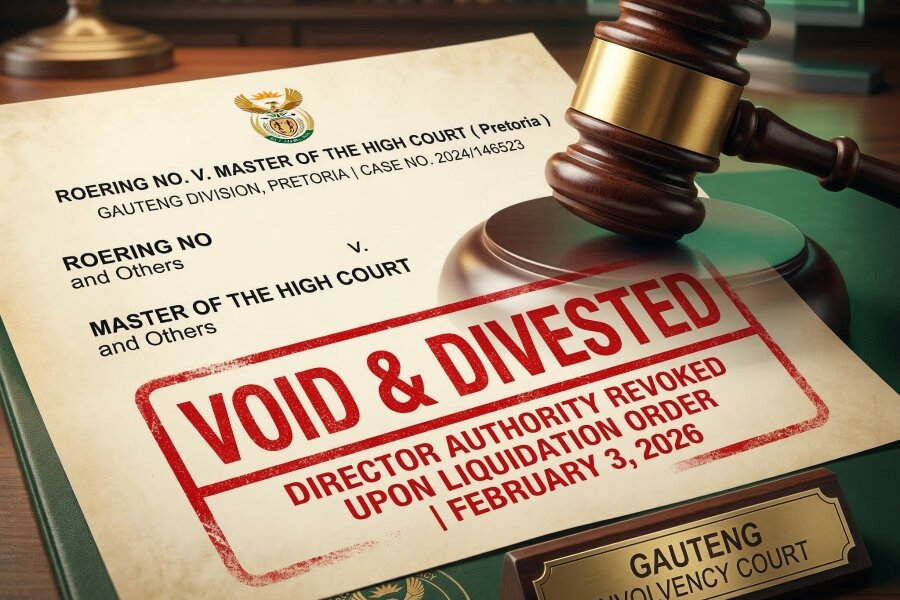
In the sphere of corporate insolvency, the Gauteng Division of the High Court in Pretoria delivered an instructive judgment on February 3, 2026, in the matter of Roering NO and Others v Master of the High Court, Pretoria and Others (Case No. 2024/146523). The complex dispute centered on the strict boundaries of authority between appointed liquidators, the Master of the High Court, and the creditors of two insolvent companies, African Brick Centre Limited and African Brick (Pty) Ltd.
The judgment sheds critical light on the devastating and absolute nature of a winding-up order under South African insolvency law. Upon the granting of a liquidation order, the concursus creditorum (concourse of creditors) is immediately established, and the insolvent estate is effectively frozen to prevent preferential treatment of any single creditor. The court reiterated that all property of the respondent company immediately falls under the statutory custody and control of the Master of the High Court until a provisional liquidator is formally appointed to manage the estate.
A highly critical element of the ruling addressed the stripping of corporate authority from former leadership. The court emphasized that once the winding-up commences, the directors, managers, and office-bearers of the company are entirely divested of their powers to direct and manage corporate affairs. They are legally barred from executing transactions on behalf of the company, and any such attempts are considered void ab initio, regardless of whether the transactions would have been valid in the ordinary course of business.
This ruling comes at a pivotal time when the Gauteng High Court has established a dedicated Insolvency Court to address a severe backlog and expedite commercial restructuring and liquidation applications. The judgment in Roering NO serves as a stern warning to the legal fraternity and corporate officers against overstepping jurisdictional bounds during the vulnerable "gap period" between a winding-up order and the finalization of the liquidators' administrative strategies. It reinforces the principle that insolvency mechanisms are strictly statutory procedures designed to equitably protect the general body of creditors.
Source: SAFLII