


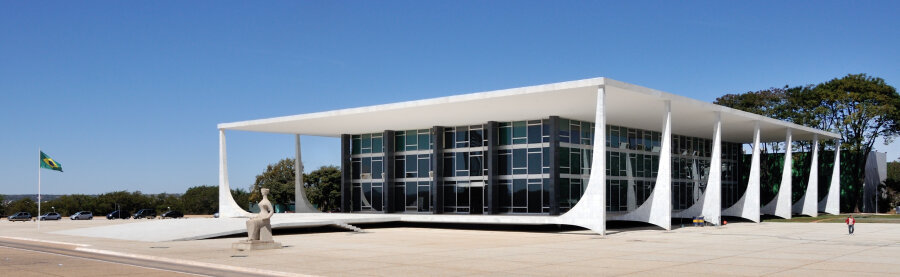
The Brazilian judiciary has escalated its crackdown on anti-democratic threats, with Supreme Federal Court (STF) Justice Alexandre de Moraes ordering the house arrest of ten individuals convicted of involvement in the 2022 coup attempt. This decision, issued in late December 2025 under Inquiry 4.874 (the "Digital Militias" inquiry), marks a shift from provisional liberty to stricter confinement for high-level conspirators.
The immediate catalyst for this judicial order was the apprehension of a co-conspirator—a former senior police official—in Paraguay. The official was arrested while attempting to board a flight to El Salvador using a forged Paraguayan passport. This incident provided the STF with concrete evidence of a sophisticated, transnational flight network helping convicted plotters escape justice. Intelligence reports indicated that the network remained active, utilizing social media to coordinate movements and spread disinformation.
Justice de Moraes justified the harsh measures by characterizing the ten individuals not as passive participants, but as "intellectual authors" of the coup attempt. They were accused of drafting the "Article 142 interpretation," a pseudo-legal theory intended to legitimize military intervention against the government. The Court ruled that standard precautionary measures, such as ankle monitors, were insufficient given the group's demonstrated ability to manufacture false documents and cross borders.
The ruling has deepened political polarization in Brazil. Supporters of former President Jair Bolsonaro—who himself was placed under house arrest in August 2025—decried the move as authoritarian. However, constitutional scholars view the STF's actions as a necessary application of "defensive democracy," aimed at decapitating the leadership of a movement that continues to threaten the rule of law. The coordination with Paraguayan authorities also highlights a growing regional commitment to suppressing political extremism through judicial cooperation.
Source: Jurist