Hong Kong Residential Tenancy Disputes: Legal Guide for Expatriates
- The Lands Tribunal is the primary venue for resolving residential tenancy disputes in Hong Kong.
- Security deposit recovery and eviction defense require a fully stamped tenancy agreement and a certified CR109 form.
- Expatriates cannot legally break a lease early without a written break clause or mutual landlord consent.
- Tenants cannot legally withhold rent in Hong Kong, even if the landlord fails to make necessary repairs.
- Filing a claim at the Lands Tribunal is inexpensive, but hiring legal representation for complex disputes adds significant costs.
The Lands Tribunal
The Lands Tribunal handles residential tenancy disputes in Hong Kong, including evictions for unpaid rent and lease breaches. It provides a faster legal process compared to higher courts.
The process begins by filing a Notice of Application. The tribunal covers eviction (legal recovery of vacant possession), unpaid rent, and contract breaches. The opposing party has seven days to file a Notice of Opposition. If a tenant misses this deadline, the landlord can apply for a default judgment. Straightforward cases take one to two months, while contested hearings take longer.
The Lands Tribunal requires written evidence and rarely relies on verbal testimony. The presiding officer reviews the lease, payment histories, and notices to issue a binding decision. A landlord cannot evict a tenant without a formal order from the tribunal. Self-help evictions (such as changing locks or cutting utilities) are criminal offenses.
You can find official forms and procedural guidelines on the Hong Kong Judiciary Lands Tribunal website.
Essential Documents for Tenancy Disputes
Resolving a tenancy dispute requires a clear paper trail. Gather the following records before filing a claim or submitting a defense:
- Stamped Tenancy Agreement: The signed contract with an official stamp duty certificate from the Inland Revenue Department. An unstamped agreement is inadmissible in civil proceedings. You can pay late stamp duty, but the Inland Revenue Department will apply a financial penalty.
- Form CR109: The Notice of New Letting or Renewal Agreement endorsed by the Rating and Valuation Department. The tribunal requires this document to hear a case.
- Proof of Rent Payments: Bank transfer records, cashed checks, or signed receipts showing a consistent history of paid rent.
- Security Deposit Receipt: Written confirmation the landlord received your initial deposit.
- Move-In Condition Report: Photos, videos, and a signed inventory list documenting the property condition on your exact move-in date.
- Written Correspondence: Printed emails, chat logs, and formal letters regarding repairs, notice periods, or early termination.
- Notice to Quit: Any formal written notice served by you or the landlord regarding lease termination.
Security Deposits and Deductions
Hong Kong has no statutory tenancy deposit scheme. Landlords hold security deposits directly in their personal bank accounts.
Most standard agreements require landlords to return the security deposit within 14 to 30 days after the tenant vacates the property and returns the keys. If the contract omits a timeframe, the deposit is due within a reasonable time, assuming there is no outstanding rent or severe property damage.
Landlords cannot deduct money for normal wear and tear, like faded paint or floor scuffs. Deductions are limited to actual damage caused by negligence, unapproved structural alterations, or deep cleaning required due to poor maintenance.
Estimated Tribunal and Legal Costs
Tribunal filing fees in Hong Kong are predictable, while legal fees vary based on case complexity. Self-representation is common for basic rent arrears. Complex lease disputes often require professional legal counsel.
| Expense Type | Estimated Cost (HKD) | Description | | : | : | : | | Application for Possession | 355 | Tribunal fee to file a claim to recover the property or claim unpaid rent. | | Notice of Opposition | 71 | Tribunal fee for a tenant to formally contest a landlord's claim. | | Filing of Witness Statement | 36 | Fee per document filed as evidence in the tribunal. | | Bailiff Execution Fee | 1,000 - 2,000 | Government fee to enforce an eviction order if the tenant refuses to leave. | | Legal Consultation | 2,500 - 5,000 | Hourly rate for a tenancy lawyer to review your lease and advise on strategy. | | Full Legal Representation | 30,000 - 80,000+ | Total estimated cost for a lawyer to manage a contested tribunal hearing. |
Early Lease Termination and Notice
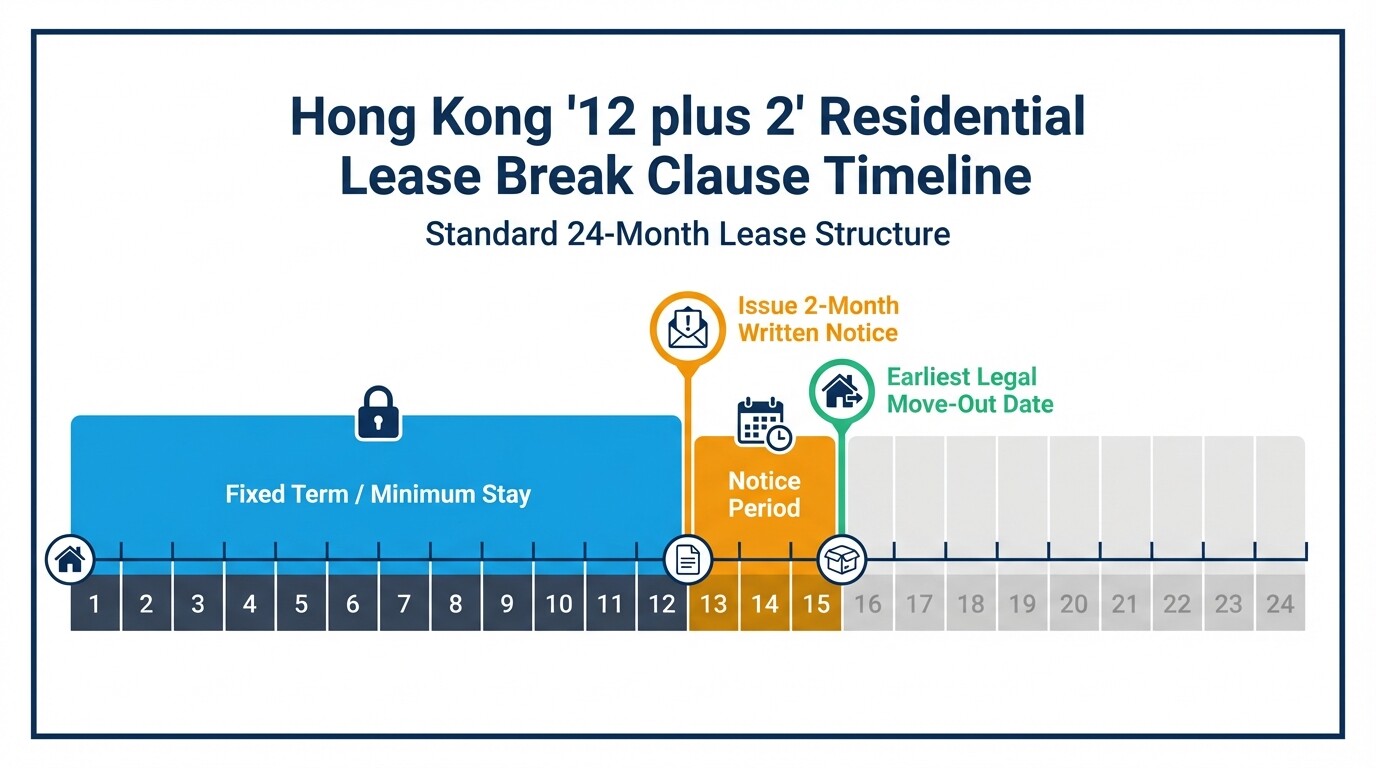
You can only terminate a residential lease early if the agreement has a break clause or if the landlord agrees to a mutual surrender. Without these provisions, you must pay rent until the fixed term ends, even if your employer relocates you out of Hong Kong.
A standard two-year lease usually includes a "12 plus 2" break clause. The tenant must stay for 12 months before issuing a two-month written notice to end the lease. This notice must include the date, property address, a reference to the break clause, and the final move-out date. Casual text messages are not legally valid.
Any lease alteration, including early termination or temporary rent reduction, needs a written addendum. The Lands Tribunal favors written agreements and ignores verbal promises. Without a break clause, your option is negotiating a Deed of Surrender. Landlords usually require tenants to forfeit the deposit or pay the real estate agent fees required to find a replacement tenant.
Subdivided Unit Rent Controls
Hong Kong enforces strict rent controls and security of tenure for tenants in subdivided units. Landlords cannot raise the rent during the initial two-year term.
Under Part IVA of the Landlord and Tenant (Consolidation) Ordinance, tenants in subdivided units have the right to renew for a second two-year term. Rent increases upon renewal are tied to a government index and capped at 10 percent. Landlords cannot overcharge tenants for public utilities like water and electricity. Charging flat-rate utility fees above the actual billed amount is a regulatory offense.
Rent Withholding and Repairs
Expatriates sometimes mistakenly apply tenant protections from their home countries to Hong Kong. Under local law, paying rent and maintaining the property are independent covenants. You cannot legally withhold rent to force the landlord to make repairs. If you stop paying rent over a broken air conditioning unit, the landlord can file for immediate eviction based on rent arrears.
When to Hire a Lawyer
Consider hiring a tenancy lawyer when a dispute involves a high-value deposit, complex contract breaches, or a formal eviction notice from the Lands Tribunal. While the tribunal allows self-representation, legal counsel helps protect your procedural rights against landlords with deep local experience.
If you face a dispute, gather all written communications, your stamped tenancy agreement, and the CR109 form. Stop verbal negotiations and move all dialogue to email. If a landlord refuses to return your deposit or threatens an illegal eviction, consult Hong Kong contract lawyers to review your lease and issue a formal demand letter.