


- The UK Competition and Markets Authority (CMA) operates independently post-Brexit and runs parallel investigations alongside EU regulators.
- Section 26 mandatory information requests require a strict legal hold on internal communications to avoid administrative penalties.
- Investigations follow a strict timeline. Phase 1 takes 40 working days, and Phase 2 can take up to 24 weeks.
- Destroying internal messages during a dawn raid is a criminal offense that triggers immediate prosecution.
- Tech firms can negotiate commitment decisions to resolve antitrust concerns without formal infringement findings or global revenue fines up to 10%.
Investigation Triggers and Jurisdiction
The CMA often launches probes based on competitor complaints, whistleblowers, or market studies that reveal anti-competitive algorithms or unfair data usage. If your tech firm conducts business globally and your practices affect UK consumers, the CMA has jurisdiction to investigate. The agency can levy fines up to 10% of global corporate turnover, even if your company lacks a physical UK office.
CMA vs. European Commission Investigatory Powers
Since Brexit, the UK CMA operates independently of the European Commission. It runs parallel investigations with distinct enforcement powers. While both agencies pursue global tech firms, the CMA has lower thresholds for launching interventions and broader discretion for imposing structural remedies.
Navigating parallel investigations requires understanding how these two regulatory bodies diverge. The CMA has positioned itself as a primary regulator for digital markets.
| Regulatory Feature | UK CMA | European Commission |
|---|---|---|
| Jurisdictional scope | UK markets and consumer impact | EU member states |
| Tech sector threshold | Lower threshold based on "strategic market status" | Governed by the Digital Markets Act |
| Preferred remedies | Willingness to force structural changes and divestments | Historically prefers behavioral remedies and fines |
| Parallel probes | Initiates probes alongside the EU and US | Coordinates with global counterparts |
Responding to Section 26 Information Requests
Responding to a mandatory information request under Section 26 of the Competition Act 1998 requires a coordinated data preservation strategy. Failing to comply, providing false information, or missing deadlines can result in administrative penalties or criminal prosecution for corporate officers.
When a Section 26 notice arrives, legal and IT teams must mobilize immediately to secure the requested data.
- Issue a legal hold: Suspend auto-deletion policies for emails, messaging apps, and internal servers.
- Establish a task force: Appoint internal counsel, external advisors, and IT leadership to manage data extraction.
- Filter for privilege: Review all collected data to identify and withhold materials protected by legal professional privilege.
- Negotiate the scope: If the volume of requested data is burdensome, engage the CMA case team to narrow the scope or agree on a rolling submission schedule.
Investigation Timeline and Phases
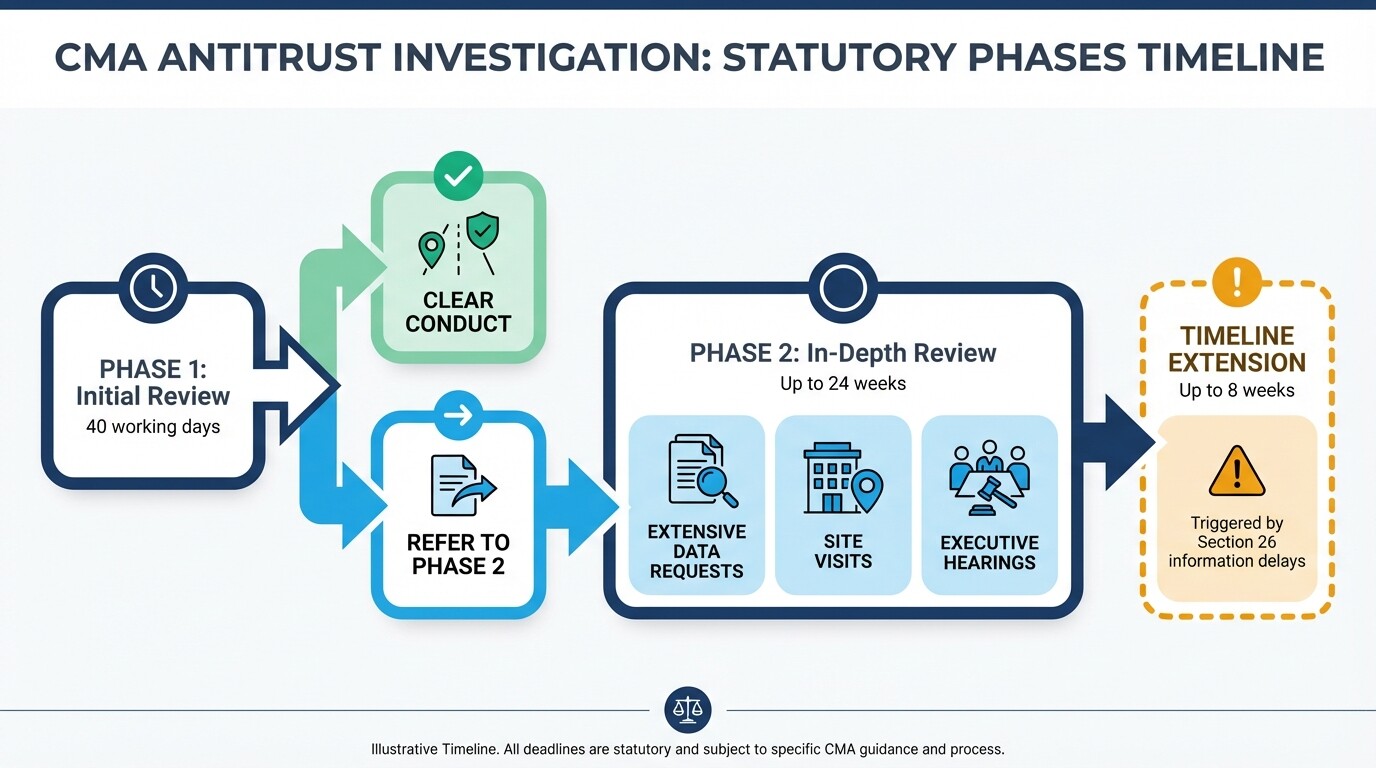
A standard CMA antitrust investigation operates on a strict statutory timeline divided into two phases.
- Phase 1 (40 working days): The CMA gathers initial information, sends informal questionnaires, and decides whether the case warrants a deeper probe. The CMA then clears the conduct or refers the case to Phase 2.
- Phase 2 (up to 24 weeks): An independent panel conducts an in-depth review involving extensive data requests, site visits, and formal hearings with executives.
- Timeline extensions: The CMA can extend the Phase 2 deadline by up to 8 weeks for special reasons, such as a company delaying the submission of critical information requested under Section 26.
Dawn Raids and Costly Mistakes
A dawn raid can last from a single day to an entire week, depending on the volume of digital data the inspectors need to image and the complexity of your network.
The costliest mistake a tech firm can make during a CMA unannounced inspection is destroying or concealing internal communications. Tampering with evidence, including deleting chat apps or private channels, leads to immediate criminal obstruction charges rather than standard civil fines. International tech firms often misunderstand UK antitrust enforcement rules.
- Deleting unread messages: The CMA has statutory power to seize and inspect personal mobile devices used for business purposes. Deleting messages on a personal device is not a safe workaround.
- Answering inspector questions: Employees should only answer basic logistical questions, such as the location of a server room. They must wait for external legal counsel to arrive before answering substantive queries about business practices.
- Frontline protocols: Keep a printed dawn raid response protocol at all reception desks. Frontline staff must know who to call and where to direct inspectors while waiting for the legal team.
Negotiating Commitment Decisions
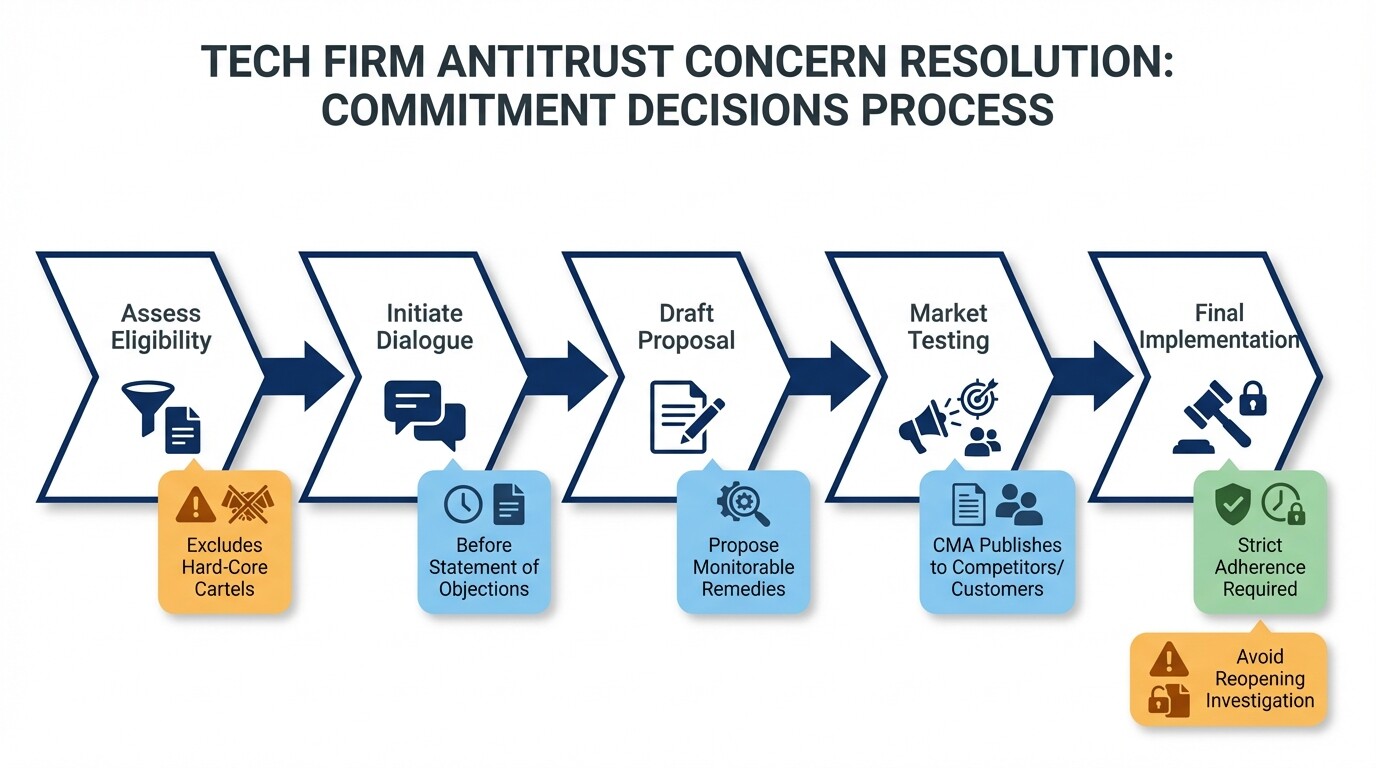
Negotiating a commitment decision allows a company to address the CMA's antitrust concerns voluntarily without facing formal infringement findings or heavy fines. This process requires proposing legally binding changes to your business practices early in the investigation.
Offering commitments is a strategic move that saves time and legal fees while mitigating reputational damage.
- Assess eligibility: Determine if the case is suitable for commitments. The CMA typically rejects commitments for hard-core cartels but accepts them for abuse of dominance or vertical agreement concerns.
- Initiate dialogue: Approach the CMA case team formally to express a willingness to offer commitments before the agency issues a formal Statement of Objections.
- Draft the proposal: Propose clear and monitorable remedies that eliminate the specific competition concerns raised by investigators.
- Market testing: The CMA publishes proposed commitments to third parties, including competitors and business customers, to gauge whether the remedies will restore market competition.
- Final implementation: Establish an internal compliance program to ensure strict adherence. Breaching a binding commitment allows the CMA to reopen the investigation and impose heavy fines.
When to Hire an Antitrust Lawyer
Engage specialized antitrust counsel the moment you receive an informal inquiry, a Section 26 notice, or experience a dawn raid. Early legal intervention prevents accidental waiver of legal privilege and ensures data collection methods comply strictly with CMA standards.
International firms dealing with UK investigations require local expertise. You can find experienced professionals in the antitrust litigation lawyers in the United Kingdom directory to build your defense strategy immediately. Do not attempt to negotiate scope or supply documents to the CMA without having your legal team review the submissions first.
Next Steps
Surviving a CMA investigation requires proactive compliance and swift execution of defense protocols. Your immediate priority is securing internal data and establishing a direct line of communication with legal advisors.
- Audit current data retention and communication policies to ensure compliance with evidence preservation rules.
- Train frontline staff, receptionists, and executives on precise dawn raid protocols.
- Appoint an internal regulatory response team comprising IT, legal, and public relations executives to handle inquiries efficiently.