Intellectual Property Protection for Foreign Manufacturers in Vietnam
Key Takeaways
Protecting your intellectual property in Vietnam requires early action and a clear understanding of local regulations before you begin manufacturing. Foreign brands must secure their rights proactively to avoid costly disputes with local factories or opportunists.
- Vietnam uses a strict first-to-file system, meaning you must register your trademarks and patents before your competitors or local partners do.
- The registration process for trademarks and patents typically takes 12 to 24 months, requiring early filing before entering the market.
- Filing costs range from $800 to $2,500 per application when using local legal counsel.
- Administrative actions are the most effective way to stop counterfeiting quickly, while civil litigation is reserved for complex disputes and claiming damages.
- Active monitoring is essential to catch and oppose bad faith registrations by local entities trying to hijack your brand.
Why is the First-to-File System Critical in Vietnam?
Vietnam operates on a strict first-to-file principle, meaning the government grants intellectual property rights to the first person or company who applies for them. This applies regardless of who originally created the invention or who used the brand first in other countries.
For foreign manufacturers, this system creates a significant vulnerability. If you share your designs, brand names, or technical blueprints with a prospective Vietnamese factory before filing for protection, that factory can legally register your intellectual property under their own name. Once they secure the registration, they hold the exclusive rights to produce and sell those goods in Vietnam. To prevent this, international brands must file applications with the Intellectual Property Office of Viet Nam before initiating talks with local manufacturers.
Foreign Manufacturer IP Protection Checklist
Protecting your intellectual property requires a proactive strategy that begins months before you sign any manufacturing contracts. Use this step-by-step checklist to secure your assets during your market entry phase.
Pre-Entry Phase
- Conduct a Clearance Search: Verify that your brand name, logo, or patent has not already been registered in Vietnam by a third party.
- Sign NNN Agreements: Execute Non-Disclosure, Non-Use, and Non-Circumvention agreements with all potential manufacturing partners before sharing technical specs.
- File Applications Early: Submit your trademark, patent, and industrial design applications to the local intellectual property office before sending any prototypes to Vietnam.
Manufacturing Phase
- Register with Customs: Record your registered trademarks with Vietnam Customs to allow border agents to seize counterfeit goods attempting to leave the country.
- Monitor the Registry: Set up a watch service to monitor the official IP gazette for identical or confusingly similar trademark applications filed by bad faith actors.
- Audit Factory Practices: Regularly inspect your local manufacturing facilities to ensure overrun products or rejected quality control items are destroyed and not sold into the unauthorized grey market.
What is the Timeline for Trademark and Patent Approval?
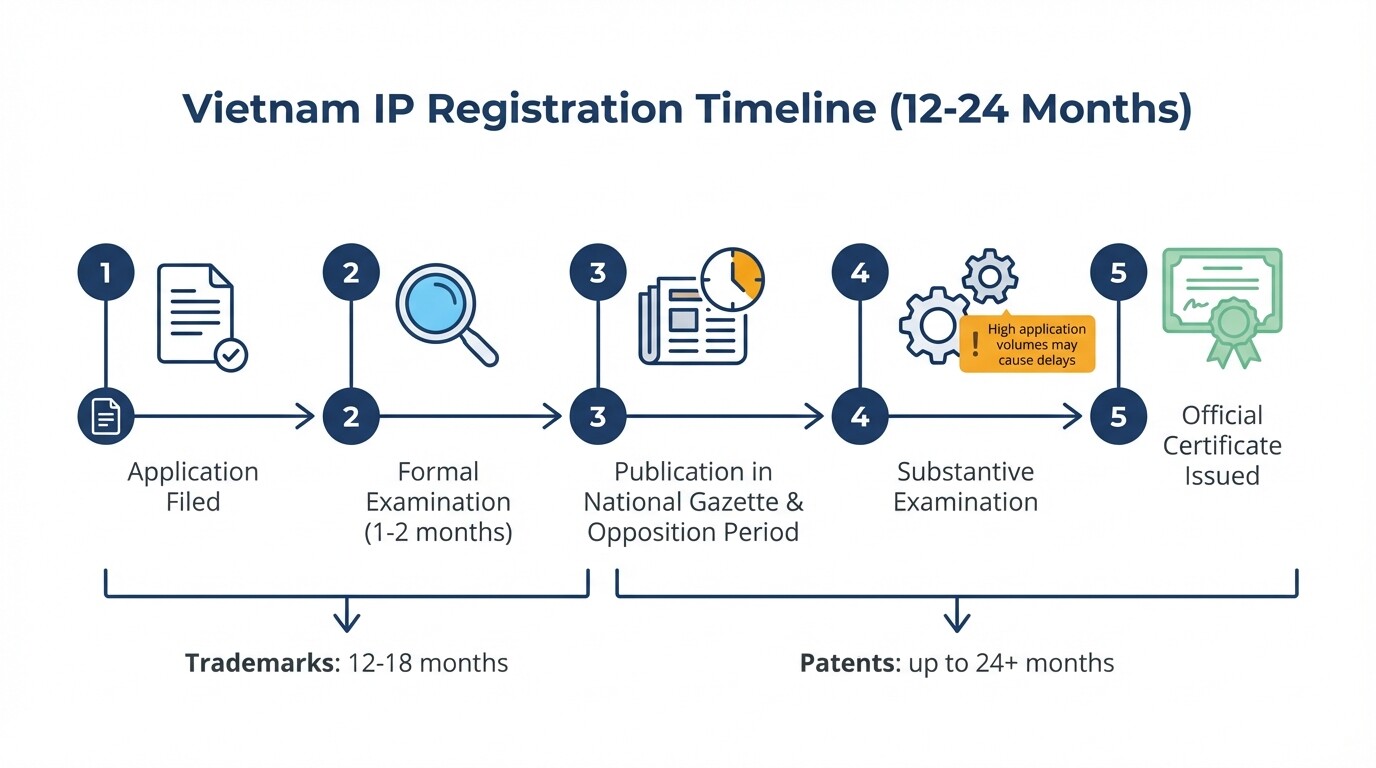
Registering intellectual property in Vietnam typically takes between 12 to 24 months, depending on the complexity of the asset and current government processing backlogs. Trademarks often finalize near the 12 to 18 month mark, while patent reviews generally stretch toward the full 24 months or beyond.
The process begins with a formal examination, which takes one to two months, followed by publication in the national gazette. Once published, there is a strict window for third parties to oppose the application. After the opposition period closes, the government conducts a substantive examination. Because of high application volumes, this substantive phase frequently faces delays. Foreign companies should factor this timeline into their business plans, as full enforcement rights are only granted once the official certificate is issued.
Estimated Costs for IP Registration in Vietnam
Filing for intellectual property protection through a local Vietnamese attorney generally costs between $800 and $2,500 per application. This estimate includes official government filing fees, mandatory document translation costs, and professional legal representation.
In local currency, this translates to roughly 20 million to 62 million Vietnamese Dong (VND) per application. Trademarks fall on the lower end of this scale, while complex patents requiring extensive technical translation sit at the higher end. It is highly recommended to budget for legal representation, as foreign entities without a physical presence in Vietnam are legally required to file applications through a licensed local intellectual property agent.
How to Monitor for Bad Faith Registrations
Unscrupulous local actors often monitor international trade shows and foreign markets to register emerging brands in Vietnam before the legitimate owner does. Companies must actively monitor the official intellectual property database to catch and oppose these bad faith filings during the public review period.
A bad faith registration occurs when someone registers a brand they do not own, usually to extort the original owner by selling the trademark back to them at a high premium. To combat this, foreign manufacturers should hire local counsel to conduct monthly sweeps of the national gazette. If a conflicting mark is published, your legal team can file an official opposition. Successfully proving bad faith requires documenting your brand's international fame and showing that the applicant had a dishonest motive or prior relationship with your company.
Enforcement Options: Administrative Actions vs. Civil Litigation
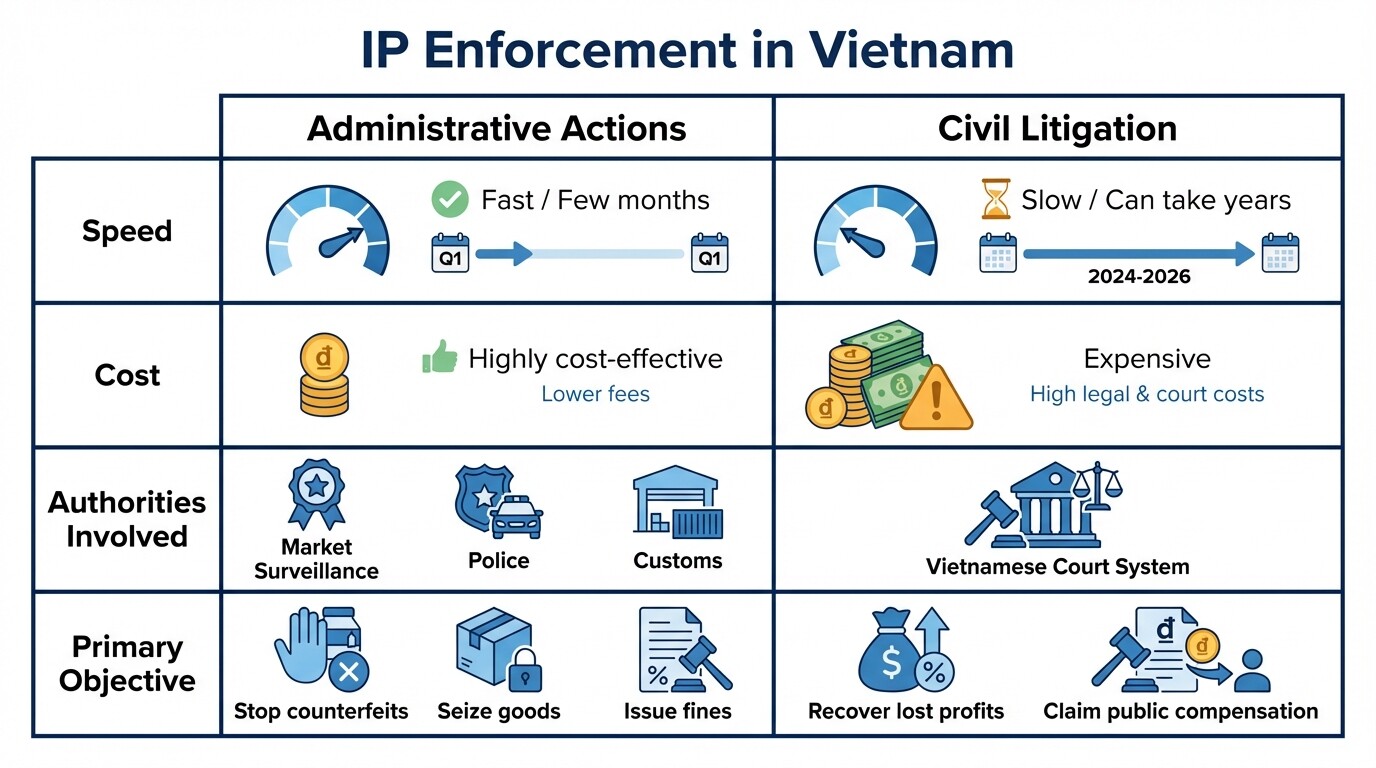
Foreign companies can enforce their intellectual property rights in Vietnam through administrative actions by market control agencies or via civil litigation in the court system. Administrative action is faster and more cost-effective for halting counterfeits, while civil litigation is necessary if you need to claim financial damages.
Administrative Actions This is the most common enforcement route in Vietnam. It involves reporting violations to agencies like the Market Surveillance Directorate, the Police, or Vietnam Customs. These authorities have the power to conduct unexpected factory raids, seize counterfeit goods, suspend business licenses, and issue immediate financial penalties. Administrative actions usually resolve within a few months and are highly effective for stopping active infringement.
Civil Litigation Taking an infringer to a Vietnamese civil court is a longer, more complex process. However, it is the only legal avenue available if your goal is to recover lost profits or force the infringing party to pay public compensation. Because the evidentiary standards in civil courts are exceptionally high and cases can take years to resolve, litigation is typically reserved for large-scale commercial disputes or complex patent infringements where administrative agencies lack the technical expertise to rule.
Common Misconceptions About IP Rights in Vietnam
Many foreign investors make critical errors by assuming their international intellectual property protections automatically cover Vietnamese jurisdiction. Correcting these misunderstandings early saves companies from catastrophic legal vulnerabilities.
- International registrations are automatically valid: Registering your trademark in the United States or the European Union offers zero protection in Vietnam. Unless you file directly in Vietnam or specifically designate Vietnam through the Madrid Protocol, your brand is unprotected locally.
- A factory contract prevents IP theft: Standard manufacturing contracts rarely stop a rogue factory from stealing your designs. Without officially registering your patents and trademarks with the government, you have no legal basis to stop them from producing and selling your product independently.
Frequently Asked Questions
Do I need a local address to register a trademark in Vietnam?
Foreign individuals and companies without a physical address or commercial presence in Vietnam cannot file directly with the government. You must use a licensed local intellectual property agent to submit and manage your applications.
Can I protect my software under Vietnamese patent law?
Computer programs and software source code are generally protected under copyright law in Vietnam rather than patent law. However, if the software is an integral part of a hardware process that provides a technical solution, it may be eligible for patent protection.
What happens if I discover a local factory is using my unregistered brand?
If your brand is unregistered in Vietnam, your enforcement options are severely limited. You may attempt to claim rights based on international fame, but this is incredibly difficult to prove. Your immediate step should be consulting local counsel to evaluate if you can still file or if you must negotiate with the infringing party.
When to Hire an IP Lawyer in Vietnam
You should engage legal counsel before you share any confidential information or product designs with potential manufacturing partners in Vietnam. A local attorney will secure your filing dates, draft enforceable non-disclosure agreements, and ensure your applications meet the strict formatting and translation requirements of the Vietnamese government. Furthermore, if you discover counterfeit versions of your products entering the market, a lawyer is essential for organizing factory raids and coordinating with local customs officials.
Next Steps
Taking action to protect your intellectual property secures your investment and preserves your brand's integrity. Start by conducting a thorough audit of the assets you plan to manufacture or introduce to the Vietnamese market. Next, commission a clearance search to confirm those assets are available to register. Finally, partner with qualified corporate and commercial lawyers in Vietnam to formally file your applications and establish an ongoing monitoring strategy to defend your market position.