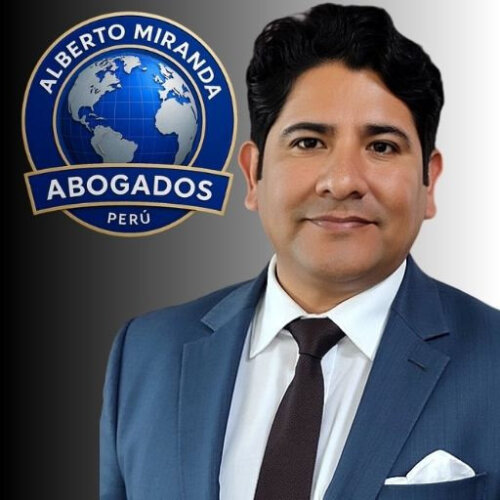
Dr. Alberto Miranda is a Peru-qualified attorney registered with the Lima Bar Association (CAL No. 39450), founder of Alberto Miranda Abogados, and a legal practitioner focused on international private law, Peruvian civil law, cross-border family law, and legal proceedings connected to Peru.
His...
About Corporate Document Authentication Law in Peru
Corporate document authentication in Peru covers the formal steps used to certify the authenticity of signatures and the validity of corporate documents such as minutes, resolutions, powers of attorney, and charter documents. The process typically begins with an authenticated signature or certified copy by a Peru notary and may require legalization or apostille if the documents are destined for use abroad. Notarization confirms identity and intent, while legalization or apostille confirms the document for international recognition.
In domestic use, authentication supports Sunarp registrations, bank transactions, and corporate governance. For international use, Peru commonly relies on apostille or legalization through the Ministry of Foreign Affairs after notarization. This combination ensures that corporate documents are accepted by foreign authorities and counterparties.
Peru uses authentication and, when needed, apostille or legalization to certify documents for foreign use.
Understanding the distinction between authenticating signatures and certifying documents is essential. Authentication verifies that the signature on a document is genuine, while certification confirms the content and the authority of the signer. For corporate documents, these steps are often required for governance acts, cross-border transactions, and regulatory compliance.
For corporate acts, notarization and subsequent apostille or legalization are common requirements for cross-border use.
Why You May Need a Lawyer
Having a lawyer handle corporate document authentication in Peru can prevent delays and legal pitfalls. Below are concrete scenarios that commonly require legal expertise.
Board resolutions and minutes for a Peruvian corporation being used to secure a bank loan. A lawyer ensures the documents meet bank standards, are properly notarized, and correctly reflect corporate governance decisions.
Preparing a power of attorney for a foreign affiliate to act in Peru. A corporate attorney drafts the scope, limits, and expiry, and arranges notarization and eventual apostille or legalization for international use.
Registering changes to corporate information at SUNARP after a capital increase or board restructuring. A lawyer coordinates the required resolutions, notarization, and digital or physical submissions to the registry.
Cross-border mergers or acquisitions requiring certified corporate documents. An attorney reviews the material acts, aligns them with local law, and manages notarization and apostille if documents will be used abroad.
Preparing corporate documents for use in a foreign jurisdiction, such as establishing a subsidiary or signing a foreign supplier agreement. Legal counsel handles authenticity, translation, and apostille procedures.
Responding to government tenders or regulatory inquiries demanding certified corporate documents. A lawyer ensures documents comply with Peruvian law and are properly authenticated for submission.
Local Laws Overview
Several Peruvian legal frameworks govern corporate document authentication, notarization, and the use of documents abroad. Below are two to three core laws and regulatory concepts that commonly apply to corporate document authentication in Peru.
Ley General de Sociedades (Law governing corporations, governance, and corporate acts). This framework regulates how companies are formed, how resolutions are adopted, and what documents are required for changes to corporate structure. It underpins the documents that must be authenticated for registration with SUNARP and for cross-border dealings.
Código Civil Peruano (Peru Civil Code). The Civil Code provides the general rules on contracts, obligations, and the validity of acts among individuals and entities. It complements corporate governance instruments such as bylaws, shareholder agreements, and powers of attorney by clarifying requirements for authenticity and enforceability.
Notarial and Authentication Regulations (Regulations governing notaries and signature authentication). Notaries in Peru certify signatures and copies of corporate documents. These acts often precede SUNARP registration or foreign legalization. The rules are administered through the corresponding national bodies and ministry guidelines.
For international use, the necessary steps typically include notarial authentication, followed by legalization or apostille by the Ministry of Foreign Affairs. The Ministry of Foreign Affairs provides official guidance on apostilles and document legalization for Peru-bound or Peru-originating documents.
Documents intended for use abroad may require apostille or legalization after notarization.
Recent trends emphasize digital transformation in notarial services and improved guidance for cross-border document use. Peruvian agencies such as SUNARP and MRE provide updated procedures and online resources to help prepare corporate documents for both domestic use and international recognition.
Peru continues to modernize notarial and legalization processes to facilitate cross-border business.
Frequently Asked Questions
What is corporate document authentication in Peru?
Corporate document authentication in Peru verifies signatures and copies of corporate documents such as minutes, resolutions, and powers of attorney. It usually involves a notary public and may require legalization or apostille for international use. The process ensures documents are legally recognized by Peruvian authorities and foreign counterparts.
How do I get a board resolution notarized in Peru?
Prepare the board resolution with clear, complete language reflecting the decision. Visit a Peruvian notary with the original document and a valid ID. The notary will verify signatures, affix their seal, and provide a notarized copy or certified true copy as needed.
When should I use apostille versus legalization for Peruvian documents?
Use apostille when the destination country is a Hague Convention member, and legalization when it is not. Notarization by a Peruvian notary is typically required first, followed by the appropriate apostille or legalization step with the Ministry of Foreign Affairs.
Where can I obtain notarial services for corporate documents in Peru?
Notarial services are offered by licensed notaries across Peru, often affiliated with professional bodies. You can locate a notary via legal directories or by asking a lawyer for referrals who routinely works with corporate documents.
Why do I need a lawyer for corporate document authentication?
A lawyer ensures documents comply with Ley General de Sociedades and the Código Civil, avoids errors in formation or governance documentation, and coordinates notary, SUNARP, and apostille steps efficiently.
Can my corporate documents be notarized online in Peru?
Online notarization options exist in some jurisdictions, but Peru typically requires physical presence for notarization. Check with your chosen notary whether remote electronic processes are accepted for specific document types.
Do I need a Peruvian lawyer to apostille documents for foreign use?
Yes. A lawyer should oversee the process to ensure the document is properly notarized and correctly routed to the Ministry of Foreign Affairs for apostille or legalization, and that translations are accurate if required.
How much does notarial authentication cost in Peru?
Notarial fees vary by document type and complexity, but you can expect a base charge plus additional fees for copies and translations. A lawyer can provide a precise estimate based on your documents and goals.
How long does the authentication and apostille process take?
Notarization usually takes 1-2 business days after you submit documents. Apostille or legalization can take 3-7 business days, depending on the workload at the Ministry of Foreign Affairs and document complexity.
Do I need to translate Peruvian corporate documents for foreign use?
Translations are often required by foreign authorities. Use a sworn translator recognized in Peru to ensure translations are legally acceptable for the destination country.
Is there a difference between authentication and certification of copies?
Yes. Authentication relates to verifying signatures and the authority of the signer, while certification of copies confirms that copies are true and faithful reproductions of the originals.
Do I need to present original documents for SUNARP registration?
Sunarp typically requires original documents or authenticated copies, along with payment and any translations. Your attorney can coordinate the exact submission requirements for your case.
Additional Resources
Access official resources to guide you through corporate document authentication in Peru:
Ministerio de Relaciones Exteriores (MRE) - Apostilla y Legalización de Documentos; guidance on international use of Peruvian documents. https://www.gob.pe/rree
SUNARP - Superintendencia Nacional de los Registros Públicos; governs corporate registrations, notarized documents, and required filings. https://www.sunarp.gob.pe
Ministerio de Justicia y Derechos Humanos (MINJUSDH) - regulatory guidance on notarial matters and civil registry procedures. https://www.minjus.gob.pe
Next Steps: How to Find and Hire a Corporate Document Authentication Lawyer
Define the documents you need authenticated and whether they will be used domestically or abroad; list all document types and deadlines.
Ask for referrals from trusted business partners or colleagues with similar needs; compile at least three candidate law firms or independent lawyers.
Verify each candidate’s experience with Ley General de Sociedades and notarial procedures; check recent cases involving corporate document authentication.
Schedule initial consultations to discuss required steps, timelines, and fees; request a written scope of work and cost estimate.
Have the lawyer review your documents for completeness, translations, and any SUNARP or bank requirements before authentication.
Coordinate notarization with a licensed Peruvian notary; confirm if apostille or legalization is needed for international use.
Track the process with the lawyer, including timelines for notarization, apostille, and SUNARP submission; keep copies of all submissions and receipts.
Lawzana helps you find the best lawyers and law firms in Peru through a curated and pre-screened list of qualified legal professionals. Our platform offers rankings and detailed profiles of attorneys and law firms, allowing you to compare based on practice areas, including Corporate Document Authentication, experience, and client feedback.
Each profile includes a description of the firm's areas of practice, client reviews, team members and partners, year of establishment, spoken languages, office locations, contact information, social media presence, and any published articles or resources. Most firms on our platform speak English and are experienced in both local and international legal matters.
Get a quote from top-rated law firms in Peru — quickly, securely, and without unnecessary hassle.
Disclaimer:
The information provided on this page is for general informational purposes only and does not constitute legal advice. While we strive to ensure the accuracy and relevance of the content, legal information may change over time, and interpretations of the law can vary. You should always consult with a qualified legal professional for advice specific to your situation.
We disclaim all liability for actions taken or not taken based on the content of this page. If you believe any information is incorrect or outdated, please contact us, and we will review and update it where appropriate.
Browse corporate document authentication law firms by city in Peru