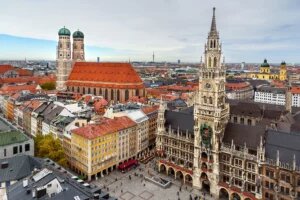
1. About International Arbitration Law in Munich, Germany
Munich is a major commercial hub within Germany and Europe, with many cross-border disputes settled through arbitration. The German framework supports arbitration as a preferred method for international business disputes, especially in technology, manufacturing, finance and life sciences sectors common in Munich and Bavaria. The seat of arbitration and the governing law shape how awards are issued and enforced in Germany and abroad.
In Germany, arbitration awards are governed by the German Code of Civil Procedure (ZPO) and by international instruments such as the New York Convention on the Recognition and Enforcement of Arbitral Awards. The New York Convention plays a key role in ensuring that German arbitral awards can be recognized and enforced abroad, and foreign arbitral awards can be enforced in Germany. In practice, many Munich disputes use institutional rules from the German Institute of Arbitration (DIS) or international rule sets such as ICC or UNCITRAL, with English often used as the language of arbitration.
Munich courts support arbitration through court assistance for interim measures, emergency relief and the recognition or enforcement of awards. The Oberlandesgericht München (Higher Regional Court of Munich) is a central appellate body for arbitration related matters within Bavaria. Practical guidance in Munich often focuses on how to draft robust arbitration clauses, select a seat, and choose the appropriate institutional rules to match the dispute profile.
As of 2023, 169 states are contracting parties to the New York Convention, facilitating cross-border recognition and enforcement of arbitral awards worldwide. newyorkconvention.org
Key resources for understanding Germany's arbitration framework include UNCITRAL's guidance on model laws and the official rules published by arbitration institutions such as the German Institute for Arbitration. These sources help explain how German law interacts with international arbitration norms in the Munich context. UNCITRAL and DIS provide foundational information on law and practice that is relevant to Munich disputes.
2. Why You May Need a Lawyer
Arbitration in Munich involves specific procedural and jurisdictional nuances that benefit from qualified legal counsel. Below are concrete, Munich-relevant scenarios where you should seek an international arbitration lawyer.
- A Munich-based company signs a cross-border supply agreement with a manufacturer in Singapore and a dispute arises over delivery terms and payment. You need counsel to interpret the arbitration clause, confirm the seat and governing law, and prepare a timely response to any arbitration notice.
- A German biotech firm in Munich enters into a licence agreement with a U.S. partner and an arbitration clause selects Munich as the seat. You require legal counsel to draft robust clause language, manage language expectations, and ensure emergency relief provisions are enforceable under German law.
- A construction project in Bavaria involves a dispute with a UAE contractor, with an arbitration clause under DIS Rules. You need counsel to coordinate institutional rules, appoint arbitrators if needed, and handle interim measures before the final award.
- An international arbitration is started against a Munich-based subsidiary, and the opposing party seeks emergency relief. You will need a lawyer to obtain temporary measures from the German courts and to address any cross-border enforceability issues.
- A dispute requires recognition or enforcement of a foreign arbitral award in Munich or another German court. You need a lawyer skilled in New York Convention procedures and German enforcement practice to avoid delays.
- Your company wants to challenge or oppose an arbitral award by filing a set‑aside or challenge in a local court. You require experienced counsel to navigate German grounds for setting aside and appeal procedures.
3. Local Laws Overview
German arbitration practice relies on a combination of national law, international treaty law and institutional rules. The following laws and instruments are central to international arbitration in Munich and throughout Germany.
- Zivilprozessordnung (ZPO) - Part V Arbitration: This part of Germany's Code of Civil Procedure governs arbitration agreements, the arbitration process and recognition or enforcement of arbitral awards within Germany. It forms the domestic framework that supports international arbitration seated in Germany, including Munich.
- New York Convention on the Recognition and Enforcement of Foreign Arbitral Awards (1958): Germany is a contracting state, which facilitates enforcement of both domestic and foreign arbitral awards in Germany and abroad. The Convention provides the basis for cross-border recognition and enforcement of arbitration awards. New York Convention information is a useful reference for understanding the global framework.
- UNCITRAL Model Law on International Commercial Arbitration: Germany has aligned its arbitration framework with the UNCITRAL Model Law through amendments to the ZPO, creating a harmonized approach to international arbitrations seated in Germany. For a concise overview, see UNCITRAL's guidance on the Model Law. UNCITRAL
- DIS Rules (Deutsches Institut fur Schiedsgerichtsbarkeit): Institutional arbitration rules widely used in Germany, including Munich, with provisions for emergency arbitrator relief, appointment procedures, and multi‑jurisdictional arbitrations. See DIS for the current Rules and practice notes. DIS
Recent developments in practice include the increased use of English-language arbitration in Germany, broader acceptance of emergency arbitration within institutional rules, and a streamlined approach to interim measures. For Munich practitioners, understanding the interaction between ZPO, the New York Convention, and DIS Rules is essential for efficient dispute resolution.
Germany has embraced international arbitration within a robust, treaty-based framework that supports cross-border enforcement of awards.
UNCITRAL
4. Frequently Asked Questions
What is international arbitration in Munich and how is it different from court litigation?
International arbitration is a private dispute resolution process selected by the parties, with decisions made by arbitrators. It is generally more flexible and faster for cross-border disputes and offers confidentiality compared with court litigation.
How do I know if I should choose Munich as the seat for arbitration?
The seat in Munich invokes German law for arbitral procedure, and the Munich courts provide specific support for interim measures and recognition of awards. If your witnesses or assets are in Germany, Munich is often a practical seat.
What is a typical arbitration clause for international disputes in Germany?
A typical clause specifies the seat, governing law, language, and the chosen arbitration institution or rules. Munich users commonly select DIS Rules or ICC Rules and designate the seat as Munich to obtain German court support.
How long does an international arbitration usually take in Germany?
Average durations vary by complexity and rules used, but institutional arbitrations often span 12 to 24 months from filing to final award, with possible extensions for appeals or complex fact patterns.
Do I need to be represented by a local lawyer in Munich?
Yes. Local lawyers understand Bavarian court practices, language considerations, and the interplay between national and international rules. They can coordinate with foreign counsel to manage cross-border issues.
How much does arbitration cost in Munich for a typical cross-border case?
Costs include arbitrator fees, institution charges, and legal fees. A mid-size international case may range from tens to hundreds of thousands of euros, depending on complexity and duration.
What is the difference between institutional and ad hoc arbitration in Munich?
Institutional arbitration uses a rules-based framework set by an institution like DIS, including administration and arbitrator selection. Ad hoc arbitration relies on the parties' own rules and agreement for appointment and process management.
Can I obtain emergency relief before the arbitral award is issued in Munich?
Yes. German courts can grant interim measures, and many institutions offer emergency arbitrator provisions to enable swift relief while the dispute is pending.
What documents are needed to start an arbitration in Munich?
Key documents include the arbitration clause, the statement of claim, contracts, evidence supporting the claim, and an outline of requested relief. A lawyer will tailor the filing to the chosen rules and seat.
How long does enforcement of an arbitral award take in Germany?
Enforcement typically takes months and depends on court schedules and potential set‑aside actions. The New York Convention framework helps streamline cross-border enforcement across contracting states.
Is Munich a good seat for disputes involving English-language arbitration?
Yes. English is widely used in international arbitrations seated in Germany, and Munich law firms regularly handle English-language arbitration matters alongside German proceedings.
5. Additional Resources
- DIS - Deutsches Institut fur Schiedsgerichtsbarkeit: Administers and provides rules for institutional arbitration in Germany, including emergency relief provisions and arbitrator appointments. DIS
- UNCITRAL: Provides international guidance and the Model Law framework used in Germany for international arbitration. UNCITRAL
- New York Convention on the Recognition and Enforcement of Arbitral Awards: Official information on cross-border recognition and enforcement of arbitral awards. New York Convention
6. Next Steps
- Clarify the dispute type and decide if arbitration is the preferred path for you, given Munich's cross-border business environment.
- Identify potential arbitration rules and seats that align with your needs (for example DIS Rules with Munich as seat or ICC Rules with a Munich connection).
- Engage a Munich-based international arbitration lawyer or a law firm with experience in cross-border disputes and strong coordination with international counsel.
- Prepare a draft arbitration clause and review existing clauses for enforceability, language, seat, governing law and emergency relief provisions.
- Collect and organize all contract documents, communications, and evidence; translate critical documents if required; submit a robust arbitration claim or response within the deadline set by the rules.
- Arrange an initial consultation to discuss strategy, potential arbitrator profiles, and cost estimates; request a written engagement letter and fee proposal.
- Monitor the timetable, ensure timely submissions, and coordinate with counsel on interim measures, discovery, and settlements when appropriate.
Lawzana helps you find the best lawyers and law firms in Munich through a curated and pre-screened list of qualified legal professionals. Our platform offers rankings and detailed profiles of attorneys and law firms, allowing you to compare based on practice areas, including International Arbitration, experience, and client feedback.
Each profile includes a description of the firm's areas of practice, client reviews, team members and partners, year of establishment, spoken languages, office locations, contact information, social media presence, and any published articles or resources. Most firms on our platform speak English and are experienced in both local and international legal matters.
Get a quote from top-rated law firms in Munich, Germany — quickly, securely, and without unnecessary hassle.
Disclaimer:
The information provided on this page is for general informational purposes only and does not constitute legal advice. While we strive to ensure the accuracy and relevance of the content, legal information may change over time, and interpretations of the law can vary. You should always consult with a qualified legal professional for advice specific to your situation.
We disclaim all liability for actions taken or not taken based on the content of this page. If you believe any information is incorrect or outdated, please contact us, and we will review and update it where appropriate.