


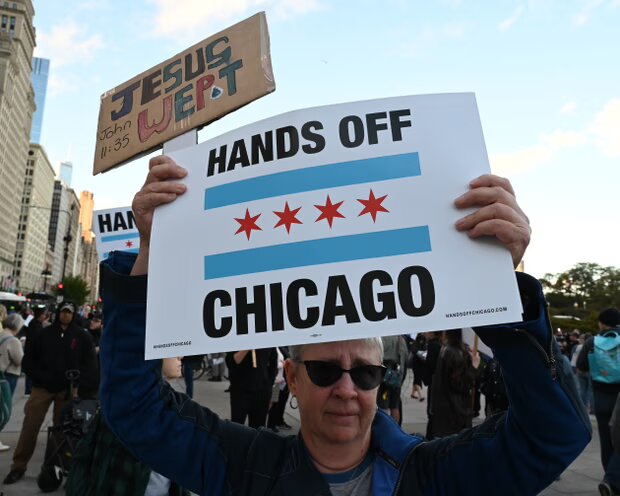
In a significant constitutional standoff between federal authority and state sovereignty, the United States Supreme Court delivered a decisive 6-3 ruling in Trump v. Illinois, denying the administration's request to federalize the Illinois National Guard. The conflict began in October 2025, when President Trump invoked 10 U.S.C. §12406 to seize control of state militia forces to police civil unrest and protect an ICE facility in Chicago. The Governor of Illinois successfully sought a restraining order in lower courts, prompting the administration to appeal to the Supreme Court.
The legal core of the case rested on the statutory interpretation of the word "unable." The relevant statute allows the President to federalize the Guard if he is "unable with the regular forces to execute the laws of the United States." The administration argued a recursive legal theory: because the Posse Comitatus Act generally bans using the regular Army for domestic law enforcement, the President was legally "unable" to use them, thus satisfying the condition to commandeer the National Guard.
The Supreme Court majority rejected this interpretation. They ruled that "unable" refers to a factual capacity gap—such as being overwhelmed by force—rather than a legal restriction like the Posse Comitatus Act. To rule otherwise would create a loophole allowing the executive branch to bypass state governors whenever domestic policing restrictions apply. Furthermore, the Court noted the administration failed to prove that civilian federal law enforcement (like the FBI or Marshals) was insufficient to handle the situation.
The decision featured a notable fracture in conservative legal thought. Justice Brett Kavanaugh concurred with the majority on the statutory reading but wrote separately to emphasize the President's inherent "protective power" under Article II, suggesting regular troops could have been used to protect federal property without federalizing the Guard. Conversely, Justices Alito and Thomas dissented, arguing that the judiciary should not second-guess the President’s national security assessments. The ruling is a victory for state federalism but leaves open questions regarding the direct use of the military for "protective" missions.
Source: The Guardian