Employment Rights for Expat Tech Workers Terminated in Ireland
Key Takeaways
A sudden job termination is highly stressful, particularly when your right to reside in a country is tied to your employment. Understanding your legal leverage in Ireland can help you secure a fair exit and protect your visa status.
- You generally need 12 months of continuous service to bring a standard unfair dismissal claim, but exceptions exist for discriminatory terminations.
- "At-will" employment does not exist in Ireland; employers must follow fair, documented procedures to terminate a contract.
- Critical Skills Employment Permit holders have up to six months to find a new job after a termination.
- You have a strict six-month deadline from the date of dismissal to file a complaint with the Workplace Relations Commission.
- Do not sign a settlement agreement or severance offer without having a legal professional review the restrictive covenants and non-compete clauses.
Understanding Unfair Dismissal Laws in Ireland
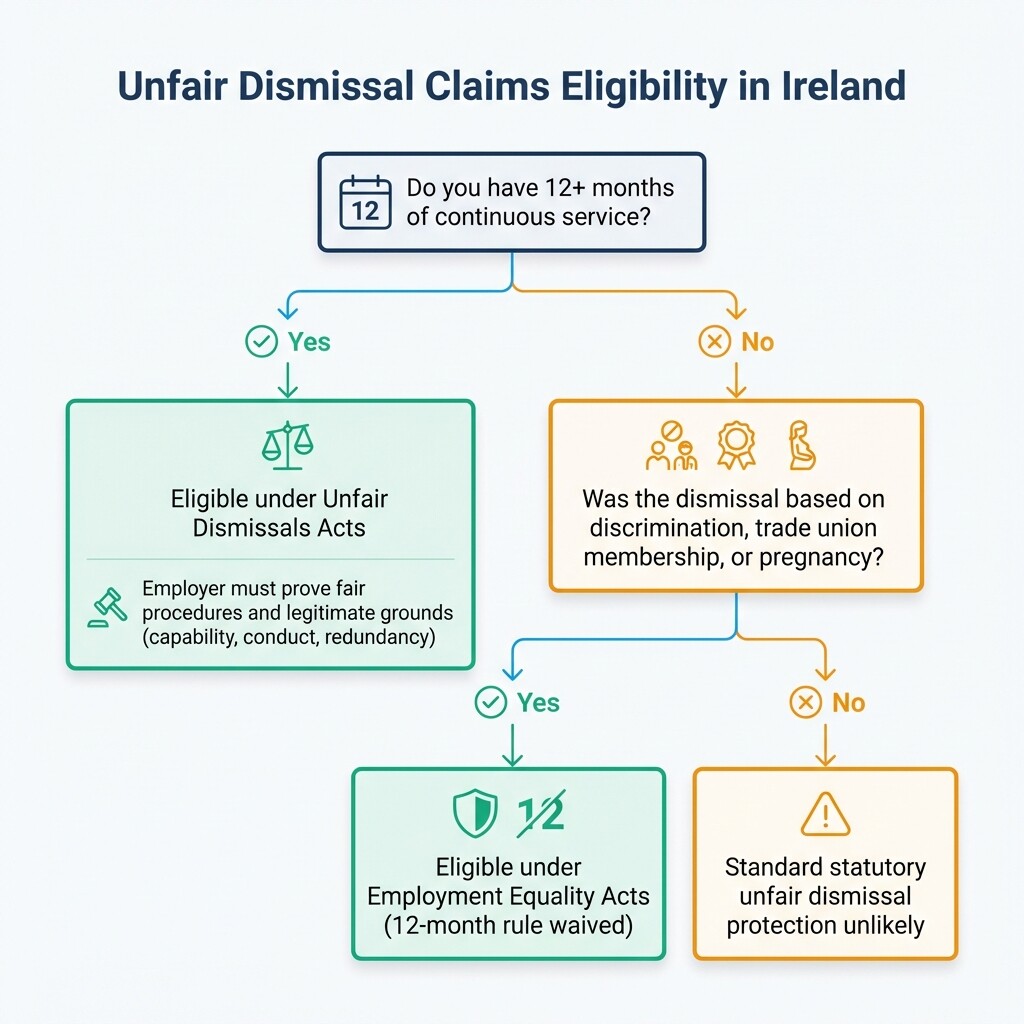
Irish law protects employees from unfair dismissal, generally requiring an employer to have substantial grounds and follow fair procedures before terminating a contract. However, you typically need at least 12 months of continuous service to claim unfair dismissal under the Unfair Dismissals Acts.
If you have passed your probationary period and reached the 12-month mark, your employer cannot fire you simply because they feel like it. Legitimate grounds for dismissal include lack of capability, poor conduct, or genuine redundancy. Even when grounds exist, the employer must adhere to principles of natural justice. This means providing written warnings, offering you the chance to improve, and allowing you representation at disciplinary meetings.
If you have less than 12 months of service, you are still protected against dismissal that stems from discrimination, trade union membership, or pregnancy. In these cases, the one-year service requirement is waived, and you can challenge the termination under the Employment Equality Acts. You can verify the exact criteria for statutory protections directly on the official Workplace Relations Commission website.
How Job Termination Affects Critical Skills Employment Permits
Losing your job does not mean immediate deportation, but it does trigger a strict timeline for securing your immigration status. If you hold a Critical Skills Employment Permit, you have up to six months to find new employment before your permission to reside in Ireland expires.
When your employment ends, you and your employer must notify the Department of Enterprise, Trade and Employment within four weeks. Once notified, the Department typically grants a concession period. If you were made redundant, this period is six months. If you were dismissed for other reasons, it is usually up to six months. During this window, you are expected to find an eligible job and apply for a new employment permit.
If you secure a new job offer within this grace period, your new employer must apply for a new permit on your behalf. You cannot legally start working for the new company until the new permit is issued. If you fail to find sponsored employment before the concession period ends, you will lose your Stamp 1 immigration permission and may be required to leave the state.
Pre-Litigation Steps for Resolving Disputes with Multinational Employers
Before escalating a dispute to formal litigation or the Workplace Relations Commission, employees should exhaust internal grievance procedures and attempt mediation. Engaging directly with human resources or legal departments can often yield a private, mutually agreeable settlement.
Multinational tech companies in Ireland prefer to avoid public tribunals. You can leverage this by taking clear, documented steps to resolve the issue privately.
- Request Written Reasons: Ask your employer to provide the exact reasons for your dismissal in writing. This locks in their narrative and reveals if they skipped mandatory disciplinary procedures.
- Appeal Internally: Most internal company policies allow you to appeal a dismissal. File a formal appeal letter detailing where the company failed to follow fair procedures.
- Propose a Without Prejudice Meeting: Invite the employer to an off-the-record conversation to discuss a mutual separation. This allows both parties to negotiate a financial exit package without admitting legal fault.
- Engage in Mediation: If direct negotiation stalls, suggest independent mediation. The Workplace Relations Commission offers a free early resolution service that can help both sides reach a settlement before a formal hearing.
Expat Tech Worker Severance Negotiation Checklist
Negotiating a severance package requires preparation, especially when balancing visa requirements and financial security. Use this checklist to organize your position before signing a settlement agreement.
- Calculate Statutory Entitlements: Confirm you have been paid for all worked hours, notice periods, and accrued but unused annual leave.
- Evaluate Ex-Gratia Payments: Assess whether the offered severance payment goes above the legal minimum. Redundancy requires two weeks of pay per year of service plus one bonus week, but tech companies often offer much higher ex-gratia sums.
- Review Equity and RSUs: Check your original stock agreement to see how termination affects your vesting schedule. Request accelerated vesting as part of your settlement.
- Negotiate a Visa Buffer: Ask your employer to keep you on the payroll for your notice period instead of paying it in lieu. This extends your official employment end date, giving you more time to find a new visa sponsor.
- Secure a Factual Reference: Ensure the agreement includes a clause guaranteeing a positive or neutral statement of employment to aid your future job search.
Negotiating Severance Packages and Non-Compete Clauses
Employers often offer a severance package in exchange for signing a waiver of your right to sue, known as a compromise or settlement agreement. When negotiating, you must closely review any non-compete clauses to ensure they do not illegally restrict your ability to find a new sponsored role.
Multinational tech companies routinely insert restrictive covenants into employment contracts and settlement agreements. These clauses might attempt to block you from working for a competitor or soliciting former clients. Under Irish law, a non-compete clause is only enforceable if it protects a legitimate business interest and is reasonable in terms of duration and geographic scope. A blanket ban on working in the tech industry globally is unenforceable.
If your employer insists on a strict non-compete period, you can negotiate "garden leave." This arrangement requires the company to keep paying your regular salary during the restricted period while you remain at home. Alternatively, you can use the non-compete clause as leverage to demand a higher ex-gratia severance payment, arguing that the restriction hinders your ability to secure new visa sponsorship.
What is the Timeline for Filing a WRC Complaint?
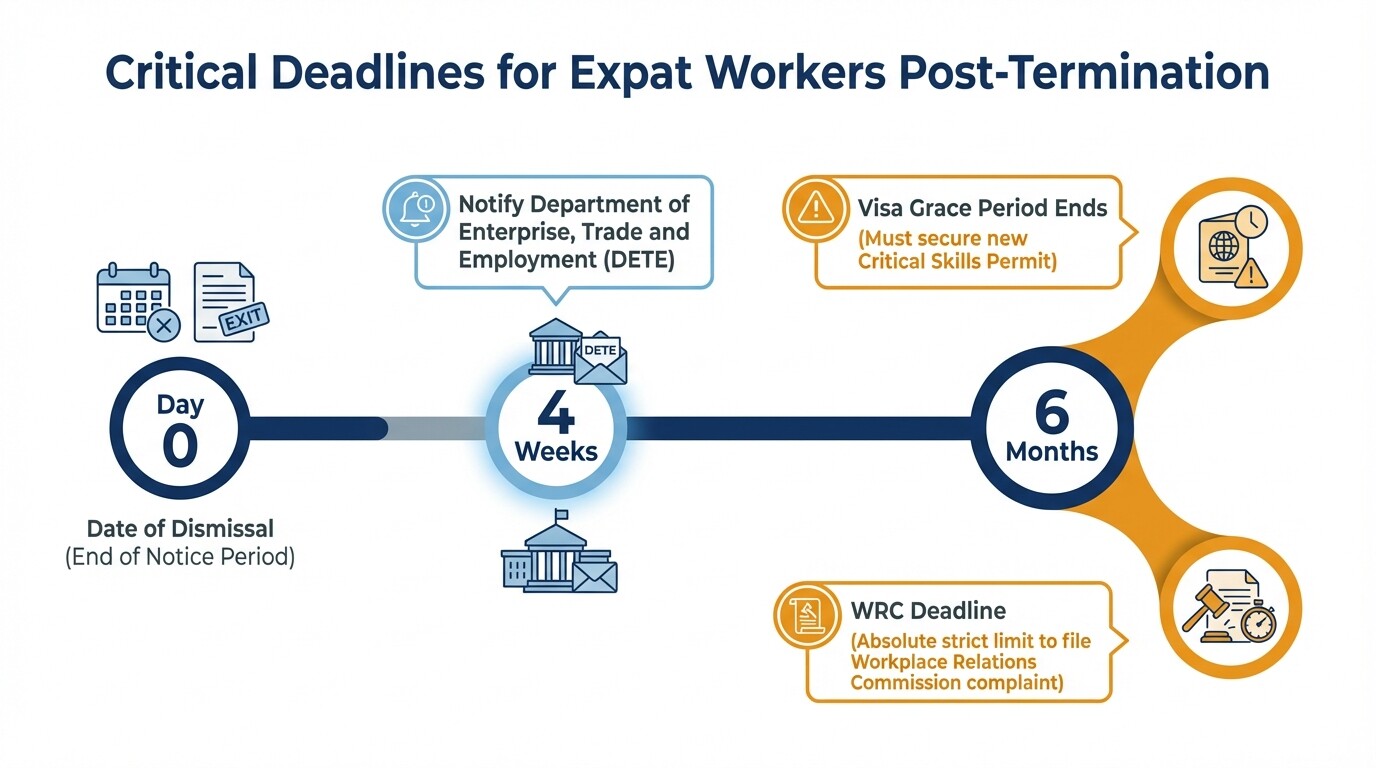
You must file a complaint with the Workplace Relations Commission within six months of your exact date of dismissal. While this deadline can occasionally be extended to 12 months in exceptional circumstances, you should always aim for the strict six-month window.
The date of dismissal is legally defined as the date your notice period expires, regardless of whether you were asked to work that notice or were paid in lieu. Missing the six-month deadline by even one day will result in your case being dismissed on jurisdictional grounds. Because multinational HR departments can be slow to respond to internal appeals, you should not wait for internal processes to conclude if the deadline is approaching. You can file the complaint online using the official WRC e-Complaint form to secure your place in the timeline.
Common Misconceptions About Tech Terminations in Ireland
Expat workers frequently misunderstand how Irish employment protections interact with their immigration status and corporate policies. Knowing the reality of these laws prevents costly missteps during a vulnerable time.
- US-style "At-Will" employment applies: Many tech workers assume their US-headquartered employer can fire them without cause. In Ireland, strict employment laws supersede foreign corporate policies.
- A redundancy means you can be easily replaced: Genuine redundancy means the specific role has ceased to exist. If a company claims your role is redundant but immediately hires someone else to do the exact same job, it may be an unfair dismissal.
- The employer can cancel your visa: Employers do not issue or cancel visas in Ireland. Only the Department of Enterprise, Trade and Employment has the authority to revoke an employment permit.
Frequently Asked Questions
Can I stay in Ireland if I am fired before my permit expires?
Yes. You generally have a concession period of up to six months to remain in the country and find a new employer who will sponsor a new Critical Skills Employment Permit.
Am I entitled to a mandatory severance payment?
You are only entitled to a mandatory statutory redundancy payment if your role is eliminated and you have at least 104 weeks of continuous service. Dismissals for performance or conduct do not mandate severance, though employers may offer it in a settlement.
Are non-compete clauses enforceable in Ireland?
Yes, but only if they are drafted narrowly to protect legitimate business interests. They must be reasonable in time duration, geographic area, and scope of restricted activities.
Can I claim unfair dismissal if I have worked there for 10 months?
Generally, no. You need 12 months of continuous service for a standard unfair dismissal claim. However, if the dismissal was based on discriminatory grounds like race, gender, or pregnancy, the 12-month rule does not apply.
When to Hire an Employment Lawyer
You should consult an employment lawyer immediately if you are asked to sign a settlement agreement, suspect discrimination, or face complex visa implications following a termination. Legal counsel ensures you do not inadvertently sign away your statutory rights or immigration security.
Because settlement agreements require you to waive your right to pursue legal action, Irish law highly recommends that employees receive independent legal advice before signing. In most cases, the employer will cover a set contribution toward your legal fees to have the document reviewed. Partnering with experienced employment lawyers in Ireland gives you the exact tactical advice needed to maximize your severance and safeguard your expat status.
Next Steps
Taking immediate, organized action protects your financial and legal standing after a termination. Prioritize securing your immigration status and documenting the circumstances of your dismissal.
- Do not sign any severance offers or waivers immediately. Acknowledge receipt and state you will review the documents with legal counsel.
- Ensure the Department of Enterprise, Trade and Employment is notified of the termination within four weeks to activate your grace period.
- Gather and download your employment contract, recent performance reviews, and any written communications regarding your dismissal.
- Update your resume and begin the search for a new employer eligible to sponsor your visa.