- Malaysia's Strategic Trade Act (STA) 2010 heavily regulates the export, transshipment, and brokering of dual-use goods, including electronics, software, and manufacturing equipment.
- Multinational manufacturers must classify their inventory using the Strategic Trade Secretariat (STS) categories and apply for specific, multiple, or bulk permits via the Ministry of Investment, Trade and Industry (MITI).
- Implementing an Internal Compliance Program (ICP) is legally required for manufacturers seeking to streamline operations through multiple or bulk export permits.
- Non-compliance carries severe corporate liability, with financial penalties reaching up to RM 30 million and potential imprisonment for corporate directors.
The Strategic Trade Act 2010 Explained
The Strategic Trade Act 2010 is Malaysia's primary legislation governing the export, transshipment, transit, and brokering of strategic items and dual-use technology. Multinational manufacturers must comply with this framework to legally export advanced technologies and avoid severe operational and legal disruptions.
As a global manufacturing and semiconductor hub, Malaysia enforces the STA to fulfill its international obligations under United Nations Security Council Resolution 1540, preventing the proliferation of weapons of mass destruction (WMD). For multinational corporations, this means that exporting seemingly standard commercial items-such as microchips, sensors, and encryption software-may trigger intense regulatory scrutiny. Foreign companies operating within Malaysia must adhere strictly to local export control rules regardless of the compliance protocols they follow in their home countries.
Identifying Controlled Dual-Use Items and Software
Multinational companies must classify their products against the Malaysian Strategic Trade (Strategic Items) Order to determine if they are controlled dual-use goods. This requires a precise technical assessment of components, software, and manufacturing equipment that possess both civilian and military applications.
Malaysia classifies strategic items across 10 broad categories that closely mirror the European Union's dual-use export control list. When evaluating product lines, manufacturers must review the following key areas:
- Electronics and Computers: High-performance microprocessors, integrated circuits, and advanced computing equipment.
- Telecommunications and Information Security: Communication equipment and software containing strong cryptographic algorithms.
- Sensors and Lasers: Advanced optical sensors, radar systems, and commercial lasers used in manufacturing.
- Materials Processing: Specialized machine tools, testing equipment, and advanced materials used in aerospace or industrial applications.
If an item falls under these technical parameters, the manufacturer must obtain an export permit before the product leaves Malaysian borders.
Applying for Export Permits through MITI
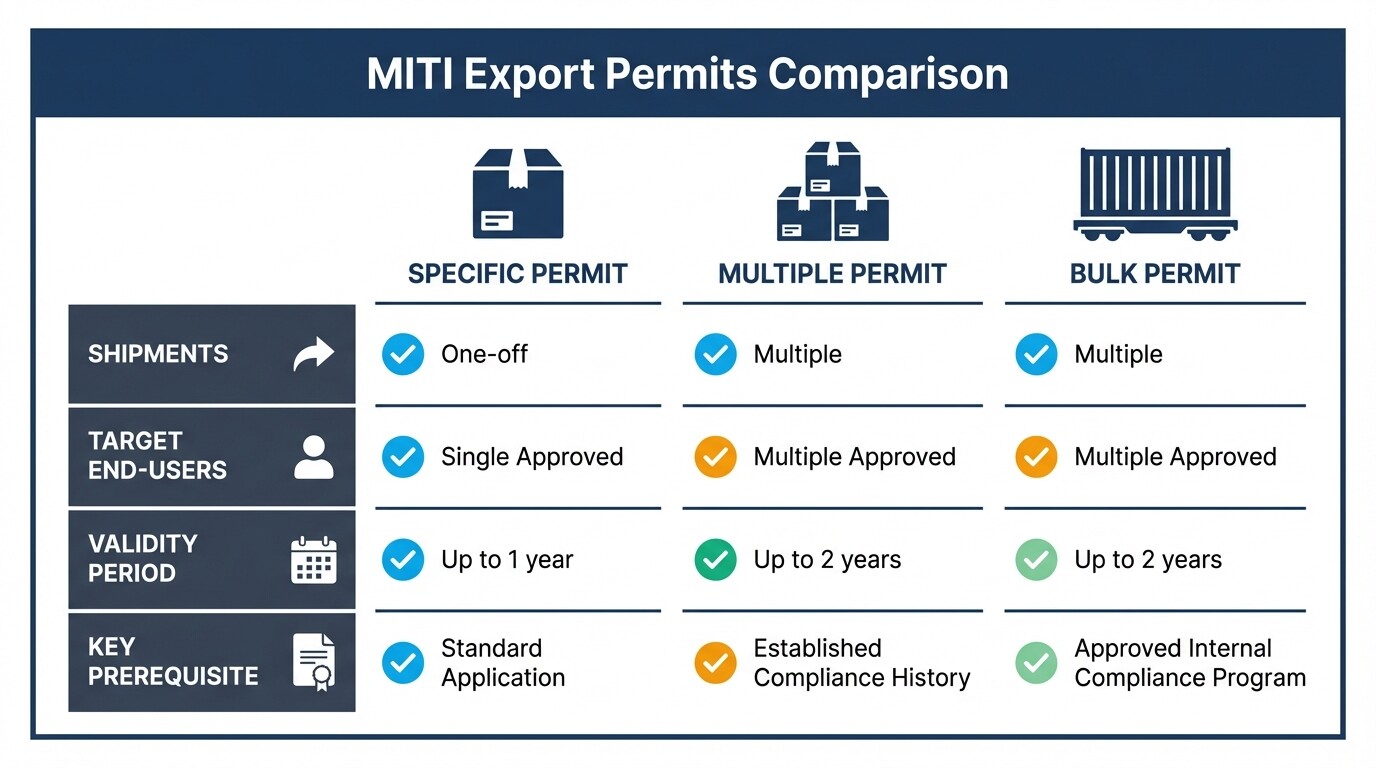
Manufacturers must submit permit applications electronically through the ePermit system managed by the Ministry of Investment, Trade and Industry (MITI). The specific type of permit required depends entirely on the company's shipping frequency and established internal compliance status.
To navigate the official MITI Strategic Trade Act framework, companies must choose the correct permit tier to maintain supply chain velocity:
- Specific Permit: Designed for single, one-off shipments to a single end-user. This permit is valid for up to one year and is ideal for companies that rarely export controlled items.
- Multiple Permit: Allows for multiple shipments of controlled items to a single recognized end-user. It is valid for up to two years but requires the exporter to have an established compliance history.
- Bulk Permit: Permits multiple shipments of controlled items to multiple approved end-users. Valid for up to two years, this is the most flexible option for high-volume multinational manufacturers, but it is only granted to companies with an approved Internal Compliance Program.
Securing Compliant End-User Statements
An End-User Statement (EUS) is a mandatory legal document signed by the overseas buyer guaranteeing that the exported dual-use items will not be used for illicit purposes. Manufacturers must obtain, verify, and submit this document before MITI will approve any export permit application.
The EUS acts as the primary safeguard against the diversion of sensitive technology. To be accepted by MITI, a valid End-User Statement must clearly document:
- The exact legal name, address, and corporate details of the final overseas buyer.
- A precise description of the items being exported, including quantities and technical specifications.
- A clear, specific declaration of the intended commercial end-use of the product.
- A binding pledge that the items will not be used in connection with chemical, biological, or nuclear weapons, nor re-exported without prior authorization.
Internal Compliance Program (ICP) Implementation Checklist
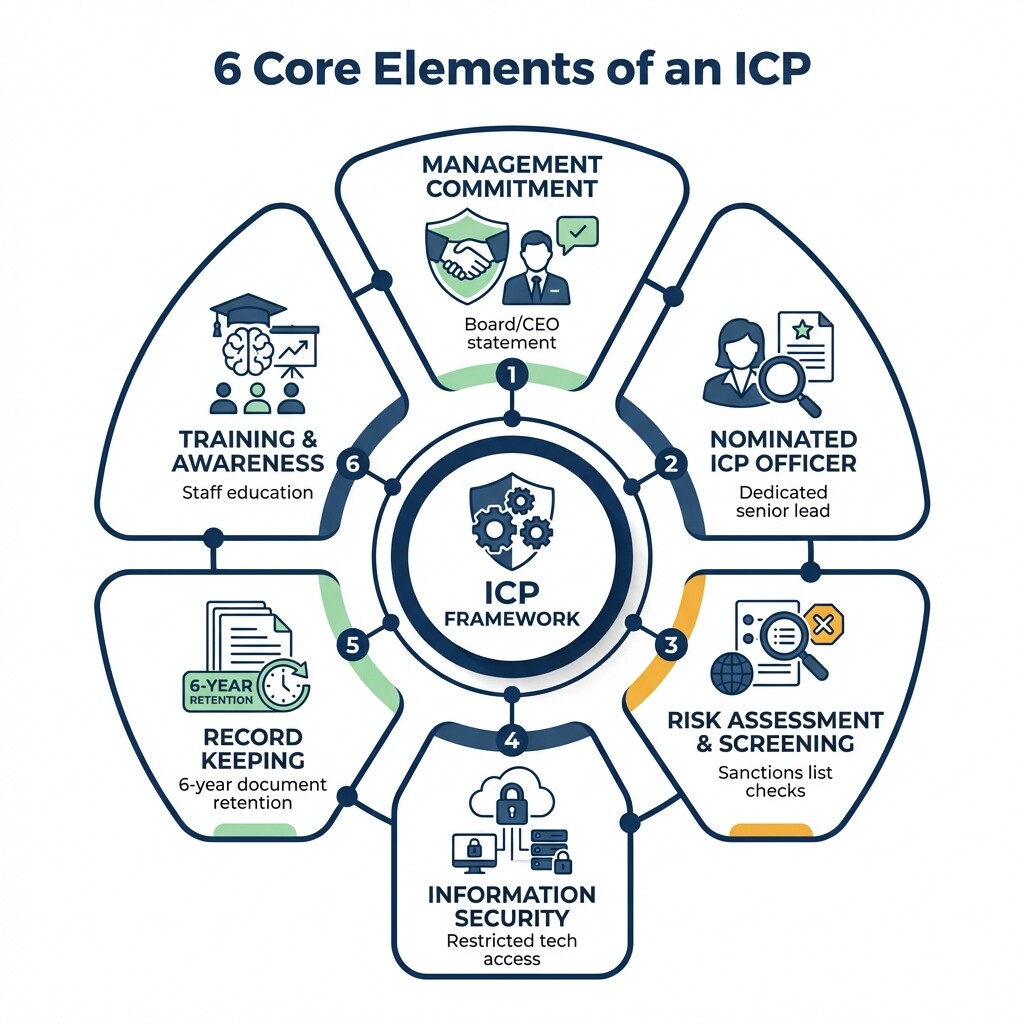
An Internal Compliance Program is a mandatory operational framework for companies seeking Multiple or Bulk export permits under the STA. Implementing an approved ICP demonstrates a company's commitment to preventing illegal exports through structured internal controls.
To successfully register an ICP with MITI's Strategic Trade Secretariat, multinational manufacturers must establish and document the following core elements:
- Management Commitment: A formal, written statement from the executive board or CEO emphasizing strict adherence to the STA.
- Nominated ICP Officer: The appointment of a dedicated, senior-level compliance officer responsible for overseeing export control decisions.
- Risk Assessment and Screening: Established procedures for screening all customers, end-users, and supply chain partners against international sanctions and restricted party lists.
- Information Security: Protocols limiting internal access to controlled technology, blueprints, and dual-use software to authorized personnel only.
- Record Keeping: A secure system to maintain all export documents, EUS forms, and shipping records for a minimum of six years as mandated by law.
- Training and Awareness: Regular, documented export control training sessions for logistics, sales, and engineering staff.
Corporate Liability and Penalties for Non-Compliance
Violating the Strategic Trade Act exposes multinational manufacturers to strict corporate liability, massive financial penalties, and potential criminal charges for company directors. Malaysian authorities actively enforce these rules, making robust compliance non-negotiable for foreign entities.
If a company exports controlled items without a permit, the penalties are uniquely severe. For a corporate body, fines typically begin at a minimum of RM 2 million and can escalate up to RM 30 million depending on the nature of the violation. Crucially, the STA imposes strict liability on corporate officers. Directors, managers, and the nominated ICP officer can face individual fines and imprisonment ranging from 5 years to life-or even the death penalty if intent to assist WMD proliferation is proven. An executive can only avoid liability by proving that the offense was committed without their knowledge and that they exercised all due diligence to prevent it.
Common Misconceptions About Malaysia's Export Controls
Many foreign manufacturers fundamentally misunderstand how Malaysia applies its strategic trade regulations, leading to dangerous compliance gaps. Correcting these assumptions is vital for smooth supply chain operations and risk mitigation.
- Only weapons manufacturers are affected: Many tech companies assume "strategic trade" only applies to arms dealers. In reality, commercial items like standard telecommunications routers, industrial chemicals, and commercial-grade encryption software are heavily regulated dual-use items.
- Foreign compliance guarantees local compliance: Multinationals often rely on their US or EU export control classifications and assume they are covered. While the lists are similar, Malaysian law requires an independent STA classification and localized permits approved directly by MITI.
Frequently Asked Questions
How long does it take to get a MITI export permit?
Standard specific permits typically take five working days to process after a complete application is submitted via the ePermit system. Bulk and multiple permits take considerably longer, often requiring weeks of processing, as they involve deep audits of the company's Internal Compliance Program.
How long must we keep export control records under the STA?
Multinational manufacturers must securely retain all export documents, end-user statements, and shipping records for a minimum of six years. These records must be readily available for unannounced audits by the Strategic Trade Secretariat or Malaysian Customs.
Does the STA apply to software and technology transfers?
Yes, the Strategic Trade Act covers intangible technology transfers, including emails, cloud server access, and software downloads containing controlled data. Transmitting restricted technical data to a server or employee outside of Malaysia requires a valid export permit.
When to Hire a Lawyer
Engaging a legal professional is critical when classifying complex dual-use items, setting up an Internal Compliance Program, or responding to a regulatory audit. Specialized trade counsel ensures your compliance framework protects both the corporation and its executives from severe legal exposure.
You should consult Sanctions & Export Controls Lawyers in Malaysia if your company is expanding its manufacturing footprint, introducing new product lines that require technical classification, or if you discover a historical export violation that requires voluntary disclosure to MITI. Legal experts will help structure your ICP to satisfy local regulators while aligning with your global corporate policies.
Next Steps
Taking immediate action to evaluate your export control posture can prevent supply chain bottlenecks and shield your executive team from legal liability. Begin by auditing your current product lines against Malaysia's strategic items list to identify any compliance gaps.
If you manufacture potentially controlled items, immediately halt undocumented exports and designate a senior manager to act as your localized ICP Officer. Your next priority should be establishing an End-User Statement protocol with your overseas buyers and initiating discussions with legal counsel to formally draft your Internal Compliance Program for MITI submission.