


- Rental bonds must be legally lodged with Tenancy Services within 23 working days of payment, not held in the landlord's personal account.
- Thoroughly documented entry and exit property condition reports are your absolute best defense against unfair bond deductions.
- Expats cannot unilaterally break a fixed-term lease due to a visa change or job relocation; you must negotiate an assignment or mutual termination.
- The Tenancy Tribunal offers a low-cost, accessible dispute resolution process that relies heavily on mediation before formal hearings.
- Withholding rent during a dispute is illegal in New Zealand and can result in your eviction.
Documenting Property Condition Reports to Protect Your Bond
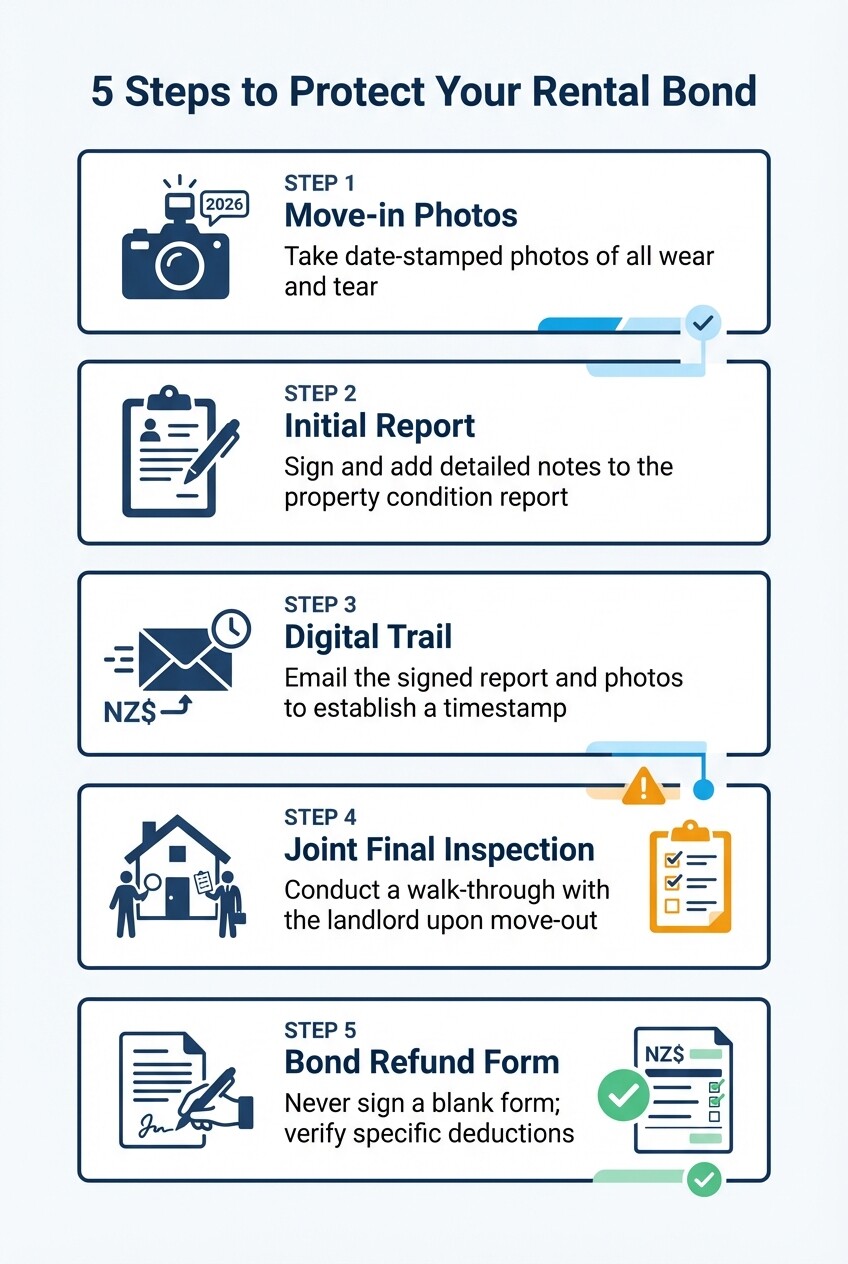
Securing your rental bond refund starts the day you move in by meticulously documenting the property condition. A detailed initial inspection report prevents property managers from claiming pre-existing damage is your fault when you eventually move out.
To create an ironclad pre-litigation defense against bond disputes, follow this specific documentation checklist:
- Take date-stamped photographs: Capture every room, focusing heavily on existing wear and tear, marks on walls, carpet stains, and the inside of ovens or appliances.
- Complete the initial report: Fill out and sign the standard property condition report provided by the landlord. Add your own detailed notes to any sections that underestimate existing damage before signing.
- Establish a digital paper trail: Email a copy of the finalized, signed report along with your photos directly to the property manager so there is a timestamped record of receipt.
- Conduct a joint final inspection: When moving out, request that the landlord or property manager walk through the property with you, comparing the current state directly to your initial report.
- Sign a mutually agreed bond refund form: Never sign a blank bond refund form. Ensure the specific deduction amounts (if any) are explicitly listed before adding your signature.
Alternative Pre-Litigation Negotiation Tactics
Resolving conflicts directly with your property manager before filing a formal legal claim saves you time, stress, and money. Effective negotiation relies on building a written evidence trail, understanding your basic rights under the Residential Tenancies Act 1986, and proposing reasonable compromises rather than escalating tensions.
Instead of threatening immediate legal action, use these pre-litigation strategies to resolve disputes with your landlord:
- Keep all communication in writing: Shift all conversations from phone calls to email. If you must have a phone conversation, immediately send a follow-up email summarizing what was discussed and agreed upon.
- Issue a 14-Day Notice to Remedy: If the landlord breaches the tenancy agreement, such as failing to fix a leaking roof, issue a formal 14-day notice to remedy. This official document gives them a legal deadline to fix the problem before you can take them to the Tribunal.
- Propose a specific settlement: Property managers prefer fast resolutions. Present a clear, numerical compromise. For example, if disputing a cleaning fee, offer to pay a specific percentage rather than engaging in open-ended arguments.
- Use the Tenancy Services framework: Frame your arguments using the official language found on the Tenancy Services website, which signals to the property manager that you are educated on New Zealand tenancy law.
Navigating the Tenancy Tribunal Dispute Resolution Process
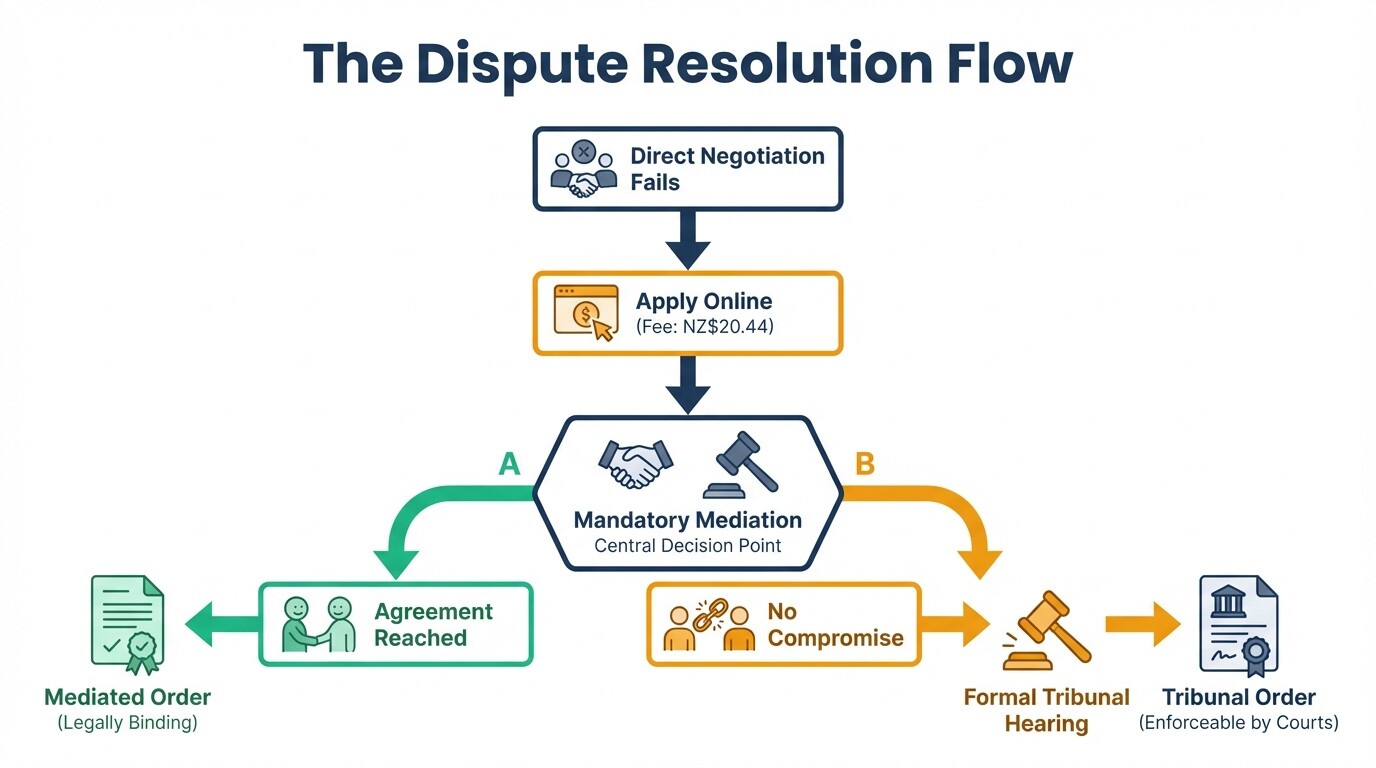
The Tenancy Tribunal is a specialized New Zealand court designed to handle unresolved rental disputes involving claims up to $100,000 NZD. The process is highly structured, beginning with mandatory mediation before escalating to a formal hearing before an adjudicator.
If direct negotiations fail, you will need to apply to the Tribunal online through the Ministry of Business, Innovation and Employment. The application fee is $20.44 NZD. Once filed, you will be scheduled for dispute resolution.
| Feature | Mediation Phase | Formal Tribunal Hearing |
|---|---|---|
| Format | Telephone call or informal meeting | Formal hearing room or video conference |
| Decision Maker | The tenant and landlord must agree | An adjudicator issues a binding Order |
| Representation | Lawyers are typically not involved | Lawyers allowed only under special circumstances |
| Outcome | Mediated Order (legally binding) | Tribunal Order (enforceable by courts) |
During mediation, an independent mediator helps both parties talk through the problem and find a mutual solution. If you reach an agreement, it becomes a legally binding Mediated Order. If the landlord is unreasonable or refuses to compromise, the mediator will close the session and your case will automatically proceed to a formal Tenancy Tribunal hearing. For official details on lodging an application, refer to the Tenancy Services Tribunal guide.
Early Lease Termination Rights for Expats Relocating
Moving abroad for a new job or dealing with an expiring visa does not legally break a fixed-term lease in New Zealand. To avoid paying rent until the end of your contract, you must negotiate an early exit with the landlord or legally transfer the lease to a suitable replacement tenant.
Because expats are highly vulnerable to sudden international relocations, understanding your exit options is critical:
- Assignment of Tenancy: You can request to assign your lease to a new tenant. By law, landlords must consider all assignment requests and cannot decline them unreasonably. You will be responsible for rent until the new tenant takes over, plus reasonable administrative costs.
- Mutual Agreement: You can negotiate directly with the landlord to surrender the tenancy early. This often involves paying a break fee, which covers the landlord's actual costs of advertising and vetting a new tenant.
- Severe Hardship: In extreme cases, you can apply to the Tenancy Tribunal to end the fixed term due to unforeseen severe hardship. However, simply getting a new job overseas is rarely accepted as severe hardship by adjudicators.
Understanding 2026 Updates to the Healthy Homes Standards
New Zealand's Healthy Homes Standards mandate minimum requirements for heating, insulation, ventilation, moisture ingress, and draught stopping to ensure tenants live in warm, dry conditions. By the upcoming final compliance phases extending into 2026, landlords face stricter enforcement and severe penalties if their private rentals do not meet these precise metrics.
If you are an expat renting an older home, you have the right to request the property's Healthy Homes compliance certificate. If the property is non-compliant, you can issue a 14-day Notice to Remedy. Landlords who fail to upgrade heating systems, install extractor fans, or block draughts to meet the final standard deadlines can be taken to the Tenancy Tribunal, where they may be ordered to pay exemplary damages directly to the tenant for the breach.
Common Misconceptions About Tenant Rights in New Zealand
Expat tenants frequently apply the rental laws of their home countries to New Zealand, which leads to critical legal mistakes. Understanding local regulations prevents accidental lease breaches and strengthens your position in any dispute.
- You can withhold rent if repairs are ignored: Withholding rent is entirely illegal in New Zealand, even if the landlord refuses to fix a broken heater or leaking roof. If you stop paying rent, the landlord can issue an eviction notice. You must continue paying rent while pursuing action through the Tenancy Tribunal.
- The landlord holds your bond money: Many expats believe the landlord keeps their deposit in a personal bank account. In New Zealand, landlords are legally required to lodge the bond with Tenancy Services within 23 working days. Tenancy Services holds the funds in trust until the end of the lease.
Frequently Asked Questions
Can a landlord charge a fee for breaking a lease early?
Yes, but the fee must reflect only the actual and reasonable costs incurred by the landlord. This typically includes the cost of advertising the property, conducting background checks on new applicants, and rent up until the exact day the new tenant assumes the lease.
How long does the landlord have to return my rental bond?
Once both the tenant and the landlord sign the official bond refund form and submit it to Tenancy Services, the refund is typically processed and deposited into your nominated bank account within three to five working days.
Can my property manager show up at the house unannounced?
No. Under New Zealand law, landlords and property managers must provide at least 48 hours written notice before a routine property inspection, and at least 24 hours notice before entering the property to complete necessary repairs.
When to Hire a Lawyer
While the Tenancy Tribunal is specifically designed to be accessible to everyday renters without legal representation, highly complex disputes may require professional legal counsel. You should consider hiring a legal professional if your dispute involves allegations of severe property damage exceeding your bond, retaliatory or unlawful eviction, or if you are dealing with a complex mixed-use commercial and residential lease. You can find experienced New Zealand dispute prevention lawyers to help you review your lease and evaluate your legal standing.
Next Steps
If you are currently facing a tenancy dispute, organize your evidence immediately. Gather your signed tenancy agreement, initial condition report, photographs, and all email correspondence with the property manager. Draft a polite but firm 14-day Notice to Remedy if the landlord is in breach of their duties, and prepare to apply to the Tenancy Tribunal for mediation if they fail to resolve the issue within the two-week timeframe.