Key Takeaways
Resolving commercial disputes in Nigeria requires a strategic approach that balances speed, cost, and asset protection. Foreign investors must structure their contracts defensively and understand the local judicial mechanisms to secure favorable outcomes.
- Arbitration through the Lagos Multi-Door Courthouse (LMDC) typically resolves disputes in 6 to 12 months, avoiding the 2 to 4 year timelines of traditional litigation.
- Nigeria is a signatory to the New York Convention, meaning foreign arbitral awards are recognized and enforceable in Nigerian courts.
- Failing to include a clear, internationally recognized dispute resolution clause in commercial contracts is a critical and common error for foreign businesses.
- Securing pre-emptive injunctions, such as freezing orders on corporate assets, is a vital first step before formally filing a commercial lawsuit.
Comparing Lagos Multi-Door Courthouse (LMDC) Arbitration and High Court Litigation
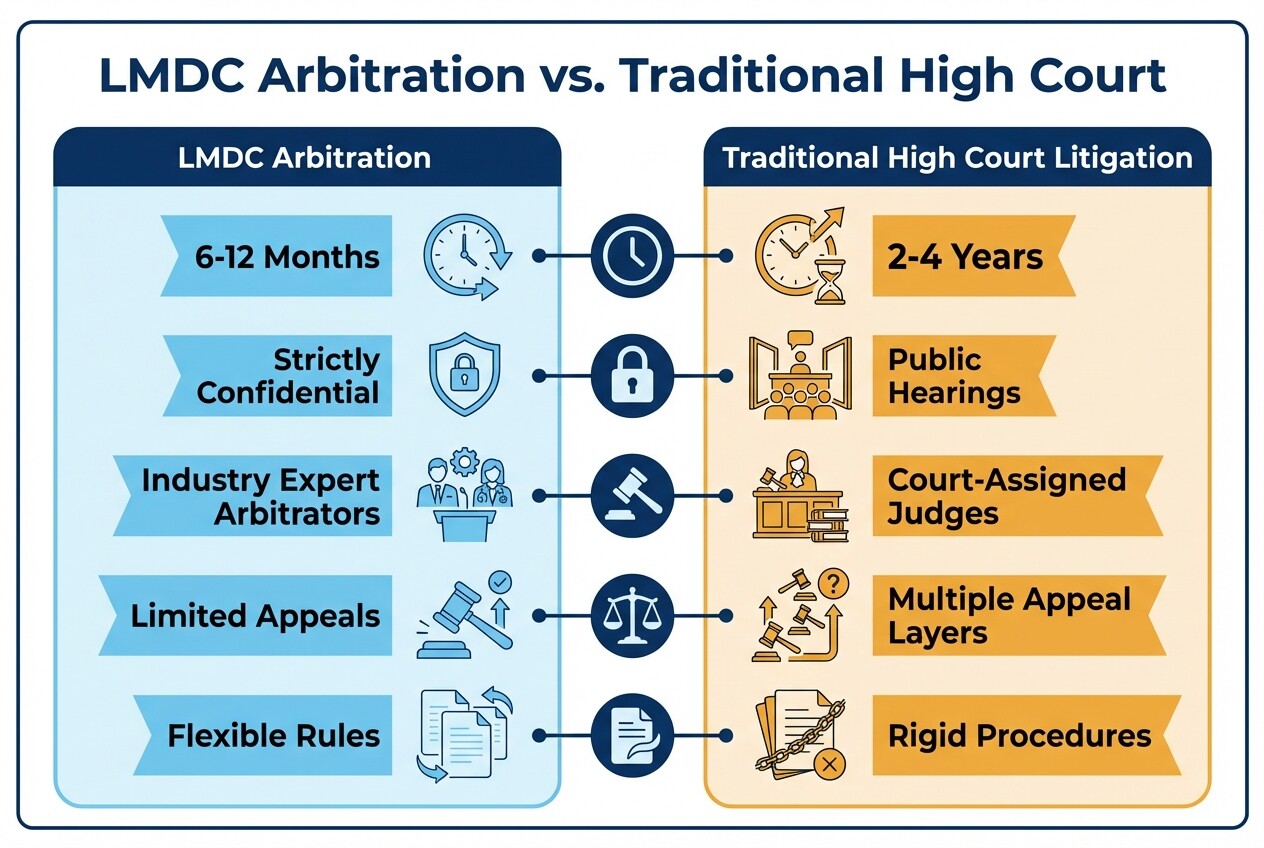
The Lagos Multi-Door Courthouse offers a faster, confidential alternative to the public and heavily backlogged traditional High Court system. Foreign investors typically prefer arbitration to maintain business privacy and secure significantly faster resolutions for contract breaches.
Arbitration proceedings are driven by the agreement of the parties, allowing for flexible scheduling and specialized arbitrators. Traditional litigation is bound by strict procedural rules and subject to frequent court adjournments, leading to extended delays.
| Feature | LMDC Arbitration | Traditional High Court Litigation |
|---|---|---|
| Typical Timeline | Concludes in 6 to 12 months. | Spans 2 to 4 years (excluding appeals). |
| Privacy | Completely confidential proceedings and awards. | Public hearings and publicly accessible court records. |
| Decision Maker | Arbitrators chosen by parties for industry expertise. | Judges assigned by the court system. |
| Appeal Process | Very limited grounds to overturn an arbitral award. | Multiple layers of appeal extending timelines by years. |
| Process Control | High flexibility in rules, language, and scheduling. | Rigid adherence to civil procedure rules. |
Sample Dispute Resolution Clause for Nigerian Contracts
A properly drafted dispute resolution clause dictates exactly how, where, and under what rules a conflict will be settled before it ever begins. Failing to include a clear, internationally recognized clause in initial contracts is one of the most severe mistakes foreign investors make when entering the Nigerian market.
Without this clause, parties are automatically forced into the local court system, exposing foreign investors to unpredictable delays. You can adapt the following standard arbitration clause for your Nigerian commercial agreements.
Standard Arbitration Clause Template: "Any dispute, controversy, or claim arising out of or relating to this contract, or the breach, termination, or invalidity thereof, shall be settled by arbitration in accordance with the rules of the Lagos Multi-Door Courthouse (LMDC). The arbitral tribunal shall consist of [insert number, typically one or three] arbitrator(s). The place of arbitration shall be Lagos, Nigeria. The language to be used in the arbitral proceedings shall be English. The resulting award shall be final and binding on both parties."
Step-by-Step Process for Filing a Lawsuit and Securing Corporate Assets
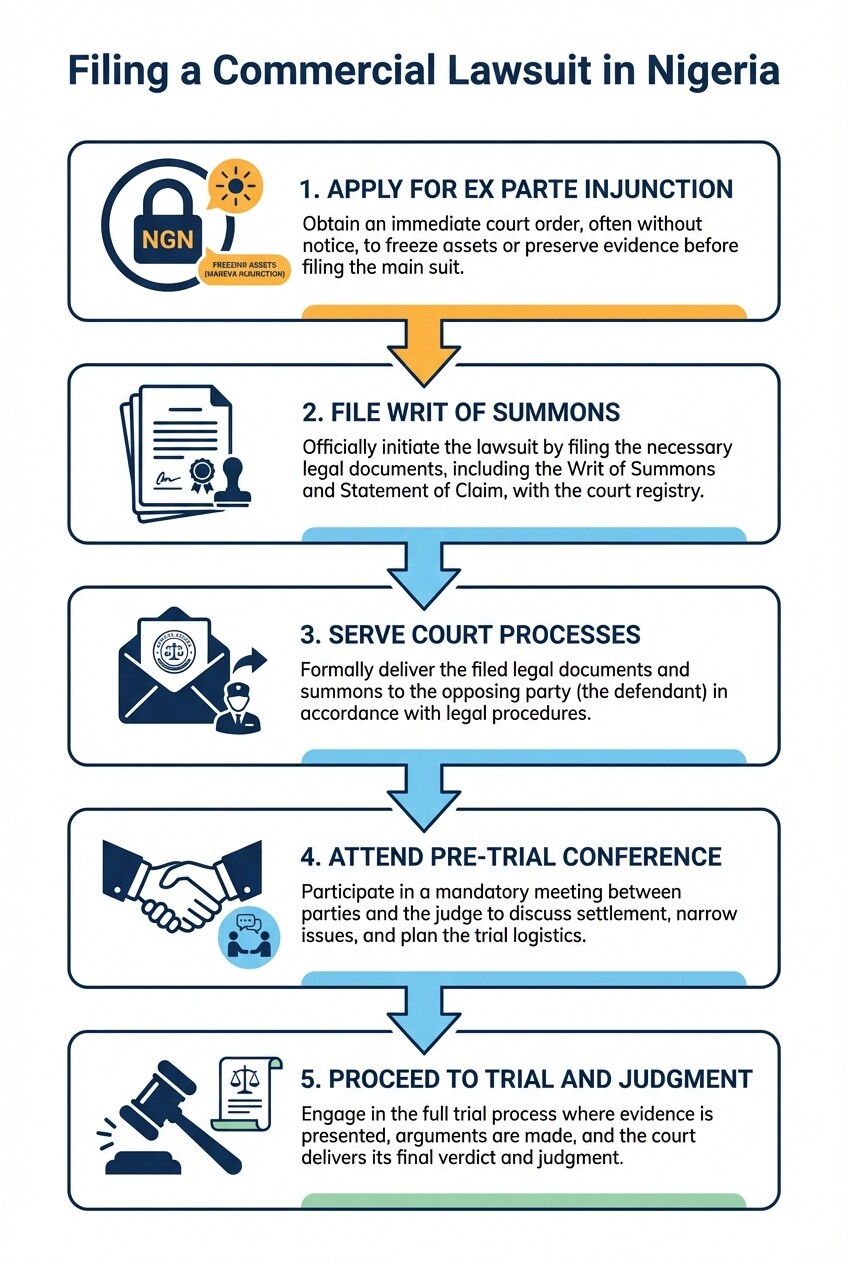
Initiating a commercial lawsuit in Nigeria requires filing a formal writ of summons and often securing a pre-emptive injunction to freeze assets before the defendant can move them offshore. These injunctions, particularly the Mareva injunction, are crucial for protecting your financial interests while the trial is ongoing.
A Mareva injunction is a temporary court order that prevents a party from removing their assets from the jurisdiction of the Nigerian courts. Securing this protection requires moving quickly through specific legal channels.
- Apply for an Ex Parte Pre-Emptive Injunction: Before the defendant is notified of the lawsuit, your legal team files an urgent application asking the judge to freeze the defendant's local bank accounts or corporate assets.
- File the Writ of Summons: Once assets are secured, you file the main lawsuit document, known as the Writ of Summons, alongside a detailed Statement of Claim outlining the contract breach.
- Serve the Court Processes: The court bailiff or your legal representative formally delivers the lawsuit documents to the defendant, establishing court jurisdiction over them.
- Attend the Pre-Trial Conference: Both parties meet with a judge to organize the case, filter out frivolous arguments, and explore the possibility of a final settlement before trial.
- Proceed to Trial and Judgment: If settlement fails, evidence is presented, witnesses are cross-examined, and the judge issues a legally binding decision.
How to Enforce Foreign Arbitral Awards in Nigeria
Foreign investors can seamlessly enforce international arbitral awards in Nigeria because the country is a formal signatory to the New York Convention. Nigerian courts recognize these foreign awards as binding and enforce them exactly like judgments issued by domestic judges.
Enforcement is governed locally by the Arbitration and Mediation Act of 2023. To successfully enforce an award, the process must strictly follow statutory guidelines.
- Filing an Originating Motion: Your lawyer must file a formal application at the relevant State or Federal High Court, requesting the court to recognize the award.
- Providing Documentation: You must supply the court with the duly authenticated original award and the original arbitration agreement, or certified copies of both.
- Overcoming Defenses: The opposing party has limited legal grounds to resist enforcement, such as proving they were not given proper notice of the arbitration or that the dispute is not arbitrable under Nigerian law.
Common Misconceptions About Nigerian Commercial Litigation
Many foreign executives enter the Nigerian market with incorrect assumptions about the local legal system, leading to costly strategic errors during dispute resolution. Understanding the reality of Nigerian commercial law saves businesses significant time and financial resources.
- Misconception: Litigation is the required first step. Many investors believe they must go to court for a contract breach. In reality, Nigerian courts actively encourage and enforce alternative dispute resolution mechanisms like arbitration and mediation first.
- Misconception: Foreign court judgments are automatically enforced. Unlike foreign arbitral awards under the New York Convention, foreign court judgments require a complex, separate registration process under the Foreign Judgments Act before they hold power in Nigeria.
- Misconception: Informal agreements are completely unenforceable. While relying on handshake agreements is highly risky and difficult to prove, Nigerian law does recognize oral contracts if compelling evidence and witness testimony can establish the agreed terms.
Frequently Asked Questions
Commercial dispute resolution in Nigeria involves specific statutes and costs that vary greatly depending on the complexity of the case. These common questions address the immediate concerns of foreign entities facing contract breaches.
What is the statute of limitations for breach of contract in Nigeria?
In most Nigerian states, including Lagos, the statute of limitations for a standard breach of contract is six years from the date the breach occurred. If the contract is executed under seal as a formal deed, the limitation period extends to twelve years.
Can I recover my legal fees in a Nigerian commercial lawsuit?
Nigerian courts have the discretion to award costs to the winning party, but these awards rarely cover the actual, full expense of your legal representation. It is highly recommended to include a specific clause in your commercial contracts stating that the losing party must pay all reasonable attorney fees.
Do I need to be physically present in Nigeria for arbitration?
You generally do not need to be physically present in Nigeria to participate in arbitration proceedings. The Lagos Multi-Door Courthouse and other arbitral bodies routinely allow foreign parties and witnesses to appear via secure video conferencing.
When to Hire a Commercial Litigation Lawyer in Nigeria
You should hire a local commercial litigation lawyer the moment a contract dispute escalates beyond standard business negotiations or when corporate assets are actively at risk. Early legal intervention prevents costly procedural mistakes and ensures your claims are filed properly within the Nigerian statute of limitations.
Do not wait until the opposing party has already filed a lawsuit or hidden their assets. To ensure you have experienced representation familiar with international business standards, consult with specialized commercial litigation lawyers in Nigeria who understand both local court procedures and international arbitration rules.
Next Steps for Foreign Investors
Protecting your investments in Nigeria requires proactive contract management and swift action when financial disputes arise. Your immediate next steps should focus on auditing existing agreements and securing local legal support to build a defensive strategy.
- Review all active Nigerian commercial contracts to verify they contain a valid, enforceable arbitration clause.
- Compile all relevant evidence of the dispute, including emails, invoices, shipping documents, and formal notices of default.
- Consult a Nigerian legal expert to evaluate whether an urgent Mareva injunction is necessary to freeze the opposing party's assets.
- Draft a formal demand letter through your legal counsel to initiate the dispute resolution process officially.