- Neutral Jurisdiction: Singapore is a leading neutral jurisdiction for Asian cross-border tech disputes because of its pro-arbitration laws and intellectual property expertise.
- Fast-Track Resolution: The SIAC Expedited Procedure delivers a final award within six months of tribunal formation.
- Emergency IP Protection: SIAC's Emergency Arbitrator provisions allow companies to secure immediate injunctions against source code theft or data breaches.
- Global Enforceability: Singapore arbitral awards are enforceable in over 170 jurisdictions under the New York Convention.
- Drafting Precision: Using standard SIAC model clauses prevents jurisdictional disputes and controls early legal costs.
Why Choose Singapore as the Arbitral Seat for Tech Disputes?
Singapore is a neutral jurisdiction with a strong legal framework for resolving intellectual property and commercial technology disputes. Selecting Singapore as your arbitral seat ensures confidentiality, tribunal impartiality, and limited judicial interference in proceedings.
The Singapore International Arbitration Centre (SIAC) is popular for cross-border tech disputes. The jurisdiction operates under the International Arbitration Act 1994, which aligns with the UNCITRAL Model Law. This statute clarifies the enforceability of arbitration agreements. It allows tribunals to rule on their own jurisdiction and issue binding interim measures. SIAC panels often include arbitrators with backgrounds in software development, data privacy, and telecommunications. This technical knowledge helps tribunals assess complex evidence directly.
Sample SIAC Arbitration Clause for Tech Contracts
A precise arbitration clause prevents jurisdictional battles and moves disputes directly to a merits hearing. Tech companies should include a clear institutional model clause in their Master Service Agreements (MSAs), SaaS contracts, and IP licenses.
To ensure SIAC has jurisdiction over a potential tech dispute, include this standard language in your commercial agreements:
Standard SIAC Arbitration Provision "Any dispute arising out of or in connection with this contract, including any question regarding its existence, validity, or termination, shall be referred to and finally resolved by arbitration administered by the Singapore International Arbitration Centre (SIAC) in accordance with the Arbitration Rules of the Singapore International Arbitration Centre (SIAC Rules) for the time being in force, which rules are deemed to be incorporated by reference in this clause."
Required Customizations for Tech Contracts:
- Seat: Singapore.
- Tribunal: One arbitrator (or three for high-value disputes).
- Language: English.
- Governing Law: The laws of [Insert Jurisdiction].
Avoiding "Pathological" Arbitration Clauses
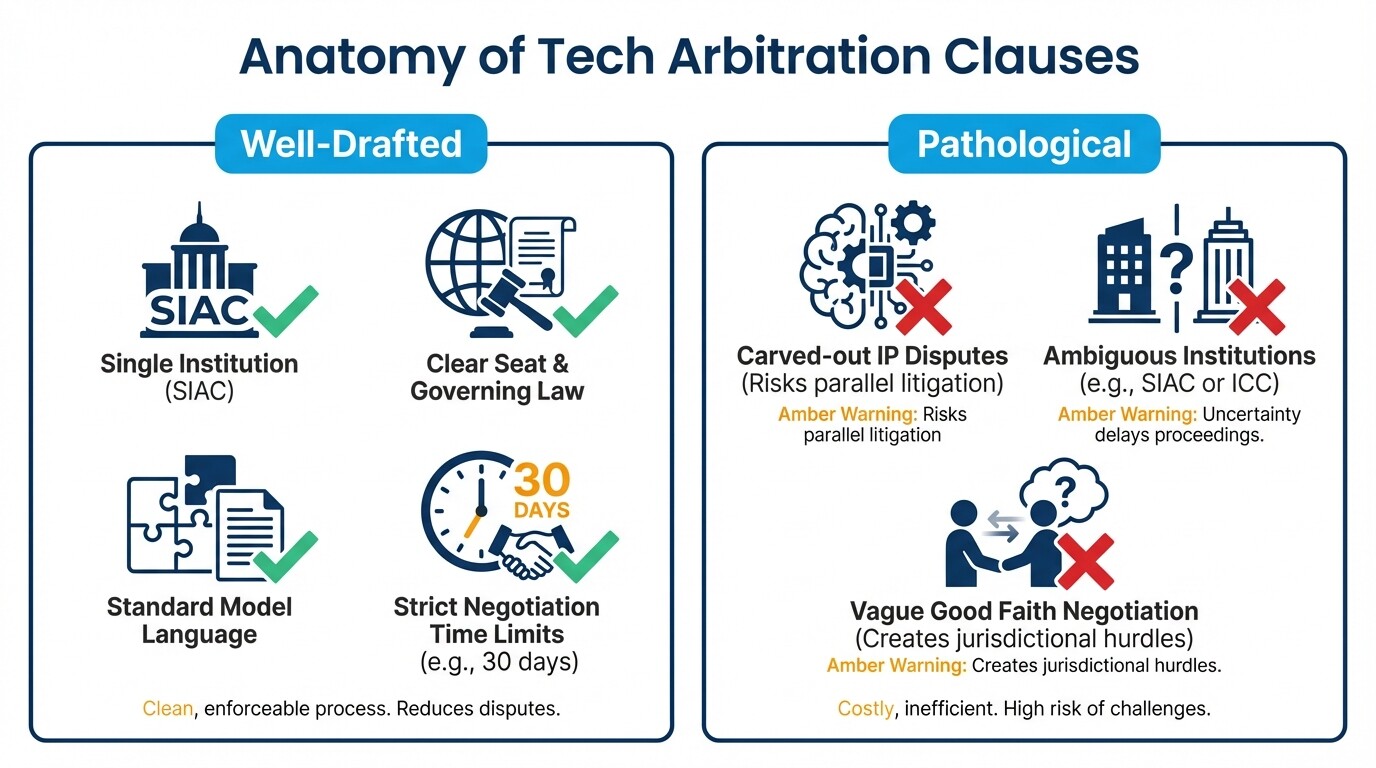
Pathological arbitration clauses contain contradictory, vague, or legally impossible terms. These errors delay tribunal formation and invite parallel court litigation. Drafting mistakes often occur when companies heavily customize standard clauses or combine conflicting dispute resolution methods.
Address these common drafting errors to save time and legal fees later:
- Carving out IP disputes: Splitting forums creates parallel proceedings. If contract breaches go to arbitration but IP infringement goes to domestic courts, you risk conflicting judgments. This also allows the opposing party to stall arbitration by filing an IP claim in court.
- Naming multiple institutions: Clauses stating disputes will be resolved by "SIAC or the ICC" are ambiguous. The lack of certainty regarding the administering institution requires court intervention before arbitration can begin.
- Multi-tiered negotiation clauses: Mandating that executives "negotiate in good faith" creates an enforceable condition precedent. If a party files for arbitration without satisfying a vague negotiation phase, the tribunal may lack jurisdiction. Always attach strict time limits (e.g., 30 days) to pre-arbitration mediation or negotiation steps.
Protecting IP with Emergency Interim Relief
SIAC rules allow parties to seek emergency interim relief to prevent the theft or destruction of intellectual property before the main arbitral tribunal forms. This mechanism secures binding injunctions and preserves digital assets across borders.
Waiting weeks to constitute a tribunal is impractical for software code leaks or sudden non-disclosure agreement breaches. Under SIAC rules, a party can file an application for an Emergency Arbitrator concurrent with or following their Notice of Arbitration. The SIAC President typically appoints the Emergency Arbitrator within two days of accepting the application. The arbitrator then sets a rapid schedule, often issuing interim orders or injunctions within 14 days. Applicants must pay a deposit (around SGD 30,000, depending on the current SIAC fee schedule) when seeking emergency relief.
SIAC Expedited Procedure Timeline
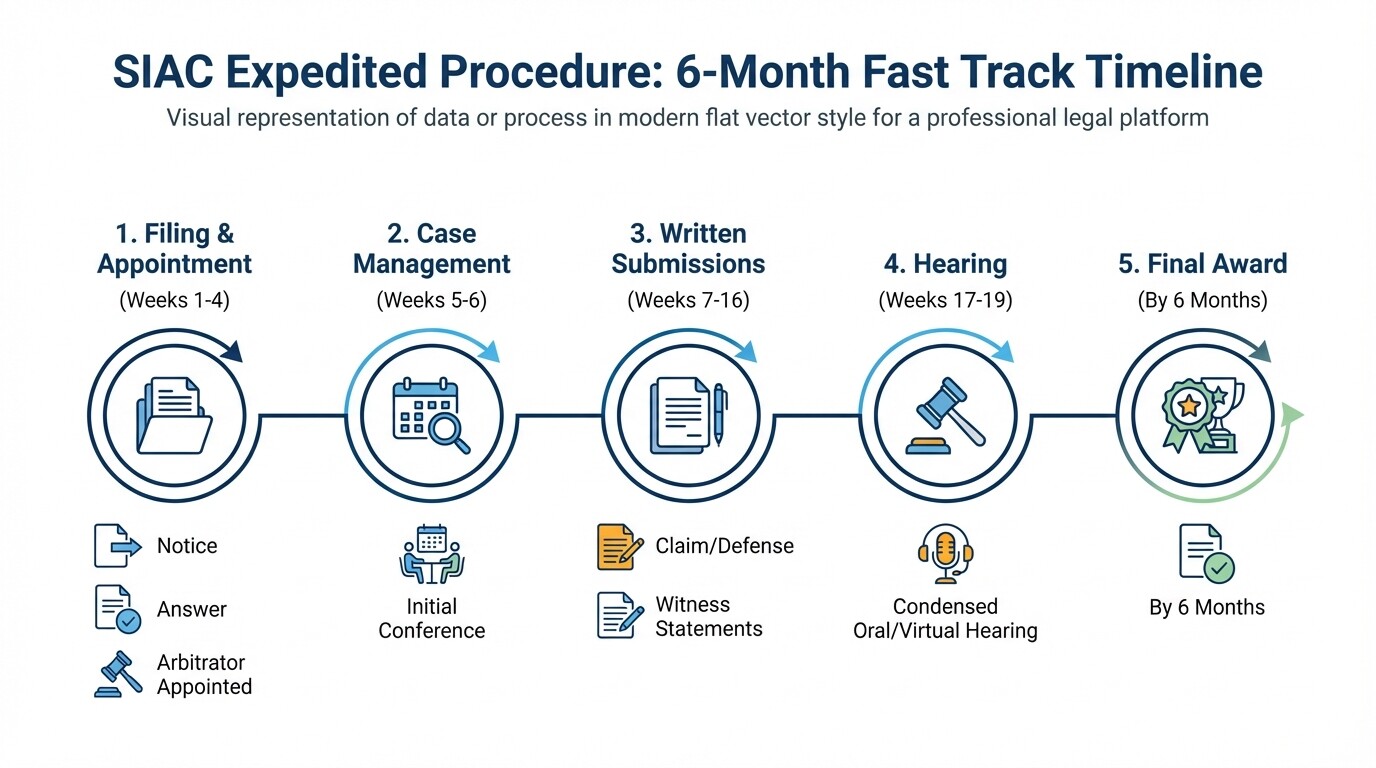
The SIAC Expedited Procedure streamlines arbitration to issue a final award within six months of tribunal formation. This fast-track option suits technology disputes that require rapid resolution.
Parties can apply for the Expedited Procedure if the aggregate amount in dispute does not exceed SGD 6 million, if both parties explicitly agree to it, or in cases of exceptional urgency. The process limits document production and may rely solely on written evidence rather than oral hearings.
| Arbitration Phase | Expedited Timeline | Key Procedural Actions |
|---|---|---|
| Filing & Appointment | Weeks 1-4 | Claimant files Notice. Respondent answers. SIAC appoints a sole arbitrator. |
| Case Management | Weeks 5-6 | Tribunal holds initial conference. Timeline restricts document requests. |
| Written Submissions | Weeks 7-16 | Exchange of Statements of Claim and Defense. Witness statements filed simultaneously. |
| Hearing | Weeks 17-19 | Condensed oral hearing, often virtual. Cross-examination is time-limited. |
| Final Award | By 6 Months | Arbitrator issues the binding award. SIAC Registrar grants extensions only in exceptional cases. |
Global Enforcement of SIAC Awards
Arbitral awards issued in Singapore are enforceable in over 170 countries under the New York Convention on the Recognition and Enforcement of Foreign Arbitral Awards. This treaty ensures a SIAC award carries the same legal weight as a domestic court judgment in the losing party's home jurisdiction.
Enforceability is the primary advantage of arbitration over litigation for tech companies licensing software across borders. If a foreign vendor breaches a contract and ignores a domestic court judgment, enforcing that judgment abroad is difficult and relies on patchwork bilateral treaties. Under the New York Convention, a local court in the vendor's home country is obligated to recognize and enforce the SIAC arbitral award. This allows you to seize local assets. Foreign courts can only refuse enforcement based on severe procedural failures, such as a lack of due process or fundamental public policy violations.
Costs, Confidentiality, and Virtual Hearings
SIAC arbitration offers several structural benefits for technology companies:
- Predictable costs: SIAC calculates administration and arbitrator fees on an ad valorem basis, depending on the total sum in dispute. The streamlined procedures generally make arbitration costs more predictable than multi-year commercial court litigation.
- Virtual proceedings: SIAC tribunals routinely conduct case management conferences and full evidentiary hearings virtually. This reduces travel costs for expert witnesses and multinational executives.
- Strict privacy: SIAC arbitration is private and confidential by default. The existence of the arbitration, the pleadings, and the final award remain unpublished. This protects sensitive source code, trade secrets, and corporate reputation.
Next Steps
Engaging legal counsel during the contract drafting phase prevents pathological clauses. Hiring an arbitration specialist immediately after a contract breach helps you secure emergency relief and navigate SIAC procedural rules.
If your technology firm is entering a cross-border partnership, have a legal professional review your dispute resolution clauses to ensure they establish SIAC jurisdiction. If a dispute arises, act quickly to evaluate whether your case qualifies for the Expedited Procedure or Emergency Arbitrator provisions. You can find specialized arbitration lawyers in Singapore who possess the technical and institutional experience required for complex B2B tech disputes.