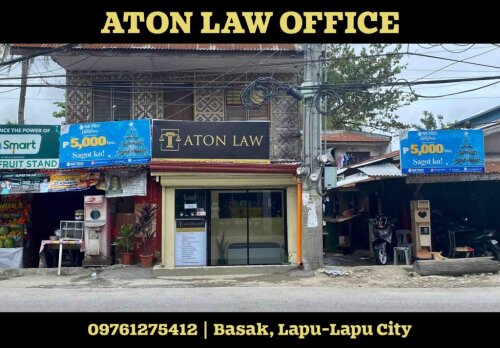
About Certified True Copies Law in Lapu-Lapu City, Philippines
A certified true copy (CTC) is a copy of an original document that an authorized person confirms as a faithful reproduction. In the Philippines, CTCs are typically issued by competent authorities such as a notary public or the local civil registrar, depending on the document type. In Lapu-Lapu City, residents commonly obtain CTCs from the City Civil Registry for civil registry records and from licensed notaries for other documents.
The purpose of a CTC is to provide a verifiable, legally recognized copy that can be used for official processes, applications, and court filings. City offices in Lapu-Lapu and nearby Cebu locales often require a CTC to prove identity, ownership, or eligibility for services. When you obtain a CTC, you usually must present the original document and a valid ID, and you may pay a specified processing fee.
Local government rules and nationwide statutes shape how CTCs are issued and accepted. In Lapu-Lapu City, the Civil Registry functions under the Local Government Code of the Philippines, and notarial practice is governed by Supreme Court rules. These frameworks protect document authenticity and ensure consistent handling of certified copies nationwide. For official guidance, consult government resources such as PSA and the Supreme Court notarial guidelines.
Certified true copies are generally accepted by government agencies for identity verification and record certification when issued by a competent authority.
Why You May Need a Lawyer
In Lapu-Lapu City, certain scenarios require professional legal help to obtain, verify, or challenge certified true copies. A lawyer can navigate local procedures, protect your rights, and prevent costly delays. Below are concrete situations where legal counsel is particularly valuable.
- You need a CTC of a PSA birth certificate for a Philippine passport application processed through the Department of Foreign Affairs in Cebu.
- You must obtain a certified copy of a land title or tax declaration to support a property sale in Lapu-Lapu City and anticipate bank document requirements.
- You are filing a court case in Cebu or nearby courts and require CTCs to accompany pleadings or evidence, with proper authentication to avoid disputes about originality.
- You must verify that a CTC from a city civil registrar will be accepted by a bank for loan processing or by an agency for civil service eligibility.
- You need to challenge a CTC you believe is forged or erroneously certified, which may involve criminal or civil proceedings and require evidence preservation.
- You are handling a corporate transaction that requires certified copies of corporate documents like articles of incorporation or board resolutions, accurately authenticated by a licensed attorney.
Local Laws Overview
Two core frameworks shape the issuance and acceptance of certified true copies in the Philippines, including Lapu-Lapu City:
- Civil Code of the Philippines, Republic Act No. 386 (effective 1949-06-18). The Civil Code sets general principles for contracts, obligations, and formalities that underpin how certified copies may be used in civil transactions.
- Local Government Code, Republic Act No. 7160 (effective 1992-01-01). This law governs the responsibilities of local government units, including civil registry functions performed by city and municipal offices such as Lapu-Lapu City Hall.
- Rules on Notarial Practice. The Supreme Court governs notarial acts and the certification of true copies issued by notaries public. These rules affect how non-government offices validate copies and their use for legal proceedings.
The above laws provide the national framework for authenticity and verification of copies used in Lapu-Lapu City. Always verify current requirements with the issuing office because local practice and fees may change. For authoritative texts, consult the Official Gazette and the PSA for official guidance on certified copies.
The Local Government Code delegates civil registry functions to local government units, ensuring accessibility of CTC services at city level.
Frequently Asked Questions
What is a Certified True Copy in the Philippine context?
A certified true copy is a copy of an original document verified by an authorized person as a faithful reproduction. It is typically used for official processes where presenting the original is impractical. A CTC from a city civil registrar or a notary is usually valid for government and court submissions.
How do I obtain a certified true copy from the City Civil Registrar in Lapu-Lapu City?
Visit the City Civil Registrar office with your original document and valid IDs. Complete any application form, pay the processing fee, and wait for the staff to produce the CTC. Some offices offer appointment options or minor online pre-registrations.
When is a certified copy required for government transactions in Lapu-Lapu City?
CTCs are commonly required when applying for government services, passports, school records, housing or civil service eligibility. They are used to verify identity or ownership without presenting the original document. Always check the specific agency's requirements before applying.
Where can I verify if a CTC is accepted by the PSA for my document?
The PSA provides official guidance on acceptable document types and CTC use for national transactions. If in doubt, request the PSA authentication or verification guidance for your particular document type.
Why might a notary be better than a city civil registrar for certain documents?
A notary public can certify copies of documents that are not civil registry records, such as contracts, affidavits, and corporate documents. Notaries may offer broader geographic validity for private transactions and standardized certification formats.
How long does it take to obtain a CTC from the LGU in Lapu-Lapu City?
Most basic requests can be processed within 1-3 business days if no complications arise. Complex cases or high-volume periods may extend turnaround to 5-7 business days. Ask the office for current timelines when you file.
Do I need to present the original document to get a CTC?
Yes. The issuing officer typically requires the original document to compare with the copy and verify authenticity. You should also present a valid ID and any other documents the office requests.
Is there a cost difference between a CTC issued by a notary and by a civil registrar?
Yes. Notaries usually charge service fees based on the document type and length, while civil registrars set fees according to local schedules. Compare total costs before proceeding and ask about any additional charges.
Can I use a certified true copy for real property transactions in Lapu-Lapu?
CTCs are commonly used in real estate deals to verify ownership and records, but lenders and registries may have specific requirements. Ensure your CTC format and issuing authority meet the recipient's standards.
Should I hire a lawyer to obtain a CTC for a court case?
Hiring a lawyer can expedite filing and ensure proper authentication if the case involves multiple documents or unusual requirements. A lawyer also helps address potential disputes about authenticity during litigation.
How much does a certified true copy cost in Lapu-Lapu City?
Costs vary by office and document type. Civil registry offices typically charge a processing fee per document, while notaries charge service fees in addition to any government charges. Confirm exact rates with the issuing office.
What is the difference between an authenticated copy and a certified true copy?
A certified true copy is validated as a faithful reproduction by an officer or notary. An authenticated copy is typically endorsed by a notary or official to confirm the document's genuineness and the identity of the signer.
Additional Resources
- Philippine Statistics Authority (PSA) - Official government agency issuing civil registry records and guidance on certified copies; provides information on document use and authentication. https://psa.gov.ph
- Official Gazette - Source for national laws including the Local Government Code and Civil Code; useful for understanding the legal framework governing civil registries and certified copies. https://www.officialgazette.gov.ph
- Supreme Court of the Philippines - Governs notarial practice and certification of copies by notaries; consult for practice rules and updates affecting CTCs. https://www.sc.judiciary.gov.ph
Next Steps
- Identify the exact document you need a CTC for (birth certificate, title, contract, etc.) and the issuing authority required by the receiving party. This determines who will certify the copy.
- Collect originals and bring valid photo IDs; verify any special requirements (e.g., additional documents, authentication of signatures).
- Contact the appropriate office in Lapu-Lapu City (City Civil Registrar or a licensed notary) to confirm current fees, processing times, and accepted formats.
- If you anticipate complexity, consult a lawyer with local Lapu-Lapu City experience to review the documents and plan the filing strategy.
- Schedule your appointment or submission, submit your documents, and obtain the CTC as instructed by the issuing office.
- Review the CTC for accuracy, including names, dates, and document descriptions; request corrections promptly if needed.
- Store CTCs securely and provide copies to the requesting agency with any required attachments or certifications for the specific transaction.
Lawzana helps you find the best lawyers and law firms in Lapu-Lapu City through a curated and pre-screened list of qualified legal professionals. Our platform offers rankings and detailed profiles of attorneys and law firms, allowing you to compare based on practice areas, including Certified True Copies, experience, and client feedback.
Each profile includes a description of the firm's areas of practice, client reviews, team members and partners, year of establishment, spoken languages, office locations, contact information, social media presence, and any published articles or resources. Most firms on our platform speak English and are experienced in both local and international legal matters.
Get a quote from top-rated law firms in Lapu-Lapu City, Philippines — quickly, securely, and without unnecessary hassle.
Disclaimer:
The information provided on this page is for general informational purposes only and does not constitute legal advice. While we strive to ensure the accuracy and relevance of the content, legal information may change over time, and interpretations of the law can vary. You should always consult with a qualified legal professional for advice specific to your situation.
We disclaim all liability for actions taken or not taken based on the content of this page. If you believe any information is incorrect or outdated, please contact us, and we will review and update it where appropriate.