Netherlands Tech Restructuring FAQ: EU AI Act Compliance
Key Takeaways
The enforcement of the EU AI Act in 2026 is forcing non-EU technology companies to restructure their European operations to mitigate algorithmic liability. The Netherlands serves as a premier jurisdiction for these hubs due to its favorable corporate structures and advanced restructuring tools.
- Corporate Isolation: Restructuring assets into specialized Dutch B.V.s (private limited companies) helps shield core intellectual property from high-risk AI regulatory liabilities.
- Documentation is Critical: By 2026, companies must hold comprehensive technical dossiers, Conformity Assessments, and quality management manuals physically or digitally accessible within the EU.
- DPO Requirements: Foreign entities must formally appoint and document an EU Representative and Data Protection Officer (DPO) with the Dutch authorities.
- WHOA Framework: The Dutch restructuring scheme (WHOA) provides a powerful pre-insolvency tool to reorganize tech entities burdened by regulatory costs without triggering formal bankruptcy.
Restructuring Corporate Assets to Isolate Algorithmic Liability
Isolating algorithmic liability in the Netherlands requires forming specialized subsidiary entities to separate high-risk AI operations from core intellectual property and revenue centers. This strategic corporate restructuring limits the financial contagion of regulatory fines or intellectual property disputes under the new EU AI Act.
Why use a Dutch B.V. for AI liability isolation?
A Dutch Besloten Vennootschap (B.V.) offers a robust corporate veil that protects parent companies from subsidiary liabilities. By transferring high-risk AI development or data processing into a distinct B.V., foreign tech firms can compartmentalize risk. If a specific AI model incurs severe regulatory fines, the financial impact is legally contained within that specific entity rather than bleeding into the US parent company.
Can asset stripping be challenged during AI-related insolvency?
Yes, regulators and creditors can challenge asset transfers using the Dutch actio Pauliana (fraudulent conveyance) laws. If a company deliberately moves valuable intellectual property out of a subsidiary right before an expected regulatory fine or insolvency event, Dutch courts can reverse those transactions. Restructuring must occur proactively during solvent periods and for legitimate business purposes.
How does the WHOA scheme protect tech companies?
The Wet homologatie onderhands akkoord (WHOA) is a Dutch pre-insolvency restructuring framework that allows companies to impose a debt restructuring plan on dissenting creditors. If a tech subsidiary faces overwhelming regulatory audit costs or fines, the WHOA can be used to restructure financial obligations, allowing the core technology operations to survive without liquidating the entity.
Documentation Required to Prove Compliance with the 2026 EU AI Act
Proving compliance with the 2026 EU AI Act requires maintaining a comprehensive technical dossier that details your AI system's design, risk categorization, and human oversight mechanisms. Regulatory bodies expect these documents to be readily accessible at your Dutch European headquarters or by your authorized EU representative.
To survive regulatory scrutiny, ensure your Dutch entity maintains the following compliance checklist:
- Conformity Assessment Certificate: Official documentation proving that high-risk AI systems have passed the required EU conformity assessments before being placed on the market.
- Technical Documentation (Annex IV): A detailed technical file outlining the AI system's architecture, training data origins, validation metrics, and algorithmic logic.
- Quality Management System (QMS) Manual: Written policies detailing how the company ensures ongoing compliance, manages data governance, and monitors system performance throughout its lifecycle.
- Human Oversight Protocols: Documented procedures explaining how human operators intervene, override, or shut down the AI system to prevent fundamental rights violations.
- Post-Market Monitoring Plan: A structured strategy for collecting system performance data and reporting severe incidents or malfunctions to the Dutch regulatory authorities within 15 days.
Data Protection Officer Appointment Documentation for Foreign Entities
Foreign entities operating in the EU must formally appoint a Data Protection Officer (DPO) and an EU Representative, registering these roles with the Dutch Data Protection Authority. Proper documentation ensures you have a legally recognized liaison for regulatory audits, GDPR compliance, and AI Act inquiries.
Failing to properly document these appointments can lead to immediate administrative fines and delays in restructuring approvals. Non-EU companies must prepare the following:
- Article 27 EU Representative Mandate: A formal, written mandate appointing a legal entity or individual in the Netherlands to act on behalf of the non-EU parent company regarding GDPR and AI Act obligations.
- DPO Designation Letter: An internal legal document detailing the DPO's independence, their reporting line to the highest management level, and their specific duties regarding algorithmic impact assessments.
- Registration with the AP: The official submission of the DPO's contact details to the Autoriteit Persoonsgegevens (the Dutch Data Protection Authority), which must be kept updated in the public register.
- Data Processing Agreements (DPAs): Updated contracts between the US parent, the Dutch subsidiary, and any third-party AI vendors detailing exact data flows, liability caps, and audit rights.
Comparing Dutch Tech Regulations with Standard US Compliance Frameworks
Dutch and EU technology regulations prioritize proactive risk assessment and consumer fundamental rights, whereas standard US compliance frameworks typically focus on reactive harm reduction and sector-specific rules. Navigating this shift is critical for US tech firms restructuring their European operations to avoid severe compliance penalties.
| Feature | Dutch / EU Framework (AI Act & GDPR) | US Framework (Standard Approaches) | | : | : | : | | Regulatory Approach | Pre-market conformity assessments; strict categorization of high-risk AI. | Post-market enforcement; reliance on consumer protection litigation. | | Corporate Liability | Fines up to 35 million EUR or 7 percent of global annual turnover. | Generally lower statutory fines; relies heavily on class-action damages. | | Restructuring Impact | Requires complex data mapping and DPO sign-off during M&A or asset transfers. | Intellectual property and data assets transfer with fewer privacy hurdles. | | Data Governance | Strict purpose limitation; requires explicit legal basis for training AI models. | Broad "fair use" defenses; opt-out models for data collection. |
Pre-Litigation Strategies for Handling European Regulatory Audits
Handling European regulatory audits requires establishing a clear legal privilege perimeter and conducting regular mock dawn raids before official regulators intervene. A proactive defense strategy prevents minor compliance gaps from escalating into public litigation or triggering insolvency events.
When facing an audit from Dutch or EU authorities, non-EU companies should implement specific pre-litigation steps. First, establish a dedicated regulatory response team based in the Netherlands, isolating internal communications to maintain legal privilege under Dutch law. Second, conduct algorithmic impact assessments under the protection of external counsel. If an audit reveals systemic non-compliance that threatens the solvency of the Dutch hub, the company should immediately draft a contingency restructuring plan using the WHOA framework to manage potential creditor and regulatory claims efficiently.
Common Misconceptions About Dutch Tech Restructuring and AI Compliance
Many foreign tech companies underestimate the strict liability and corporate tracing mechanisms inherent in European regulatory frameworks. This often leads to flawed restructuring plans that fail to protect parent companies from cross-border liabilities.
- Misconception 1: GDPR compliance means AI Act compliance. While data privacy and AI regulations overlap, they are distinct. A company can have perfect GDPR documentation but still face total market bans under the AI Act if their algorithmic models lack required conformity assessments or transparency logs.
- Misconception 2: Standard bankruptcy erases regulatory fines. Liquidating a Dutch subsidiary does not automatically make regulatory liabilities disappear. Under certain conditions of severe mismanagement or direct parental involvement, European authorities can pierce the corporate veil and pursue the foreign parent company for unpaid fines.
- Misconception 3: The US Safe Harbor concept applies in Europe. US tech firms often assume their domestic compliance safe harbors protect them abroad. The EU operates on a strict territorial basis; if your AI output affects EU citizens, your corporate structure must meet EU standards regardless of where the code was written.
Frequently Asked Questions
When does the EU AI Act officially take effect for foreign companies?
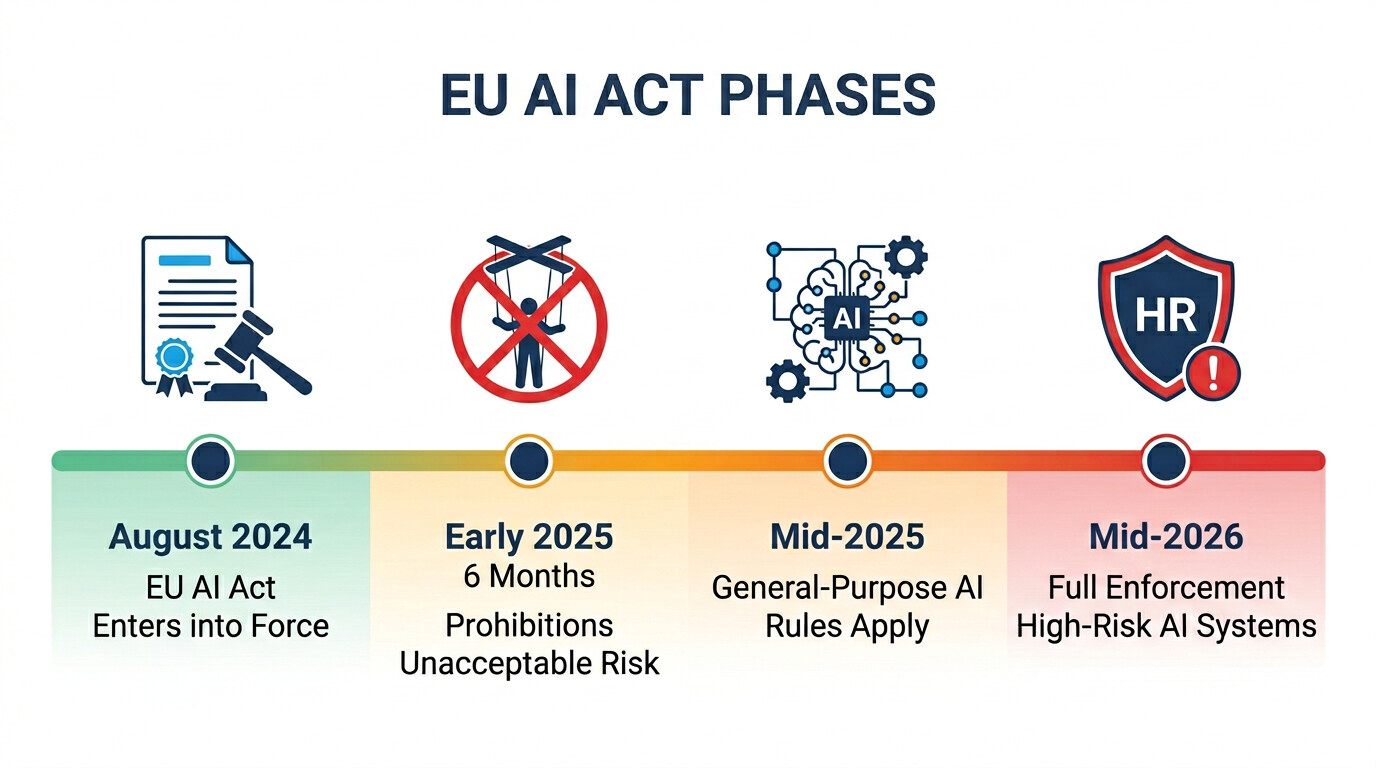
The EU AI Act entered into force in August 2024, with a phased implementation. Prohibitions on unacceptable risk AI apply within six months, general-purpose AI rules apply by 2025, and full enforcement for high-risk AI systems takes effect in mid-2026.
Can a foreign company act as its own EU Representative?
No. A non-EU company must appoint a legal or natural person physically established within an EU member state, such as the Netherlands, where its data subjects reside or its AI systems are deployed.
What are the penalties for non-compliance under the new AI regulations?
Penalties are tiered based on the severity of the violation. Using prohibited AI practices can result in fines up to 35 million EUR or 7 percent of the company's total worldwide annual turnover, whichever is higher.
When to Hire a Tech Restructuring Lawyer in the Netherlands
Engaging legal counsel is crucial before executing cross-border asset transfers, establishing new EU headquarters, or responding to formal inquiries from the Autoriteit Persoonsgegevens. A lawyer is essential when categorizing your proprietary software under the EU AI Act risk framework or when financial distress requires initiating the WHOA pre-insolvency scheme to shield core assets. Working with specialized restructuring and insolvency lawyers in the Netherlands ensures your corporate architecture can withstand aggressive European regulatory scrutiny.
Next Steps for Foreign Tech Entities
- Map AI and Data Assets: Audit all algorithms, software, and data flows currently interacting with the European market to determine your risk categorization under the upcoming 2026 regulations.
- Evaluate Corporate Structure: Review your current European subsidiaries to determine if high-risk operations should be legally isolated into a separate Dutch B.V.
- Formalize Appointments: Draft and execute the necessary legal mandates to appoint your EU Representative and DPO in the Netherlands.
- Assemble Technical Dossiers: Begin compiling the required conformity assessments and quality management manuals well ahead of the 2026 enforcement deadlines.