Key Takeaways
Managing import tariffs and resolving customs disputes in South Africa requires strict adherence to timelines and precise commodity classification. Navigating the South African Revenue Service (SARS) framework effectively protects businesses from costly delays and penalties.
- You have exactly 30 days to file a Notice of Objection against a SARS customs assessment.
- Accurate tariff classification under SACU and AfCFTA is your best defense against unexpected duties.
- Using the internal SARS Alternative Dispute Resolution (ADR) process is generally faster and cheaper than High Court litigation.
- Failing to arrange provisional payments during disputes can lead to massive demurrage fees and cargo seizure.
How to Classify Goods Under AfCFTA and SACU Tariff Schedules
To classify goods correctly and avoid SARS penalties, businesses must use the Harmonized System codes aligned with the Southern African Customs Union (SACU) and the African Continental Free Trade Area (AfCFTA). Accurate classification dictates the exact tariff rate applied to your imports and determines your eligibility for preferential trade rates.
- Consult Schedule No. 1: Review Schedule No. 1 to the Customs and Excise Act, which lists the exact tariff headings, subheadings, and associated duty rates for all imported goods.
- Verify AfCFTA origin criteria: Ensure your goods meet the specific rules of origin to qualify for reduced tariffs within Africa. You must hold a valid certificate of origin issued by a recognized authority.
- Apply for a SARS Tariff Determination: If a product formulation is complex, apply for an advance binding tariff ruling from SARS before shipping. This written ruling prevents classification disputes when the goods arrive at the border.
Step-by-Step Checklist for Submitting a Customs Appeal
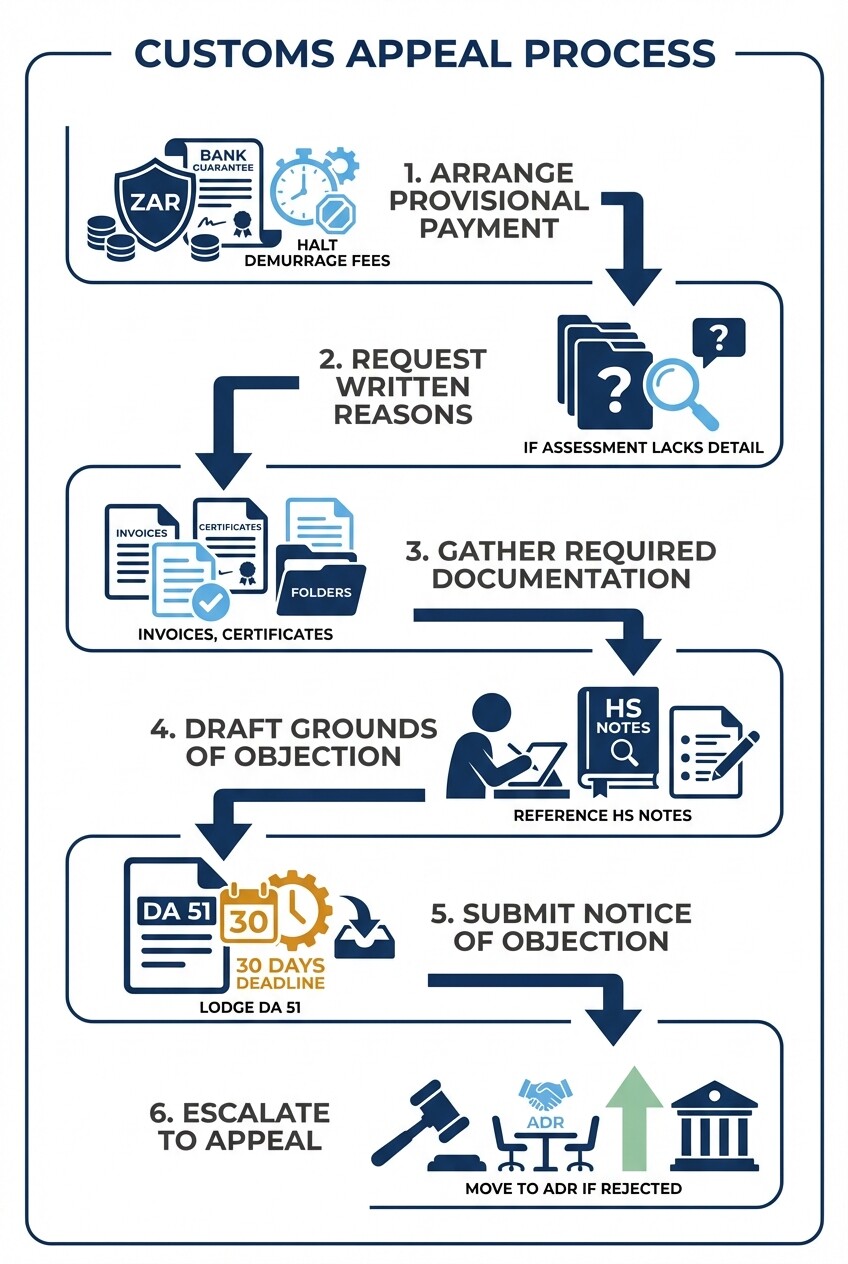
Submitting a customs appeal requires compiling comprehensive cross-border trade documentation and following the formal SARS dispute resolution workflow. Use this step-by-step checklist to structure your appeal, secure the release of your goods, and protect your legal rights.
- Arrange a Provisional Payment: Secure the release of your goods by paying the disputed amount under protest or providing a financial bank guarantee. This critical step halts daily storage and demurrage fees at the port.
- Request Reasons for Assessment: If the SARS assessment notice lacks technical detail, submit a formal request for written reasons within 30 days of the assessment date.
- Gather Required Documentation: Compile the commercial invoice, bill of lading or airway bill, packing list, technical product specifications, and the certificate of origin.
- Draft the Grounds of Objection: Clearly outline the legal and factual reasons why the SARS tariff classification or customs valuation is incorrect. Reference specific section notes and explanatory notes from the Harmonized System.
- Submit the Notice of Objection: Lodge the DA 51 form via the SARS eFiling portal alongside your supporting documents and grounds for objection.
- Escalate to Appeal: If SARS rejects your initial objection, file a Notice of Appeal to move the matter into Alternative Dispute Resolution.
The 30-Day Rule for Filing a Notice of Objection
Under South African customs law, you must file a Notice of Objection within 30 days of receiving a disputed customs assessment from SARS. Missing this strict deadline forfeits your right to appeal the decision internally, leaving you with highly limited and costly legal options.
- Calculate the 30 days starting from the date printed on the SARS assessment notice, not the date your clearing agent forwarded it to you.
- Use the official SARS eFiling system to submit the DA 51 form, ensuring you receive an automated reference number as proof of submission.
- If you miss the deadline, you must request a formal extension by proving exceptional circumstances. SARS grants these extensions rarely, usually only in cases of severe system outages or verifiable emergencies.
Comparing SARS Dispute Resolution vs Commercial Litigation
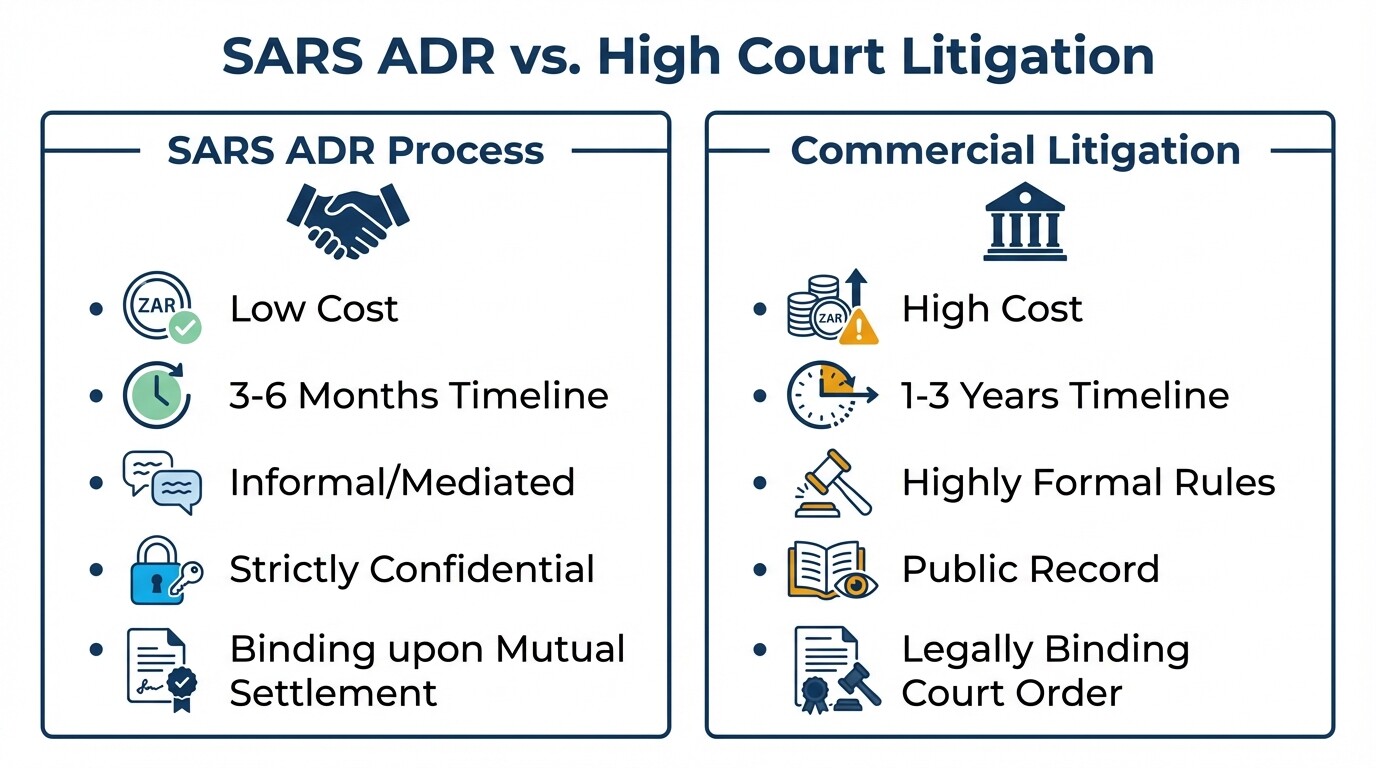
Businesses disputing customs tariffs must choose between navigating the internal SARS Alternative Dispute Resolution process and initiating formal commercial litigation in the High Court. While ADR is mandatory as a first step in most cases, understanding the differences helps businesses plan their legal strategy and allocate budgets effectively.
| Feature | SARS ADR Process | High Court Commercial Litigation |
|---|---|---|
| Cost | Low (Internal process, minimal administrative fees) | High (Requires litigation attorneys and senior counsel) |
| Timeline | 3 to 6 months on average | 1 to 3 years depending on court rolls |
| Formality | Less formal, driven by mediator facilitation | Highly formal, strictly bound by civil procedure rules |
| Binding Nature | Binding only if a mutual settlement is reached | Results in a legally binding court order |
| Publicity | Strictly confidential | Matters become part of the public court record |
Common Misconceptions About South African Customs
International exporters and South African importers frequently misunderstand SARS procedures, leading to operational bottlenecks and severe financial loss. Correcting these misconceptions is critical for maintaining a compliant and cost-effective supply chain.
- Leaving goods at the port during a dispute: Many importers refuse to pay a disputed tariff, leaving goods detained at the port while they argue with SARS. You should immediately arrange a provisional payment to release the goods. Failing to do so results in extended port seizures and exorbitant daily demurrage fees that quickly exceed the actual disputed tariff amount.
- Thinking customs brokers bear all legal liability: While clearing agents handle the administrative paperwork, the importer or exporter of record holds the ultimate statutory liability for incorrect tariff classifications, under-declarations, and resulting penalties.
- Assuming minor valuation errors go unnoticed: SARS utilizes advanced automated risk engines to flag pricing anomalies by comparing your declared values against global commodity databases. Even slight under-valuations will trigger audits and stop your shipments.
Frequently Asked Questions
What happens if SARS rejects my Notice of Objection?
If SARS rejects your objection, you have 30 days to file a formal Notice of Appeal. This action escalates your case to the ADR committee, where a neutral facilitator will attempt to help both parties reach an agreement.
Can I reclaim a provisional payment if I win the appeal?
Yes, if the dispute is resolved in your favor, SARS will refund the provisional payment. This refund will include statutory interest calculated from the date you initially made the payment to SARS.
Are AfCFTA tariff benefits applied automatically?
No, preferential tariffs under AfCFTA are never applied automatically at the border. You must present a valid, original Certificate of Origin issued by a designated competent authority in the exporting African country to claim the reduced rates.
When to Hire a Lawyer and Next Steps
You should engage an international trade lawyer immediately if SARS threatens goods seizure, initiates a formal company-wide audit, or if the disputed duty amount threatens your business cash flow. Legal intervention ensures your initial objections are factually and legally sound, preventing simple administrative errors from derailing your appeal.
- Audit your current product classifications against the latest SACU tariff schedules to ensure absolute compliance before your next shipment.
- Review your standard operating procedures with your clearing agents to ensure provisional payment mechanisms are authorized and ready to deploy during customs stops.
- Consult with experienced international trade law lawyers in South Africa to audit your cross-border documentation and strategically manage any ongoing SARS disputes.