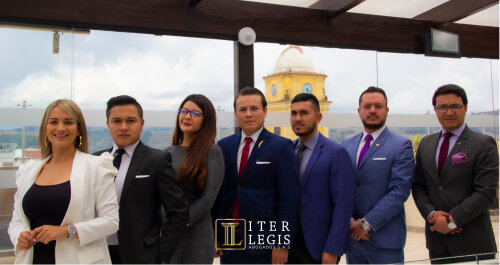
Iter Legis Abogados S.A.S is a dynamic Colombian law firm founded on February 1, 2016 that emphasizes multidisciplinary, innovative, and transparent service, with a strong presence in the eastern region of Colombia.With practice areas spanning Employment & Labor, Civil & Human Rights, Criminal...
Carlos Hoyos Abogados S.A.S is a Tunja - Boyacá based law firm with national coverage that provides advisory and consultancy across multiple branches of law, including labor, commercial, family, administrative, criminal law, constitutional actions, and specialized debt collection.The firm...
HunzaLegal Abogados Especializados, based in Tunja, Boyacá, offers comprehensive legal services across multiple practice areas, including criminal law, labor law, family law, public law, private law, claims, and notarial procedures. The firm's team of specialized attorneys is equipped to handle a...
ABOGADOS PENALISTAS OCHOA TORRES & ABOGADOS ASOCIADOS is a distinguished Colombian law firm specializing in criminal defense. With a strong presence in Boyacá, including cities such as Tunja, Duitama, Paipa, and Sogamoso, the firm offers comprehensive legal services to both individuals and...
1. About International Criminal Law in Tunja, Colombia
International Criminal Law (ICL) focuses on crimes that are of concern to the international community, such as genocide, crimes against humanity, and war crimes. In Tunja, as in the rest of Colombia, these crimes are prosecuted and regulated under national law with reference to international treaties and standards. Local prosecutors, judges, and defense lawyers work within Colombia's framework to address allegations that involve international criminal conduct.
Tunja is the capital of Boyacá Department, and its courts apply the Colombian Penal Code and Criminal Procedure Code when handling cases with international elements. When crimes cross borders or involve international institutions, Colombia coordinates with international bodies like the International Criminal Court (ICC) and adheres to its treaty obligations. The domestic system also includes transitional justice mechanisms that address crimes arising from armed conflict within the country.
Key context for residents is that Colombia is a State Party to the Rome Statute of the ICC, which governs the most serious international crimes. Domestic courts retain primary jurisdiction, and the ICC may exercise jurisdiction only in limited, exceptional circumstances or through cooperation in investigations and referrals.
Colombia ratified the Rome Statute and participates as a State Party to the ICC, with domestic courts handling most international criminal matters.
2. Why You May Need a Lawyer
Here are concrete scenarios in which a Tunja resident may need specialized international criminal law counsel:
You are accused of crimes that fall under international crimes such as genocide, crimes against humanity, or war crimes and you are facing Colombian courts in Boyacá or nearby jurisdictions.
You are a victim of an international crime and seek to participate in a transitional justice process or obtain reparations through the JEP or related proceedings.
You are witnesses or family members called to testify in a case involving international crimes and need protection, coordination, or legal guidance.
You are a businessperson or NGO staff member accused of acts that may implicate international humanitarian or human rights law in Colombia and require specialized defense or compliance counsel.
You need to assess potential extradition or international cooperation requests connected to allegations of international crimes in the region around Tunja.
You intend to report possible international crimes to the Fiscalía General de la Nación or collaborate with authorities on an investigation and want advice on privilege, evidence disclosure, and procedural rights.
In these scenarios, a lawyer with expertise in both Colombian criminal law and international law can help you understand procedural rights, timeline expectations, and the interplay between national processes and international mechanisms. A local attorney will also help you navigate Tunja's courts and coordinate with agencies such as the Fiscalía, the JEP, or international partners when appropriate.
3. Local Laws Overview
These are the principal Colombian laws and regulatory frameworks that govern international criminal matters, including how they apply in Tunja:
Código Penal Colombiano - Ley 599 de 2000 - The Colombian Penal Code defines crimes including genocide, crimes against humanity, and war crimes, and sets forth core criminal offenses and penalties. The code has undergone numerous amendments, but its basic structure remains the basis for prosecuting international crimes in Colombia. Its text is maintained by the Secretarías de Senado and available on official government portals.
Estatuto de Procedimiento Penal - Ley 906 de 2004 - This law governs criminal investigations, oral accusatory procedures, and trial conduct in Colombia. It replaces older inquisitorial procedures in many cases and affects how international crimes are investigated and prosecuted in Tunja and across the country.
Jurisdicción Especial para la Paz - Ley 1820 de 2016 - Created the Jurisdicción Especial para la Paz (JEP) to address crimes related to the armed conflict in Colombia, including certain international crimes. This framework shapes participation for victims and defendants in transition justice processes and operates alongside ordinary courts.
Recent context for Tunja residents includes ongoing implementation and interpretation of the JEP in various regions of Colombia. The JEP provides pathways for victims to participate and for cases to be processed under transitional justice rules when applicable. For authoritative descriptions of these laws, consult official Colombian sources and the ICC for international-law context.
Source notes and further reading:
- International Criminal Court (ICC) on Colombia and Rome Statute status: https://www.icc-cpi.int
- JEP overview and official information: https://www.jep.gov.co
- Fiscalía General de la Nación (Public Prosecutor's Office of Colombia): https://www.fiscalia.gov.co
4. Frequently Asked Questions
What is International Criminal Law and how does it apply in Tunja?
International Criminal Law defines crimes of international concern and sets procedures for accountability. In Tunja, these crimes are prosecuted under Colombian law with coordination to international bodies when appropriate.
How do I hire an International Criminal Law lawyer in Tunja?
Begin with a focused search for criminal defense lawyers who list international crimes or human rights as specialties. Check bar memberships and ask about experience with cases in Boyacá and with the JEP or ICC matters.
What is the role of the JEP in Colombia and how can I participate?
The Jurisdicción Especial para la Paz handles cases from the armed conflict under transitional justice rules. Victims may participate with guidance from counsel and the JEP’s own procedures, depending on the case.
What is the difference between domestic and international crimes in practice?
Domestic crimes are governed by the Penal Code and Procedural Code. International crimes involve cross-border or universal concerns and may engage international bodies or treaties in addition to the national system.
Can I report an international crime in Tunja?
Yes. You can report to the Fiscalía General de la Nación or the local judicial offices. They will assess whether the matter falls under domestic jurisdiction, JEP, or ICC cooperation as applicable.
Do I need to hire a lawyer if I am a victim of an international crime?
Yes. A lawyer can help protect your rights, navigate participation in transitional justice processes, and coordinate with authorities and the court system in Tunja or Bogotá as needed.
How long does an international crime case typically take in Colombia?
Timelines vary widely. Complex cases can extend from months to several years, depending on evidence, procedural complexity, and the use of transitional justice channels like the JEP.
What documents should I gather for a potential international crime case?
Collect identity documents, any official reports or complaint filings, evidence of harm or loss, witness statements, and correspondence with authorities. Your lawyer will tailor the list to your matter.
Is Colombia a party to the Rome Statute and what does it mean for my case?
Yes, Colombia is a State Party to the Rome Statute. This means domestic courts cooperate with ICC processes under defined circumstances, and international norms influence domestic practice.
What is the earliest step after suspecting an international crime?
Contact a qualified lawyer promptly to assess jurisdiction, rights, and strategy. Early steps can impact evidence preservation, client counsel, and potential cooperation with authorities.
What costs should I expect when hiring an international criminal law attorney in Tunja?
Fees vary by case and firm. Expect a mix of hourly rates and possible flat fees for discrete tasks; ask for a written engagement letter with a cost estimate and billing milestones.
Can I compare different lawyers before choosing one for an international crime matter?
Yes. Compare experience with international crimes, success in similar jurisdictions, familiarity with JEP or ICC processes, and transparency of fees and communication styles.
Do I need bilingual or international-law credentials for a Tunja case?
While not always required, bilingual capabilities and formal international-law training can be very helpful for cases involving ICC cooperation or cross-border elements.
5. Additional Resources
- Official ICC site covering Colombia’s status, cooperation, and relevant procedures. https://www.icc-cpi.int
- Official government site detailing the JEP’s role, processes for victims, and case management. https://www.jep.gov.co
- Colombian public prosecutor’s office for investigations and prosecutions, including international-crime matters. https://www.fiscalia.gov.co
These resources provide official, jurisdiction-specific information for Tunja residents and others in Colombia seeking guidance on international criminal matters. The ICC site gives context on international obligations, while the JEP and Fiscalía sites explain local procedures and rights.
Colombia maintains active participation in international criminal accountability frameworks and uses transitional justice mechanisms to address crimes linked to the armed conflict.
Source: ICC and JEP official sites
6. Next Steps
Define your goal and the type of international-crime issue you face (for example, the specific crime, jurisdiction, and whether victims are involved).
Identify Tunja-based or Boyacá-area lawyers with explicit experience in international crimes and transitional justice matters.
Check bar membership and research prior cases or client references related to international crimes and JEP matters.
Schedule initial consultations to discuss strategy, timelines, and fee structures; request written engagement terms.
Prepare a document packet for meetings, including any reports, witness statements, and correspondence with authorities.
Ask about coordination with the Fiscalía, the JEP, and any potential ICC involvement if applicable.
Make a formal engagement decision and sign a clear retainer agreement with milestones and dispute resolution terms.
Lawzana helps you find the best lawyers and law firms in Tunja through a curated and pre-screened list of qualified legal professionals. Our platform offers rankings and detailed profiles of attorneys and law firms, allowing you to compare based on practice areas, including International Criminal Law, experience, and client feedback.
Each profile includes a description of the firm's areas of practice, client reviews, team members and partners, year of establishment, spoken languages, office locations, contact information, social media presence, and any published articles or resources. Most firms on our platform speak English and are experienced in both local and international legal matters.
Get a quote from top-rated law firms in Tunja, Colombia — quickly, securely, and without unnecessary hassle.
Disclaimer:
The information provided on this page is for general informational purposes only and does not constitute legal advice. While we strive to ensure the accuracy and relevance of the content, legal information may change over time, and interpretations of the law can vary. You should always consult with a qualified legal professional for advice specific to your situation.
We disclaim all liability for actions taken or not taken based on the content of this page. If you believe any information is incorrect or outdated, please contact us, and we will review and update it where appropriate.