- ISTAC arbitration clauses allow commercial landlords and tenants to bypass the 2-3 year backlog in Turkish civil courts, often resolving disputes within 6 months.
- A valid arbitration agreement must be in writing and clearly state the parties' intent to refer specific disputes to the Istanbul Arbitration Centre (ISTAC).
- Turkish law mandates a mediation step for lease disputes before arbitration or litigation can proceed, which ISTAC often integrates into its procedural timeline.
- Arbitral awards issued by ISTAC are final and binding, with the same enforcement power as a court judgment once an enforcement certificate is obtained.
- While arbitrators can grant interim injunctions, parties often rely on Turkish courts for the actual execution of asset freezes or property protections.
How do you draft a valid ISTAC arbitration agreement under Turkish law?
To create a valid ISTAC arbitration agreement in a Turkish commercial lease, you must ensure the clause is in writing and expresses an unequivocal intent to arbitrate. Under the Turkish Code of Civil Procedure (HMK) and the International Arbitration Law (MTK), the agreement must specifically reference ISTAC and cover disputes that are "arbitrable," which includes most pecuniary claims and eviction issues in commercial settings.
A robust ISTAC clause should include the following elements to avoid jurisdictional challenges:
- Specific Reference: Clearly name the "Istanbul Arbitration Centre" and its rules.
- Scope of Disputes: State that "all disputes arising out of or in connection with this lease agreement" shall be resolved through arbitration.
- Seat and Language: Define Istanbul as the seat of arbitration and specify the language (typically Turkish or English).
- Number of Arbitrators: Specify whether a sole arbitrator or a panel of three will hear the case.
It is critical to remember that in Turkey, lease disputes are now subject to mandatory mediation as a cause of action (dava şartı). Your clause should acknowledge that parties will first attempt mediation through the ISTAC Mediation-Arbitration (Med-Arb) model to satisfy legal requirements while maintaining speed.
What are the speedy trial procedures for eviction and rent collection?
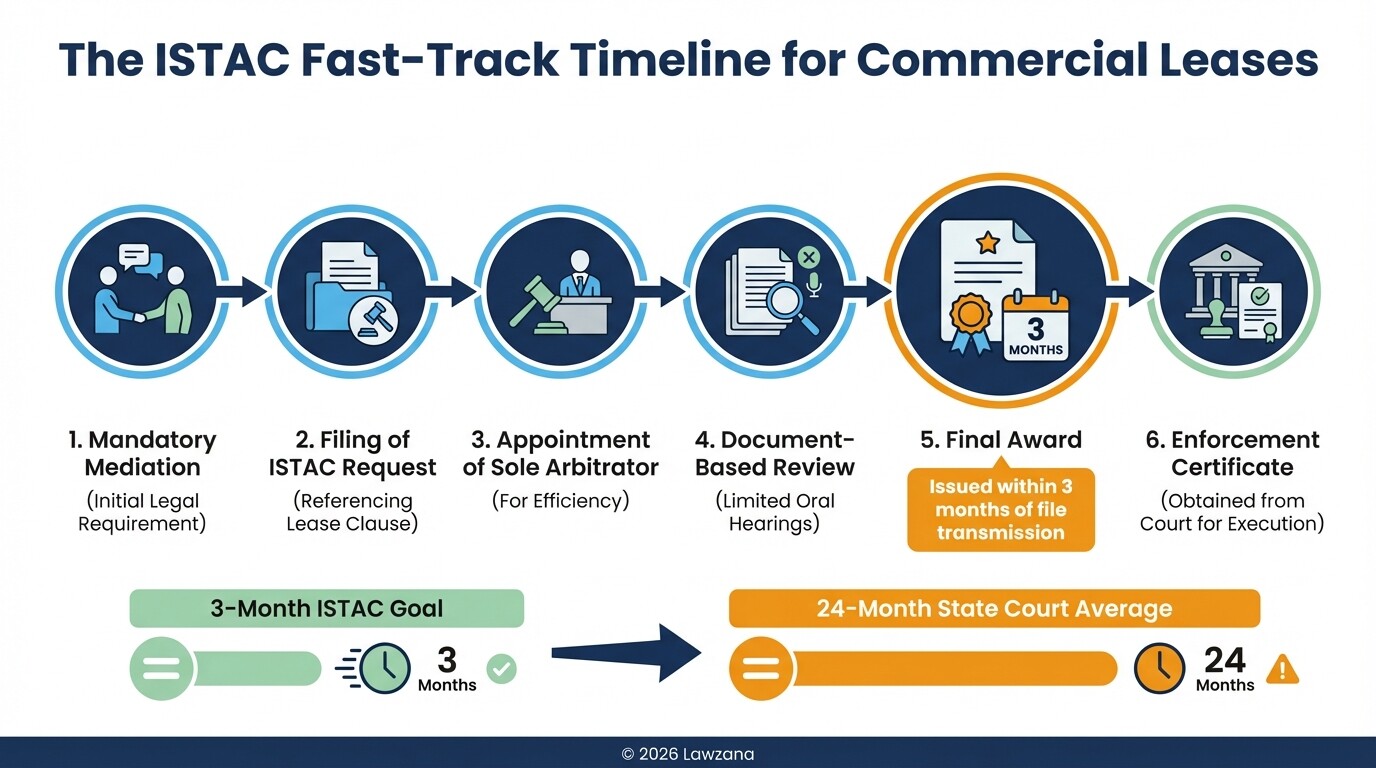
ISTAC offers a "Fast Track Arbitration" procedure that resolves disputes within three months, providing a significant advantage over the traditional Turkish court system. For commercial lease disputes involving unpaid rent or eviction, this accelerated timeline prevents the property from being tied up in litigation for years while the tenant remains in possession without paying.
The ISTAC Fast Track rules apply automatically if the dispute value is below a certain threshold (currently 300,000 TRY, though subject to update) or if the parties explicitly agree to it in their lease. The process includes:
- Shortened Deadlines: Parties have tighter windows to submit statements of claim and defense.
- Document-Based Review: Arbitrators often decide cases based on written evidence and documents rather than lengthy oral hearings.
- Sole Arbitrator: A single expert usually manages the case, reducing administrative delays and costs.
- Final Award: The arbitrator must render a final decision within three months from the date the file is transmitted to them.
How do ISTAC costs compare to Turkish civil court fees?
While ISTAC requires upfront administrative and arbitrator fees, it is often more cost-effective than Turkish civil courts when considering the "time value" of the dispute. Turkish courts charge a proportional "decision and judgment fee" (harç) which is approximately 6.8% of the dispute value, with one-quarter payable at the start. ISTAC fees follow a sliding scale based on the claim amount, which can be more predictable for high-value commercial leases.
| Cost Factor | Turkish Civil Courts | ISTAC Arbitration |
|---|---|---|
| Initial Filing Fees | Lower fixed starting fees, but 1.7% of claim value due upfront. | Administrative fee + Arbitrator fee based on ISTAC scales. |
| Duration | 18 to 36 months on average. | 3 to 12 months (Fast track vs. Standard). |
| Expert Witness Fees | Determined by the court; often leads to multiple reports. | Parties can present experts; arbitrator manages costs efficiently. |
| Appeal Costs | Requires additional fees for Regional Courts and Court of Cassation. | No merit-based appeal; only limited annulment costs. |
In the long term, the speed of ISTAC prevents "opportunity costs" for landlords who cannot re-lease their property and saves legal fees for tenants who would otherwise pay for years of litigation.
Are ISTAC awards final, and can they be annulled?
ISTAC arbitral awards are final and carry the same legal weight as a judgment from a Turkish court. Once an award is rendered, the winning party can apply to the relevant court for an "enforcement capability certificate" (icra edilebilirlik şerhi), allowing the award to be executed through the Turkish Execution Offices.
Grounds for an annulment lawsuit (iptal davası) against an ISTAC award are extremely limited under Turkish law. A party cannot appeal an award because they believe the arbitrator applied the law incorrectly; they can only seek annulment based on procedural flaws, such as:
- Lack of Capacity: One of the parties was under a legal disability or the arbitration agreement was invalid.
- Due Process Violations: A party was not given a proper opportunity to present their case.
- Scope Violation: The award deals with a dispute not covered by the arbitration agreement.
- Public Policy: The award is contrary to Turkish public policy (a very high bar to meet).
- Non-Arbitrability: The subject matter of the dispute cannot be resolved via arbitration under Turkish law.
Can an arbitrator grant interim injunctions to freeze assets in Turkey?
Under the ISTAC Arbitration Rules and the Turkish Code of Civil Procedure, arbitrators have the authority to grant interim injunctions or provisional attachments to prevent a party from hiding assets. This is vital in commercial leases where a tenant might attempt to move equipment or funds to avoid paying back-rent or damages.
However, the enforcement of these orders requires careful navigation:
- Arbitrator's Power: The arbitrator can order a party to preserve evidence or provide a bank guarantee.
- Court Assistance: If the opposing party refuses to comply with the arbitrator's interim order, the seeking party must go to the Turkish civil courts to request the enforcement of the injunction.
- Concurrent Jurisdiction: Even if an ISTAC proceeding has started, parties still have the right to apply directly to Turkish courts for interim measures if the matter is urgent or requires the use of state-enforced "coercive power" (like a police-assisted asset freeze).
Common Misconceptions About Turkish Arbitration
"Arbitration is only for international companies."
Many local Turkish business owners believe arbitration is a luxury for multinational corporations. In reality, ISTAC was designed specifically to provide Turkish SMEs and local landlords with a faster, domestic alternative to the overwhelmed state court system.
"If I lose in arbitration, I can just appeal to the High Court."
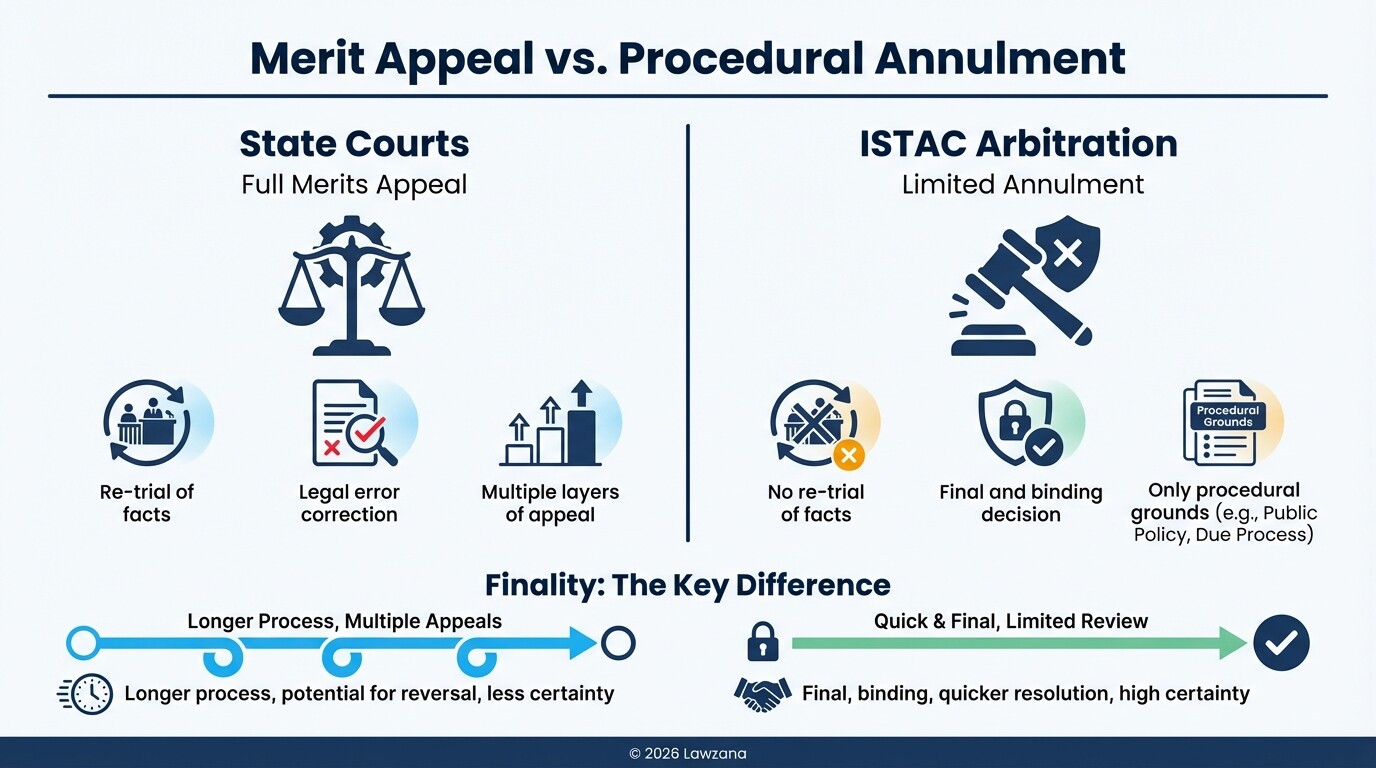
This is a dangerous misunderstanding. In the Turkish court system, you have the right to a full merits appeal. In ISTAC arbitration, the merits of the case are final. You cannot "re-try" the facts of the case in a state court just because you dislike the outcome.
"Arbitration is too expensive for rent collection."
While the initial fees are higher than court filing fees, the speed of recovery usually makes it cheaper. For example, recovering 12 months of rent in 4 months via ISTAC is significantly more profitable than waiting 3 years in court while the tenant occupies the space for free.
FAQ
Is mediation mandatory for commercial lease disputes in Turkey?
Yes, as of September 1, 2023, mediation is a mandatory prerequisite for lease disputes in Turkey. Parties must attempt mediation before they can file for arbitration at ISTAC or sue in state court.
Can ISTAC handle the physical eviction of a tenant?
An ISTAC arbitrator can issue an award ordering the eviction of a tenant. However, the physical removal of the tenant must be carried out by the Turkish Execution Offices (İcra Müdürlükleri) after the award is granted an enforcement certificate by a court.
How long does a typical ISTAC lease dispute take?
If the parties use the Fast Track procedure, the case is typically concluded within 3 months. Standard proceedings for complex commercial M&A or high-value lease disputes usually take between 6 and 12 months.
What language are ISTAC proceedings held in?
The parties are free to choose the language. In domestic commercial leases, Turkish is standard. In international leases involving foreign investors, English is frequently chosen and supported by the Istanbul Arbitration Centre.
When to Hire a Lawyer
Navigating ISTAC arbitration requires specialized legal knowledge that differs from traditional litigation. You should consult a Turkish legal expert if:
- You are drafting a new commercial lease and want to ensure your arbitration clause is "bulletproof" under the Official Gazette standards.
- You have received a notice of arbitration and need to file a defense within the strict ISTAC deadlines.
- You need to enforce an ISTAC award against a tenant who refuses to vacate the premises.
- Your dispute involves complex "Public Policy" arguments that might affect the validity of an award.
Next Steps
- Review Existing Leases: Check your current commercial lease agreements to see if they contain a valid ISTAC or other arbitration clause.
- Consult an Arbitrator: If a dispute is brewing, contact a legal professional to evaluate if your case qualifies for the ISTAC Fast Track procedure.
- Initiate Mandatory Mediation: Since Turkish law requires it, ensure you file for mediation through the appropriate channels before moving to arbitration.
- Draft Future Clauses: Update your standard commercial lease templates to include the recommended ISTAC model clause to protect your future interests.