- Customs Harmonization: Turkey is aligning its 2026 tariff schedules closer to the EU Combined Nomenclature, requiring international traders to audit and update their Harmonized System (HS) classifications.
- Documentation is Critical: Without the correct origin documents, such as the A.TR Movement Certificate for EU goods, shipments face immediate border delays and standard tariff rates.
- Anti-Dumping Deadlines: Foreign companies have exactly 37 days to respond to Turkish anti-dumping questionnaires, making immediate legal intervention necessary when an investigation begins.
- Strategic Alternatives: Turkish Free Trade Zones (FTZs) provide 100% corporate tax exemptions for manufacturing exporters, offering a lucrative alternative to direct importation.
Navigating Turkey's 2026 Customs Tariff Updates and Documentation Requirements
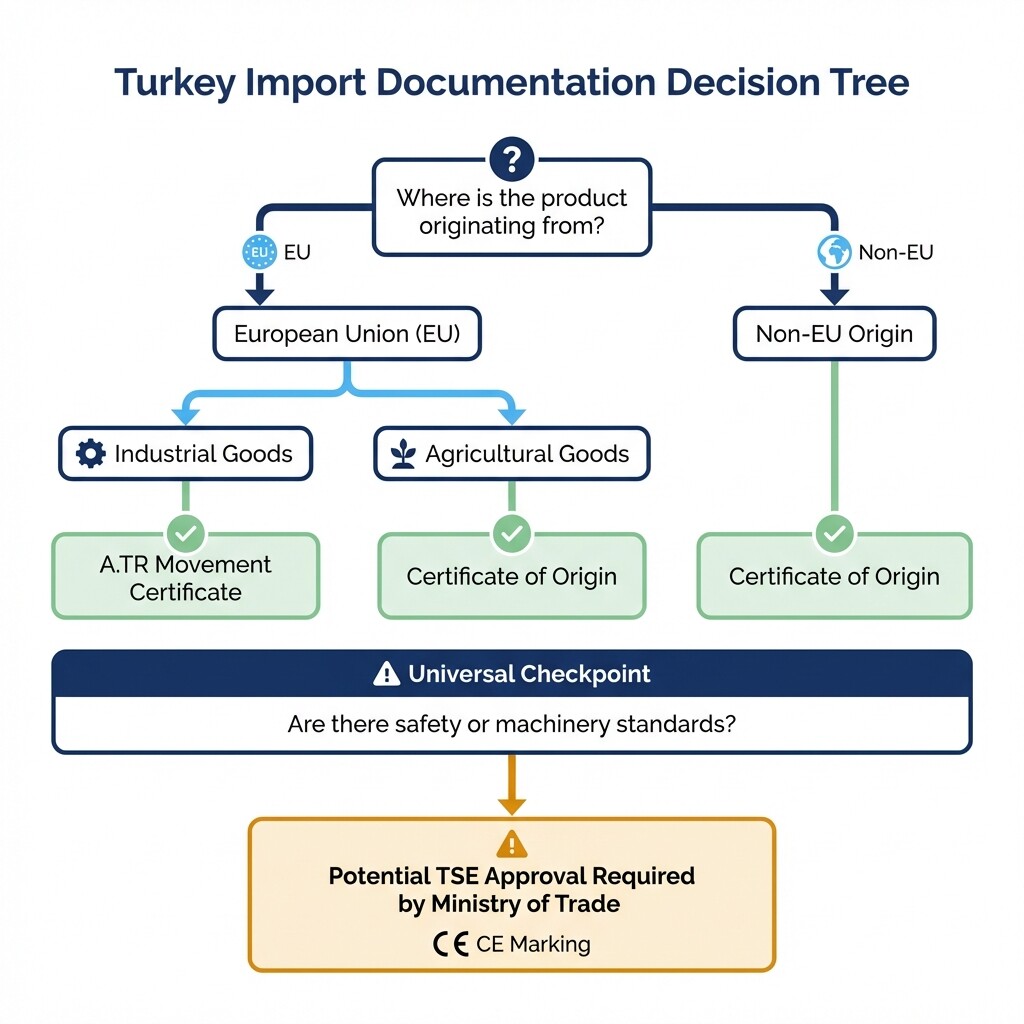
Turkey is aligning its 2026 customs tariff schedule strictly with the European Union's Combined Nomenclature, introducing rigorous documentation standards for foreign exporters. Trading companies must update their product classifications and ensure flawless origin tracking to avoid unexpected duties or border seizures.
Because Turkey is part of a Customs Union with the EU for industrial goods, the movement of these products requires specific documentation. However, agricultural goods and coal products fall outside this union and are subject to different rules. To maintain compliance during the upcoming 2026 regulatory shift, companies must secure the following documentation:
- A.TR Movement Certificate: Mandatory for industrial products moving between the EU and Turkey to benefit from zero customs duties. It proves the goods are in free circulation, not necessarily of EU origin.
- Certificate of Origin: Required for products originating outside the EU or for agricultural goods. Turkish Customs uses this to apply anti-dumping duties or preferential tariffs.
- CE Marking and TSE Approval: Products must meet EU safety standards (CE mark). However, the Turkish Ministry of Trade often requires additional safety verification through the Turkish Standards Institution (TSE) before clearing industrial machinery or consumer electronics.
Estimated Costs for Import Licenses and Legal Compliance
Securing mandatory import licenses and conducting legal compliance reviews in Turkey typically costs between 30,000 TRY and 150,000 TRY per product category. Highly regulated goods, such as pharmaceuticals, cosmetics, or agricultural products, incur the highest regulatory fees and require extensive local testing.
International trading companies should budget for a combination of government fees, legal advisory costs, and customs brokerage. Because the Turkish Lira experiences volatility, many legal and consulting services peg their rates to the US Dollar or Euro, even when billed locally.
| Service Category | Estimated Cost Range (TRY) | Description |
|---|---|---|
| Basic Import Registration | 5,000 - 15,000 | Government filing fees for standard commercial goods. |
| Specialized Import Licenses | 30,000 - 80,000 | Required for regulated sectors (medical devices, cosmetics, chemicals). |
| Customs Brokerage Retainer | 10,000 - 25,000 / month | Ongoing representation at ports to clear incoming shipments. |
| Legal Compliance Audit | 40,000 - 150,000 | Comprehensive lawyer review of trade contracts, HS codes, and FTZ strategy. |
Sample Customs Dispute Prevention Clauses for Trade Contracts
International trade contracts for the Turkish market must clearly define customs clearance responsibilities and liability for tariff reclassifications. Using precise legal language prevents goods from being abandoned at Turkish ports due to administrative errors or unexpected tax assessments.
When drafting sales agreements, distribution contracts, or supply chain documentation for goods entering Turkey, incorporate these specific compliance clauses to allocate risk effectively:
Clause 1: HS Code Classification and Import Clearances "Buyer shall be solely responsible for determining the correct Harmonized System (HS) code under the Turkish Customs Tariff Schedule and obtaining all necessary import licenses, permits, and TSE certifications required by the Republic of Turkey. Seller's obligation is strictly limited to providing commercial invoices and packing lists as requested by the Buyer. Seller assumes no liability for shipment delays, demurrage charges, or confiscation arising from improper classification or failure to obtain local regulatory approvals."
Clause 2: Tariff and Tax Reclassification Liability "In the event that Turkish Customs authorities retroactively reclassify the goods, resulting in additional customs duties, Value Added Tax (VAT), Special Consumption Tax (SCT), or anti-dumping penalties, Buyer shall bear all such costs. Buyer waives any right to seek indemnification from Seller for retroactive tax assessments levied by the Turkish government."
Establishing Operations in Turkish Free Trade Zones
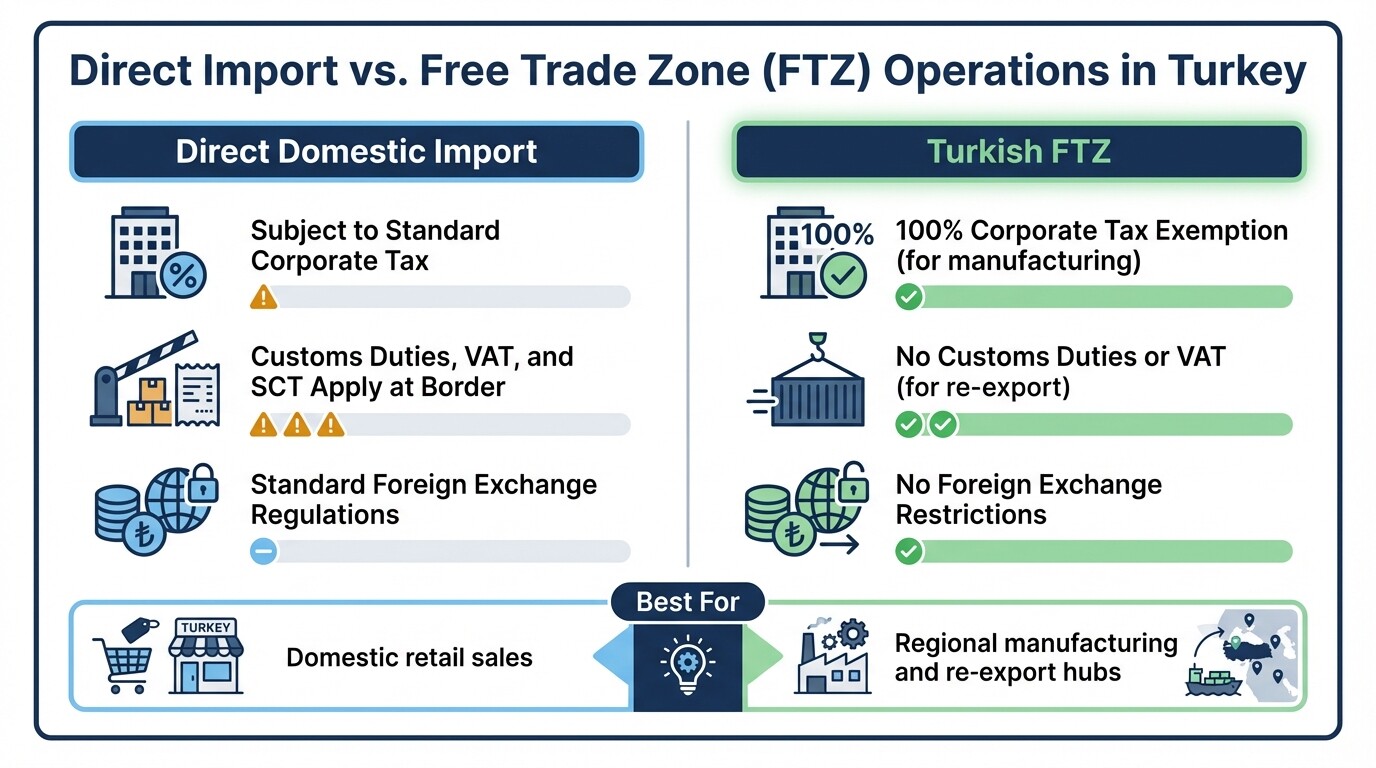
Turkish Free Trade Zones (FTZs) allow international companies to store, process, and re-export goods without paying Turkish customs duties or value-added tax (VAT). This is a highly profitable alternative to direct importation for businesses using Turkey as a regional manufacturing or distribution hub for Europe and the Middle East.
Operating within one of Turkey's 18 designated FTZs provides distinct legal and financial advantages over importing directly into the domestic Turkish market. Companies that establish branches in zones like the Aegean Free Zone (ESBAS) or Mersin Free Zone benefit from a highly deregulated environment.
Key advantages of operating in a Turkish FTZ include:
- Corporate Tax Exemption: Manufacturing companies operating in an FTZ are 100% exempt from Turkish corporate income tax on profits generated from the sale of goods produced within the zone.
- Customs Duty Relief: Goods brought into the FTZ from abroad are not subject to customs duties, VAT, or the Special Consumption Tax (SCT) as long as they are not subsequently moved into the domestic Turkish market.
- No Foreign Exchange Restrictions: Revenues generated in an FTZ can be freely transferred abroad without restrictive central bank approvals or local currency conversion mandates.
Responding to Anti-Dumping Investigations in Turkey
When the Turkish government launches an anti-dumping investigation, foreign exporters have exactly 37 days to submit a comprehensive defense questionnaire. Failing to respond with verified cost and pricing data results in the automatic imposition of punitive tariffs that can effectively close the Turkish market to your products.
Investigations are managed by the Directorate General of Imports under the Ministry of Trade. These cases are highly technical and heavily scrutinized. If your company is named in an investigation, or if an investigation targets your product category in your country, you must execute a strict legal strategy:
- Submit the Questionnaire on Time: The 37-day deadline is rigid. Exporters must provide exhaustive data on domestic sales, production costs, and export pricing to prove they are not selling below fair market value.
- Request Individual Treatment: If an industry-wide tariff is proposed, companies with clean pricing data can petition for an individual, lower tariff margin.
- Appoint Local Representation: Turkish anti-dumping proceedings are conducted entirely in Turkish. You must grant Power of Attorney to local trade counsel who can file motions and attend hearings in Ankara.
Common Misconceptions About Turkish Import Law
Many foreign businesses misunderstand Turkey's customs relationship with the EU and underestimate local certification requirements. Clearing up these regulatory myths prevents costly shipment rejections and legal penalties at Turkish ports.
- Myth: EU membership guarantees borderless trade with Turkey. Turkey is not in the EU; it merely has a Customs Union for industrial goods. Agricultural products, services, and public procurement are excluded, and customs border checks still occur to verify documentation and product safety.
- Myth: A CE mark guarantees immediate customs clearance. While a CE mark demonstrates compliance with EU safety standards, Turkish Customs frequently stops electronic, medical, and machinery imports to mandate local testing by the Turkish Standards Institution (TSE).
- Myth: Using the Incoterm "DDP" is simple in Turkey. Delivered Duty Paid (DDP) means the seller handles all import clearances. However, Turkish law requires the "Importer of Record" to be a Turkish-registered entity. Foreign sellers cannot easily clear customs as the importer without establishing a local branch or using a specialized indirect representative.
Frequently Asked Questions (FAQ)
Review these common questions to quickly understand critical compliance timelines and operational rules for importing into Turkey.
How long does customs clearance take in Turkey?
Standard commercial goods with perfect documentation clear customs in 2 to 4 days. Highly regulated items, or goods flagged for TSE safety testing, can be held at the port for 2 to 4 weeks.
Do I need a local entity to import goods into Turkey?
Yes. To act as the Importer of Record and clear goods through customs, you must possess a Turkish tax identification number and be registered in the local trade registry.
What is the penalty for incorrect HS code classification?
Misclassifying goods to secure a lower tariff rate results in the collection of the correct duty amount plus administrative fines that are typically three times the amount of the evaded customs duty.
Are all goods subject to Turkey's Value Added Tax (VAT)?
Almost all imported goods are subject to VAT, which is assessed at the border. The standard rate is 20%, though reduced rates of 1% or 10% apply to basic foodstuffs, textiles, and specific medical supplies.
When to Hire a Lawyer and Next Steps
Engaging legal counsel is critical before signing high-value distribution agreements, entering Free Trade Zones, or responding to anti-dumping claims. A proactive legal review prevents goods from being permanently held at customs or penalized for non-compliance.
International trade law in Turkey is highly bureaucratic and subject to sudden administrative changes. If you are preparing to export high volumes to Turkey or structure a complex supply chain, taking immediate action will protect your profit margins.
- Audit your current product catalog's HS codes against the upcoming 2026 Turkish customs tariff updates.
- Review your commercial contracts to ensure customs clearance and tax liabilities are explicitly assigned to the local buyer.
- Consult with international trade law lawyers in Turkey to assess whether establishing a Free Trade Zone entity aligns with your regional distribution goals.